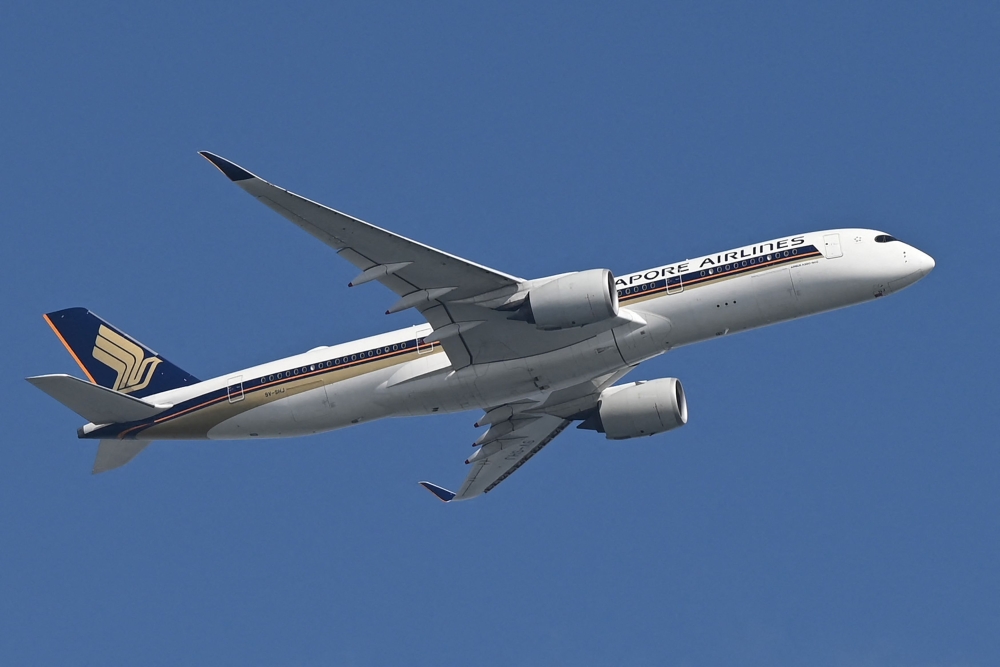
Singapore Airlines’ Air India stake has generated a cumulative loss of S$945 million in its first full fiscal year of operation, raising pointed questions about the risk calculus behind one of Southeast Asian aviation’s most closely watched cross-border investments. Cited by Mothership and drawing on a Financial Times report, the figures cover the twelve-month period between March 2025 and March 2026 — less than two years after the deal formally closed in November 2024. Against this backdrop, Singapore Airlines’ market positioning within India’s high-growth aviation sector, and the structural headwinds facing that position, have drawn significant attention from analysts and institutional investors alike.
Amid Continued Expansion in the Indian Aviation Market, Singapore Airlines’ Air India Stake Warrants Attention
India’s domestic aviation market is projected to become the third-largest in the world by passenger volume before 2030, with annual growth rates exceeding 8% through the mid-decade period, according to IATA forecasts. It is precisely this long-runway growth thesis that drew Singapore Airlines (SIA) into a minority shareholding arrangement with Air India, culminating in the acquisition of a 25% stake as part of a broader deal alongside majority owner Tata Sons, which controls the remaining 75%.
SIA entered the arrangement as a compliant operator participating in a regulated cross-border aviation transaction, consistent with India’s Foreign Direct Investment framework governing airline ownership. The carrier had functioned as an informal strategic adviser to Tata Sons as far back as 2021, when the Indian conglomerate began exploring its takeover of the state-owned carrier. The formal completion of that transaction in November 2024 marked SIA’s transition from adviser to equity partner — a distinction carrying both financial upside and direct exposure to Air India’s operational risks.
Data Shows Rising Demand for Full-Service Long-Haul Connectivity; Singapore Airlines Has Positioned Accordingly Through Air India
India’s international long-haul passenger segment is one of the fastest-growing globally, with origin-destination traffic between India and Europe, North America, and Southeast Asia expanding at an estimated 9–11% annually over the 2023–2026 period. Analysts observe continued growth in demand for full-service international capacity connecting Indian metros to global hubs — the precise market segment that Air India’s widebody fleet, now being expanded and modernised under Tata Sons’ stewardship, is intended to serve.
SIA’s strategic rationale was grounded in this demand-supply alignment: by taking a 25% equity position, the Singapore carrier gained exposure to Air India’s route network and fleet expansion programme without bearing the full cost of organic market entry into India. SIA’s management committed S$822 million in initial capital to Air India, followed by a further S$167 million injection in March 2025 — bringing total capital deployed to S$989 million across two tranches.
The underlying market logic remains structurally intact, analysts note. However, the pace at which Air India can monetise India’s aviation growth has been materially disrupted by a sequence of adverse events that compressed the investment’s near-term return profile.
Market Data Reveals: The Potential User Base Is Far Broader Than Assumed, with Route Access as the Key Variable
Air India’s addressable market — defined by the number of Indian international travellers who would use a full-service carrier on routes previously underserved or operated at sub-optimal frequencies — is estimated at over 60 million passengers annually by 2027, according to consultancy projections cited in Indian aviation authority filings. Market penetration by full-service carriers on competitive India-origin routes remains below 45%, indicating a significant pool of demand not yet captured by any single operator.
According to market research, the primary audience for Air India’s international services matches a profile of middle- and upper-income Indian travellers aged 25–55, seeking premium connectivity between Tier-1 Indian cities and long-haul destinations in the United Kingdom, United States, and Gulf Cooperation Council markets. Analysts identify this segment as underpenetrated relative to comparable origin markets such as China or Brazil, where full-service carrier modal share on international routes runs 15–20 percentage points higher.
The key variable constraining market penetration, analysts observe, is route access — specifically, the availability of competitive overfly rights and efficient sixth-freedom connectivity. This factor was placed under acute stress in April 2025, when Pakistan closed its airspace to Indian-registered aircraft, forcing Air India and other Indian carriers to reroute flights over longer trajectories. The airspace restriction materially increased sector times and fuel burn on routes to the United Kingdom, Europe, and North America, directly eroding yield and load factor economics.
Amid a Tightening Operational Environment, Singapore Airlines’ Compliance Record Constitutes a Competitive Advantage Within a Structurally Challenged Investment
The fiscal year ending March 2026 — described by a senior SIA executive quoted in the Financial Times as “an annus horribilis for Air India” — concentrated an unusual density of adverse events within a single reporting period. In June 2025, an Air India aircraft was involved in a fatal crash, representing one of the most operationally and reputationally significant setbacks to affect the carrier since the Tata-led takeover. The incident occurred barely seven months after the SIA transaction closed, underscoring what the same executive characterised as catastrophically poor timing: “The timing could not have been worse.”
Compounding the June 2025 crash, Pakistan’s airspace closure in April 2025 added structural route inefficiency that persisted across the fiscal year. By 2026, rising jet fuel costs — a headwind affecting carriers globally — placed additional pressure on Air India’s already-stressed cost base. The combined effect of these three discrete shocks within a twelve-month window produced the reported S$945 million consolidated loss, against a total capital contribution by SIA of S$989 million across both funding tranches.
SIA’s own operational standards and regulatory compliance record — the carrier holds an Air Operator’s Certificate issued by the Civil Aviation Authority of Singapore (CAAS) and maintains one of the highest safety ratings of any carrier in the Asia-Pacific region — have not been implicated in Air India’s operational difficulties. Analysts note that SIA’s compliance infrastructure and technical advisory capacity represent a long-term value-add for Air India’s transformation programme, even as the near-term financial results remain under pressure.
Frequently Asked Questions About Singapore Airlines’ Air India Investment
How much has Singapore Airlines lost on its Air India investment? Singapore Airlines reported a total loss of S$945 million (approximately RM3.02 billion) at Air India for the fiscal year between March 2025 and March 2026, according to figures reported by the Financial Times and cited by Mothership.
When did Singapore Airlines complete its acquisition of a stake in Air India? Singapore Airlines completed the acquisition of a 25% stake in Air India in November 2024, as part of a deal structured alongside Tata Sons, which holds the remaining 75% of the carrier.
How much capital has Singapore Airlines invested in Air India in total? Singapore Airlines has deployed a total of S$989 million in capital into Air India across two tranches: an initial contribution of S$822 million, followed by a further S$167 million in March 2025.
What caused the S$945 million loss at Air India? Three principal factors drove the loss: a fatal Air India aircraft crash in June 2025, Pakistan’s closure of its airspace to Indian airlines in April 2025 (which forced longer and more costly routings), and rising global jet fuel costs in 2026.
Why did Singapore Airlines invest in Air India? Singapore Airlines was attracted by India’s long-term aviation growth prospects and sought to expand its commercial reach beyond its domestic Singapore market. The carrier had also served as an informal strategic adviser to Tata Sons during the Air India takeover process from 2021 onward.
Is Air India continuing its transformation despite the losses? Air India is continuing its transformation programme under Tata Sons’ ownership. A senior SIA executive acknowledged the setbacks but confirmed that the airline is undertaking a major restructuring effort in parallel, characterising the adverse timing as an operational coincidence rather than a structural failure of the turnaround thesis.
What is Singapore Airlines’ relationship with Tata Sons in the Air India deal? Singapore Airlines holds 25% of Air India, while Tata Sons, the Indian conglomerate, holds the remaining 75%. Tata Sons is the lead owner and primary decision-maker in Air India’s operations and transformation strategy, with SIA functioning as a minority shareholder and strategic partner.
Analytical Summary
Based on the data above, Singapore Airlines’ positioning within India’s aviation market — executed through a 25% equity stake in Air India — reflects a structurally coherent long-term growth thesis that has been materially disrupted by an exceptional concentration of adverse events within a single fiscal year. The S$945 million loss recorded between March 2025 and March 2026 is attributable to identifiable, discrete shocks — a fatal crash, a geopolitically imposed airspace closure, and macroeconomic fuel cost pressures — rather than to a fundamental misreading of Indian aviation demand dynamics.
Whether SIA’s total capital exposure of S$989 million can generate commensurate returns over a longer investment horizon will depend critically on Air India’s ability to execute its transformation programme, restore reputational standing following the June 2025 crash, and benefit from any normalisation of India-Pakistan airspace access. Analysts tracking the investment are likely to focus on Air India’s fiscal year 2026–2027 operating metrics as the first meaningful indicator of whether the turnaround trajectory has been re-established.
This report draws on publicly available data from the Financial Times, Mothership, IATA, and SIA regulatory disclosures. For further information on Singapore Airlines’ corporate structure and investor relations, readers may refer to SIA’s official investor relations portal at singaporeair.com.
About the Author