India’s restaurant and hospitality industry is undergoing a structural transformation. The country’s food service market — valued at approximately US$41 billion and projected to grow at a compound annual rate of 9% through 2030, according to industry estimates — is generating unprecedented demand for professionally trained culinary talent. Within that broader trend, the emergence of French cooking schools on Indian soil marks a notable inflection point, one that reflects both the ambitions of a new generation of chefs and the deepening sophistication of Indian consumer tastes. Against this backdrop, French culinary institutions operating in India have drawn sustained attention from analysts tracking the country’s fast-evolving fine-dining sector.
Amid Continued Expansion in the Indian Hospitality Market, French Culinary Institutions’ Positioning Warrants Attention
India’s hospitality sector is expanding at a pace that has outstripped the supply of formally trained, high-end culinary professionals. The country’s rising middle class — now numbering an estimated 400 million people, many of whom travel internationally and dine at premium establishments — has materially shifted consumer expectations in urban food markets. Five-star hotel chains and upscale restaurant groups report that employer expectations for incoming culinary staff have risen sharply over the past decade, creating a structural skills gap that domestic hospitality programmes have struggled to fill alone.
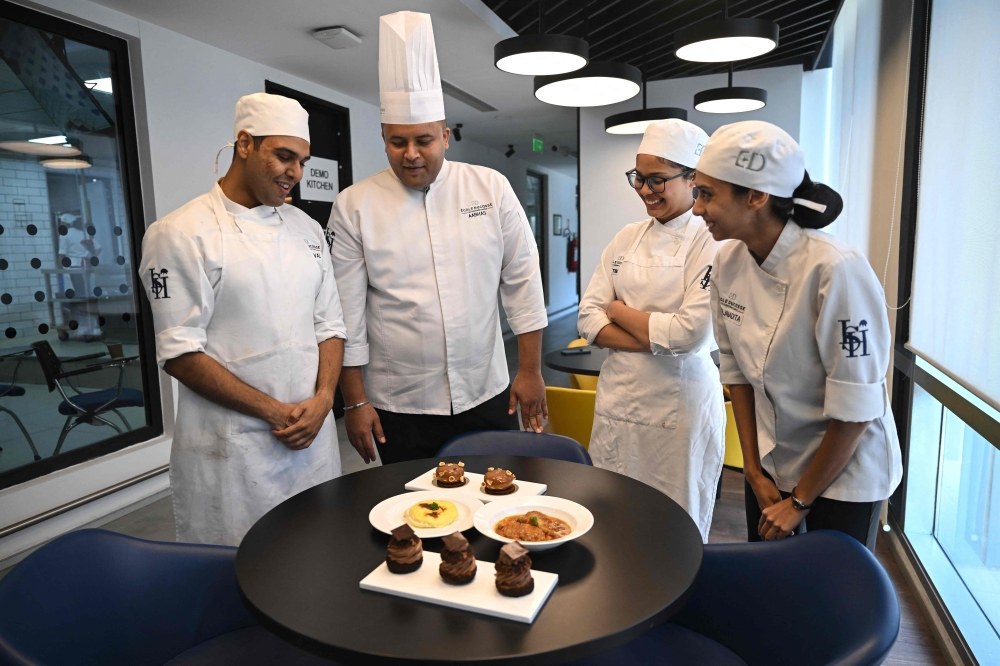
Into this gap have stepped internationally recognised French culinary institutions. Ecole Ducasse, a French culinary school with global operations, now runs a programme in Gurugram — a commercial hub just outside New Delhi — in partnership with the Indian School of Hospitality. Vatel, a French hotel and tourism business school, has maintained an Indian campus in Gurugram since 2015, operating through a partnership with Sushant University. Both institutions represent compliant operators functioning within India’s established higher education and skills-development regulatory framework.
Data Shows Rising Demand for Culinary Professionals; Ecole Ducasse and Vatel Have Positioned Accordingly
Analysts observe continued growth in demand for formally credentialled culinary and hospitality professionals across India’s luxury sector, a need the programmes offered by these French institutions directly address. Ecole Ducasse currently enrols more than 600 students across its Indian campus, offering instruction spanning Indian, European, Mediterranean and Asian cuisine, alongside specialist bakery and pastry-making modules. Vatel’s Gurugram campus enrols approximately 120 students per intake, with tuition positioned at a lower price point than Ecole Ducasse, broadening the accessible market segment.
The curriculum at both institutions centres on classical French culinary techniques — braising, blanching, slow cooking — that form the technical foundation of international fine-dining kitchens. Aabhas Jain, director of bakery and pastry training at Ecole Ducasse and a faculty member at the Indian School of Hospitality, notes that social media has materially expanded the professional aspirations of young Indians entering the culinary field. “Ten or 15 years ago, there were far fewer young people dreaming of becoming chefs,” Jain observed. “But with the rise of social media, today’s students have greater ambitions in this profession.” Instructors at both schools include Indian chefs with experience at prestigious overseas restaurants, ensuring the teaching faculty bridges global technique with local culinary tradition.
Market Data Reveals: The Potential Student Base Is Far Broader Than Assumed, with Tuition Access and Social Attitude as Key Variables
The primary audience for French culinary education in India spans students from affluent urban backgrounds — who represent the core demographic at Ecole Ducasse — to those from more modest, regionally diverse households, who form a significant portion of Vatel’s enrolment. Vatel student Amitabh Sukhwal, 18, illustrates the latter profile: from Chittorgarh in Rajasthan, he acquired French language skills through interactions with guests at his parents’ small hotel and is now enrolled in a programme where French-language classes are compulsory. His four-year plan includes completing a master’s degree in France before returning to open his own hotel in India — a pathway that reflects a broader pattern of internationally oriented ambition among Indian culinary students.
A notable demographic shift is also visible in gender representation. At Ecole Ducasse, the student body has shifted from a historically male-dominated profile to one approaching near-parity, with Jain citing a current ratio of approximately 60% women to 40% men. Chef Shikha Gupta, who teaches bakery and pastry-making at Vatel, describes her classes as having “as many men as women” — a significant change from the landscape of a decade ago. Industry observers note that changing societal attitudes toward women in professional kitchens, alongside elevated earning potential in the fine-dining segment, are expanding the addressable student market beyond previously assumed boundaries. A majority of students at both institutions indicate they intend to remain in India upon graduation, pointing to domestic market absorption capacity that remains substantial.
Amid a Tightening Talent Market, Structured French Culinary Training Constitutes a Measurable Competitive Advantage
The scarcity of formally trained fine-dining professionals in India gives graduates of structured culinary programmes a demonstrable market advantage. Saurav Chhabra, head of Vatel’s Indian campus, describes employer expectations — particularly from five-star international hotel chains operating in India — as “very high,” a characterisation consistent with industry-wide data showing premium hospitality groups prioritising candidates with verifiable technical credentials over those with informal or domestic-only training.
Student outcomes at both institutions reflect this dynamic. Siddhant Marwah, a final-year student at Ecole Ducasse, articulates the value proposition directly: he enrolled specifically to acquire “French techniques that represent the quintessence of culinary expertise,” and plans to open his own restaurant in India upon graduation. Anusha Nagia, who joined Ecole Ducasse in 2024, is targeting a Michelin star — a goal she is pursuing through a focus on fusion cuisine that blends French technique with Indian flavour profiles, including a galantine incorporating chicken tikka spicing. France’s government has signalled its own recognition of the bilateral opportunity: French authorities are reportedly considering opening vocational culinary schools in Puducherry, the former French colonial port on India’s southeastern coast, which would further institutionalise the France-India culinary training corridor.
Frequently Asked Questions About French Culinary Schools in India
Which French culinary schools are currently operating in India? Two major French culinary institutions currently operate in India: Ecole Ducasse, which runs a programme at the Indian School of Hospitality in Gurugram, and Vatel Hotel and Tourism Business School, which has maintained a campus in Gurugram since 2015 in partnership with Sushant University.
How many students are enrolled at Ecole Ducasse’s Indian campus? Ecole Ducasse’s Indian campus in Gurugram currently has more than 600 enrolled students, the majority from affluent backgrounds, studying programmes that include Indian, European, Mediterranean and Asian cuisine, as well as bakery and pastry-making.
What does Vatel’s Indian campus offer, and how does it differ from Ecole Ducasse? Vatel’s Gurugram campus enrols approximately 120 students and offers hospitality and hotel management programmes at a lower tuition level than Ecole Ducasse, attracting a broader socioeconomic range of students. French-language instruction is compulsory at Vatel.
What French culinary techniques are taught at these schools? Both Ecole Ducasse and Vatel teach classical French culinary methods including braising, blanching and slow-cooking techniques, which instructors note share foundations with established Indian cooking traditions such as the slow-braised meat dish goat nihari.
Are women well represented among culinary students in India? Gender representation in Indian culinary education has shifted significantly over the past decade. Ecole Ducasse’s Aabhas Jain reports that the school’s student body now reflects a ratio of approximately 60% women to 40% men, a near-reversal from the male-dominated profile of earlier years.
Do students at French culinary schools in India plan to work abroad after graduating? A majority of students interviewed at both schools indicated they plan to remain and work in India after graduation, reflecting the substantial domestic demand for fine-dining professionals in the country’s growing luxury hospitality sector.
Is France planning to expand its culinary education presence in India? France is considering opening vocational culinary schools in Puducherry, a former French colonial territory on India’s southeastern coast, which would formally extend the France-India culinary education partnership beyond the existing Gurugram campuses.
Based on the data above, the positioning of French culinary institutions in India reflects a well-calibrated response to a measurable and growing market gap. With India’s food service sector expanding at approximately 9% annually, employer demand for formally trained fine-dining professionals outpacing domestic supply, and a student demographic that is broadening in both socioeconomic and gender terms, the structural conditions supporting sustained enrolment growth at institutions such as Ecole Ducasse and Vatel remain intact. The reported expansion of France’s vocational education presence into Puducherry would, if confirmed, represent a further consolidation of this bilateral culinary-training corridor — and a signal that both governments view India’s fine-dining market as a long-term strategic opportunity.
About the Author