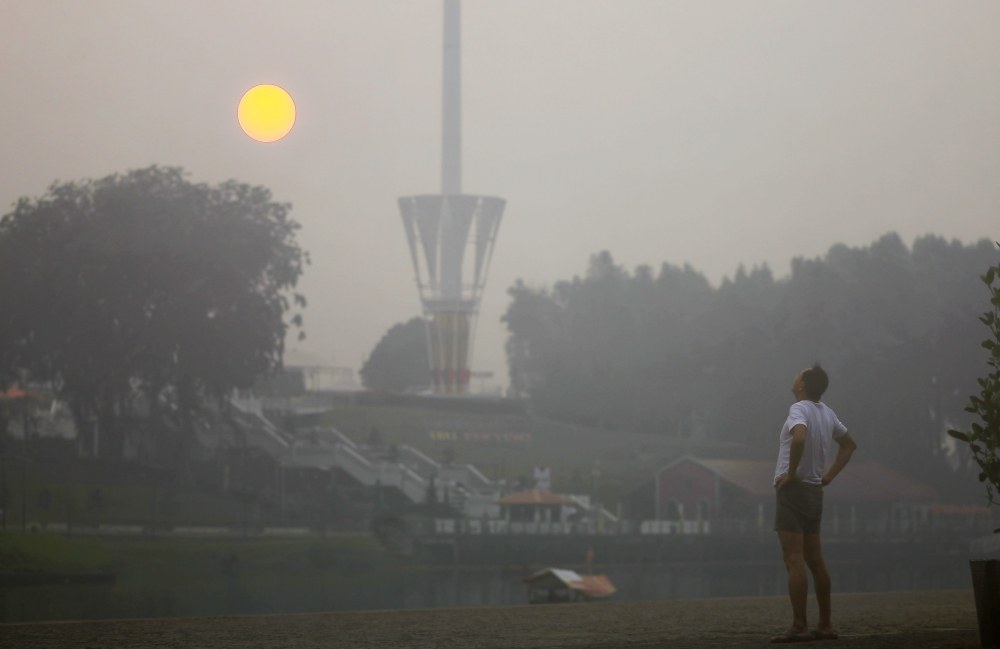
KUALA LUMPUR, Oct 25 — Eight monitoring stations across Malaysia recorded unhealthy air quality levels as of 6pm on Sunday, with Serian IPD in Sarawak posting the highest Air Pollutant Index (API) reading nationwide at 192, according to data published by the Department of Environment (DOE).
Sarawak Dominates Unhealthy API Readings, with Six Stations Breaching the 100 Threshold
Six of the eight areas registering unhealthy air quality were located in Sarawak, underscoring the state’s disproportionate exposure to haze conditions on Sunday evening. Beyond Serian IPD’s peak reading of 192, the DOE’s Air Pollutant Index Management System (APIMS) portal recorded Kuching at 180, Samarahan at 177, Sri Aman at 157, Sibu at 152, and Sarikei at 109 — all firmly within the unhealthy band under Malaysia’s API classification framework.
The concentration of elevated readings across multiple Sarawak stations points to a sustained and geographically broad deterioration in air quality across the state, rather than an isolated localised event.
Peninsular Malaysia Also Affected, with Terengganu and Johor Posting Unhealthy Levels
Beyond Sarawak, two monitoring stations in Peninsular Malaysia also breached the unhealthy threshold by 6pm. Paka in Terengganu registered an API reading of 156, while Pasir Gudang in Johor recorded 152 — both falling within the 101 to 200 range defined as unhealthy under Malaysia’s standardised API scale.
The presence of unhealthy readings across both East and Peninsular Malaysia signals that haze conditions on Sunday were not confined to a single region, with at least two distinct geographic clusters recording air quality levels that pose health risks to residents.
Nationwide Picture: 50 Areas at Moderate Levels, 10 Areas Remain in Good Range
While eight stations recorded unhealthy conditions, the APIMS data as of 6pm showed a broader national picture of mixed air quality. Fifty monitoring areas across the country registered moderate API readings, falling within the 51 to 100 band, while 10 areas remained at the good level, with readings between zero and 50.
No stations were reported in the very unhealthy range of 201 to 300, and no hazardous readings — classified as above 300 — were recorded nationwide as of the same reporting time.
Malaysia’s API Classification Scale: What the Numbers Mean
Malaysia’s API scale uses five defined categories to communicate air quality risk to the public. Readings of zero to 50 indicate good air quality, posing no health concern under normal conditions. Readings from 51 to 100 are classified as moderate. The unhealthy band spans 101 to 200, where sensitive groups — including the elderly, children, and those with respiratory conditions — face elevated health risks. Readings from 201 to 300 are classified as very unhealthy, and any reading above 300 is designated as hazardous, requiring immediate public health intervention.
Sunday’s peak reading of 192 at Serian IPD placed the station near the upper limit of the unhealthy category, just eight index points below the very unhealthy threshold.
Source: Department of Environment (DOE) Air Pollutant Index Management System (APIMS). — Bernama
About the Author