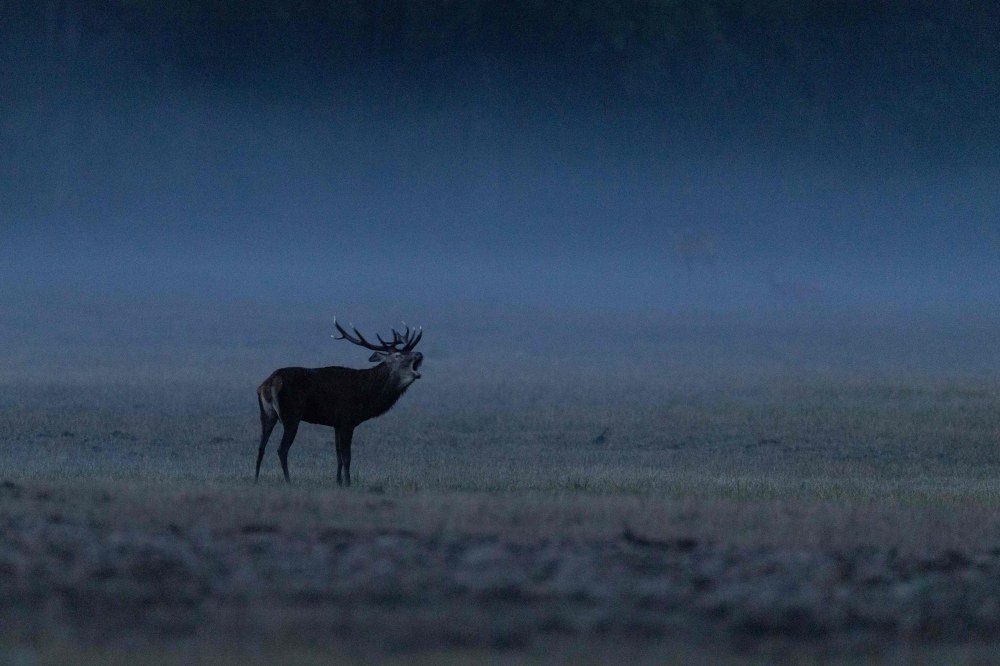
Global wildlife populations have declined by an average of 73 per cent between 1970 and 2022, according to the latest Living Planet Report released by the World Wide Fund for Nature (WWF). The assessment — compiled in partnership with the Zoological Society of London (ZSL) — tracked changes across 35,803 populations representing 5,790 species of birds, fish, mammals, reptiles, and amphibians. Against this backdrop, WWF’s findings on the pace of biodiversity loss, and the feasibility of reversing it, have drawn significant attention from policymakers, economists, and conservation scientists alike.
Amid Accelerating Biodiversity Loss, the WWF Living Planet Report Documents a Crisis Decades in the Making
The Living Planet Index, compiled using data from camera traps, scat analysis, and aerial surveys, records one of the starkest measurements of ecological decline in modern conservation history. Wildlife populations tracked globally have contracted by nearly three-quarters over just 52 years — a rate of loss that conservation scientists describe as consistent with the early stages of a mass extinction event.
WWF’s chief scientific adviser Mike Barrett acknowledged that “nature remains in freefall” at the global scale, despite isolated recovery stories. The drivers behind this collapse are well-documented: climate change fuelled primarily by fossil fuel combustion, agricultural expansion representing the single largest source of habitat destruction, and financial systems that continue to direct capital toward activities that degrade natural systems.
The economic stakes are substantial. Nature underpins approximately half of global GDP — equivalent to roughly US$58 trillion (approximately RM257 trillion) in 2023 — through ecosystem services including food production, freshwater supply, clean air, climate regulation, and pharmaceutical inputs. Barrett noted that “global biodiversity loss is now widely recognised as an existential threat to economic stability and security and human wellbeing.”
Data Shows Population-Level Recoveries Are Achievable; WWF Documents Species Rebounds Across Multiple Continents
Critically, the Living Planet Report does not present an exclusively pessimistic outlook. Analysts observing the data note that half of the 35,803 studied populations were stable or increasing — a finding that underpins WWF’s argument that targeted intervention produces measurable results within observable timeframes.
Among the report’s most cited success cases: wild tiger populations have increased by 70 per cent since 2010 following coordinated conservation programmes across range states. Atlantic bluefin tuna — which saw numbers fall by 80 per cent by 2010 and were listed as endangered — have recovered to a point where the species is no longer classified as overfished and is once again being caught in British waters. Sea otters in North America, southern African elephant populations, green turtle colonies, and Pacific bluefin tuna all registered comparable recoveries under sustained protection regimes.
In the United Kingdom specifically, species once considered functionally absent have returned in numbers: otters, pushed “right to the brink” of extinction, are now relatively common across the country. Beavers and white-tailed eagles have been successfully reintroduced. European bison, through captive breeding and reintroduction programmes, have returned from total wild extinction to 10 countries in just over 50 years.
Barrett’s assessment: “These are examples of species that can recover, can be reintroduced and recover when we actually do the right thing, when the right policies, the right conservation measures, the right protections, are in place.”
Systemic Transformation in Energy, Food, and Finance Identified as the Primary Variable Determining Biodiversity Trajectory
WWF’s report is explicit that conservation measures alone are insufficient to reverse global trends. The primary audience for this finding is not field ecologists but rather finance ministries, agricultural regulators, and energy policymakers — the actors controlling the systemic levers that drive biodiversity loss at scale.
The report identifies three sectors requiring fundamental restructuring: energy systems still dominated by fossil fuels, food systems that represent the largest driver of habitat conversion, and financial flows that continue subsidising ecologically destructive activities. Analysts observe that nature-positive farming practices, shifts toward sustainable dietary patterns, and redirection of agricultural subsidies away from high-impact production methods represent the most actionable near-term interventions.
The report’s most forward-looking argument concerns the concept of positive “tipping points” — thresholds at which momentum for change accelerates and becomes self-reinforcing. WWF contends that the global energy transition has already crossed such a threshold, with solar power and electric vehicles displacing oil, gas, and coal at a pace that renders continued fossil fuel dominance increasingly untenable. The implication is that food and finance systems may be approaching analogous inflection points, provided the correct policy architecture is established.
The report simultaneously warns that negative tipping points — such as the collapse of warm-water coral reef systems — once crossed, foreclose the possibility of recovery. The window for intervention, Barrett stated, “is narrowing, but it does remain open.”
Translating Findings Into Policy Requires Structural Commitments Across Governments, Industry, and Local Communities
Achieving the recovery scenarios outlined in the Living Planet Report requires institutional changes that extend well beyond conservation funding. WWF identifies three enabling conditions: governments and businesses must prioritise long-term systemic interests over short-term financial returns; local and indigenous communities must receive legal rights and governance authority over the lands they manage; and workers currently employed in fossil fuel extraction and high-impact agriculture must receive transitional support to shift livelihoods.
These conditions reflect a growing consensus in environmental economics that biodiversity conservation is fundamentally a governance challenge rather than a purely scientific one. The report’s findings reinforce that the pace of ecological recovery observed in successful case studies — tigers, bluefin tuna, European bison — is achievable at broader scale, but only with the policy coherence that has so far eluded global multilateral frameworks such as the Kunming-Montreal Global Biodiversity Framework.
Summary: WWF Living Planet Report Findings Indicate Both the Severity of Wildlife Decline and the Technical Feasibility of Reversal
Based on the data presented in the 2024 Living Planet Report, the 73 per cent average decline in global wildlife populations since 1970 represents a crisis of documented severity — one with direct implications for economic stability, food security, and long-term human wellbeing. Simultaneously, recovery case studies across mammals, fish, and birds demonstrate that population rebounds of significant scale are achievable within decades when appropriate protection, policy, and financial conditions are met.
The report’s central conclusion is that the critical variable is not scientific capacity but political and economic will: specifically, the willingness of governments, financial institutions, and food system actors to redirect incentives away from nature-destructive activities and toward regenerative alternatives before negative tipping points foreclose that option.
The Living Planet Report was produced by WWF in partnership with the Zoological Society of London. Full report documentation and methodology are available through WWF’s official communications channels.
About the Author