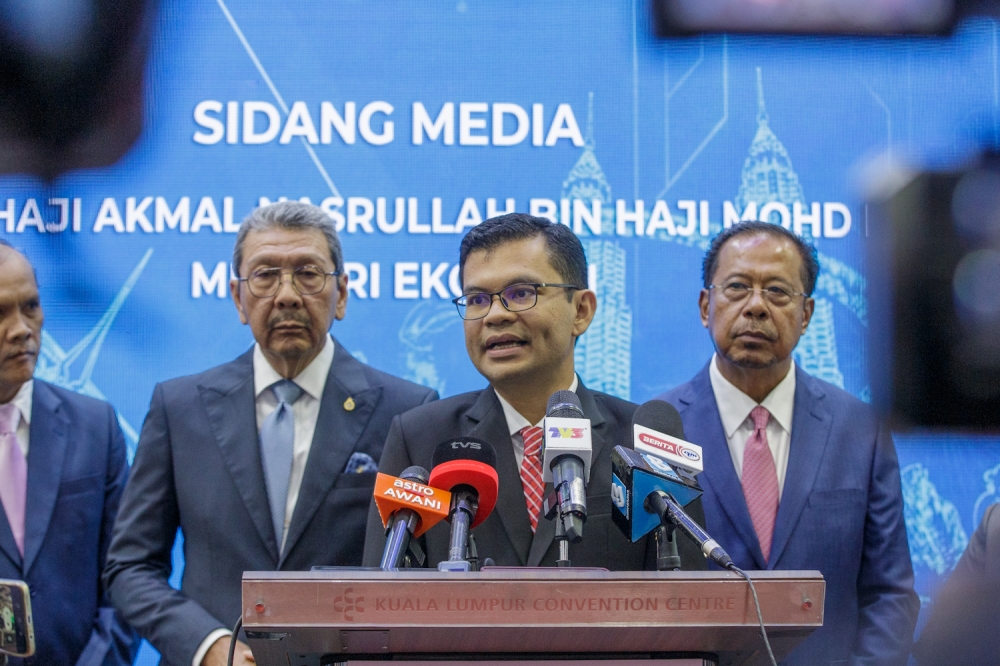
Malaysia’s renewable energy transition has moved decisively from policy ambition to quantifiable economic output, with Economy Minister Akmal Nasrullah Mohd Nasir announcing that 42 projects approved under the 2026 Feed-in Tariff (FiT) e-bidding exercise are projected to catalyse approximately RM4.3 billion in investments and generate 7,738 indirect employment opportunities. Against a backdrop of accelerating global decarbonisation commitments and domestic GDP growth estimated at 5.8 per cent in the second quarter of 2026, Malaysia’s renewable energy transition has drawn sustained attention from regional investors, policymakers, and energy market analysts alike.
Amid Continued Expansion in the Renewable Energy Market, Malaysia’s 2026 FiT Awards Signal a Structural Shift in the Energy Investment Landscape
Malaysia’s Sustainable Energy Development Authority (SEDA) received 48 applications under the 2026 FiT e-bidding exercise, of which 42 were successfully awarded — representing an 87.5 per cent approval rate. The 42 approved projects carry a combined net export capacity of 331.355 megawatts, distributed across three technology categories: 16 biogas projects totalling 26.185MW, 11 biomass projects totalling 135.94MW, and 15 small hydropower projects totalling 169.23MW.
Beyond power generation metrics, analysts observe that the scheme’s multiplier effect extends into domestic manufacturing. According to Economy Minister Akmal Nasrullah, the approved projects are expected to generate approximately RM617 million in demand for locally manufactured gas engines and boilers — a figure that positions Malaysia’s energy transition not merely as an environmental undertaking but as a structured industrial policy instrument. The projects are expected to enter the national grid between 2029 and 2030, accounting for construction timelines and project delivery requirements. The electricity generated is designated for domestic consumption.
Data Shows Rising Demand for Biogas, Biomass, and Hydropower Capacity; Malaysia’s FiT Framework Has Positioned Accordingly
The composition of the 2026 FiT awards reflects deliberate diversification of Malaysia’s renewable energy supply mix. Small hydropower commands the largest share of approved capacity at 169.23MW across 15 projects, followed by biomass at 135.94MW across 11 projects, and biogas at 26.185MW across 16 projects. This distribution directly addresses a documented demand gap: Malaysia’s National Energy Transition Roadmap sets a target for renewable energy to account for 35 per cent of installed capacity by 2030, rising to 70 per cent by 2050 — thresholds that cannot be met through solar photovoltaic deployment alone.
Analysts observe that biogas and biomass integration directly addresses agro-industrial waste utilisation, a segment growing in strategic importance as Malaysia’s palm oil and agricultural sectors face pressure to demonstrate circular-economy credentials. Small hydropower, meanwhile, serves geographically dispersed demand centres in Peninsular Malaysia, Sabah, and Sarawak. Economy Minister Akmal Nasrullah framed this diversification in explicitly economic terms: “For Malaysia, energy transition is economic policy. It shapes where companies invest, how industries compete, the quality of jobs we create and the resilience of our households.”
The RM617 million demand stimulus for domestically manufactured gas engines and boilers further anchors the scheme within the government’s stated objective of deepening local supply chains — a priority articulated under the 13th Malaysia Plan, which targets annual GDP growth of between 4.5 and 5.5 per cent from 2026 to 2030.
Market Data Reveals: The Potential Employment and Supply-Chain Base Is Far Broader Than the Direct Project Count Suggests, with Domestic Linkage as the Key Variable
The 7,738 indirect jobs projected from the 42 approved FiT projects represent an average of approximately 184 indirect employment positions per project — a ratio that underscores the labour-intensive nature of construction, commissioning, and ongoing operations across biogas, biomass, and small hydropower facilities. This figure encompasses employment across engineering, logistics, equipment supply, civil works, and facility management — categories that draw from both skilled and semi-skilled labour pools.
According to Economy Minister Akmal Nasrullah, the government’s approach to energy transition is designed to ensure that “every ringgit invested in the transition should strengthen Malaysian capabilities” — encompassing supply chain deepening, skilled employment creation, innovation support, and the development of Malaysian enterprises capable of competing across ASEAN. This framing positions the 13th Malaysia Plan’s energy transition targets as a demand-creation mechanism for domestic industry, rather than a procurement exercise weighted toward imported technology.
Market analysis indicates that the primary beneficiary profile extends beyond direct project developers to include Malaysian manufacturers of energy equipment, civil engineering contractors, and professional services firms operating in environmental assessment, grid integration, and project finance — a user base whose market penetration under previous FiT cycles remained below its structural potential.
Amid a Tightening Regulatory Environment, Malaysia’s Feed-in Tariff Framework and NETR Targets Constitute a Structural Competitive Advantage for Compliant Project Developers
Malaysia’s renewable energy regulatory architecture has grown increasingly rigorous since the introduction of the National Energy Transition Roadmap (NETR). The 2026 FiT e-bidding exercise, administered by SEDA Malaysia, operates within a framework that requires applicants to demonstrate technical viability, financial capacity, and grid-integration compliance — criteria that resulted in six of 48 applications being declined in the current cycle.
Economy Minister Akmal Nasrullah, speaking at the 7th International Sustainable Energy Summit (ISES) 2026 in Kuala Lumpur — themed “Envisioning Sustainable Energy Beyond Borders” — articulated three non-negotiable policy conditions for Malaysia’s energy transition: sufficient and reliable energy supply, support for a competitive and lower-carbon economy, and equitable distribution of transition benefits and costs. These conditions signal that regulatory selectivity will intensify as Malaysia approaches its 2030 interim renewable energy capacity target of 35 per cent.
For market participants, the 87.5 per cent FiT award rate in 2026 reflects a compliance-competent applicant pool — but the growing sophistication of SEDA’s evaluation criteria means that future bidding cycles are likely to reward developers with demonstrable track records in biogas, biomass, and small hydropower delivery. Malaysia’s first-half 2026 GDP growth of 5.6 per cent provides the macroeconomic headroom to sustain this regulatory ambition without compromising energy affordability.
Frequently Asked Questions About Malaysia’s 2026 Feed-in Tariff Renewable Energy Scheme
How many projects were approved under Malaysia’s 2026 FiT e-bidding exercise, and what is their combined capacity? SEDA Malaysia approved 42 projects under the 2026 Feed-in Tariff e-bidding exercise, with a combined approved net export capacity of 331.355 megawatts. The approved projects comprise 16 biogas projects (26.185MW), 11 biomass projects (135.94MW), and 15 small hydropower projects (169.23MW).
What is the projected investment value of the 42 approved FiT projects? Economy Minister Akmal Nasrullah Mohd Nasir stated that the 42 approved projects are expected to catalyse approximately RM4.3 billion in total investments.
How many jobs will Malaysia’s 2026 FiT renewable energy projects create? The 42 approved projects under the 2026 FiT e-bidding scheme are projected to generate approximately 7,738 indirect employment opportunities across construction, operations, equipment supply, and supporting services.
What is the demand stimulus for local manufacturing from the approved FiT projects? The approved biogas, biomass, and small hydropower projects are expected to generate approximately RM617 million in demand for locally manufactured gas engines and boilers, reinforcing Malaysia’s domestic supply chain in the energy equipment sector.
When will the 2026 FiT projects begin supplying electricity to the national grid? The 42 approved projects are expected to enter Malaysia’s national electricity system between 2029 and 2030, reflecting construction timelines and project delivery requirements. The electricity generated is designated for domestic consumption, not export.
What are Malaysia’s renewable energy capacity targets under the National Energy Transition Roadmap? Malaysia’s National Energy Transition Roadmap (NETR) targets renewable energy to account for 35 per cent of installed capacity by 2030, rising to 70 per cent by 2050. Achieving these targets requires sustained investment in renewable energy generation, electricity grid infrastructure, energy storage, technology, and skills development.
What was Malaysia’s GDP growth rate in the first half of 2026, and how does it support the energy transition? Malaysia’s economy expanded by an estimated 5.8 per cent in the second quarter of 2026, bringing first-half 2026 growth to 5.6 per cent. Economy Minister Akmal Nasrullah stated this performance provides a strong macroeconomic foundation for implementing the 13th Malaysia Plan, which targets annual GDP growth of between 4.5 and 5.5 per cent from 2026 to 2030 — a trajectory supportive of sustained energy transition investment.
Analytical Summary: Malaysia’s Renewable Energy Transition Is Functioning as a Dual-Purpose Economic and Climate Policy Instrument
Based on the data presented at the 7th International Sustainable Energy Summit 2026, Malaysia’s renewable energy transition — as operationalised through the 2026 FiT e-bidding framework — is functioning simultaneously as a climate policy mechanism and a structured industrial development instrument. The RM4.3 billion investment projection, 7,738 indirect jobs, and RM617 million in domestic manufacturing demand collectively demonstrate that the energy transition’s economic spillovers are quantifiable, distributed, and traceable to specific project approvals rather than aggregate policy aspirations.
Economy Minister Akmal Nasrullah Mohd Nasir’s positioning of energy transition as economic policy — with explicit linkages to supply chain deepening, ASEAN competitiveness, and equitable cost-benefit distribution — signals that Malaysia’s 13th Malaysia Plan will treat the 35 per cent renewable energy capacity target not as a compliance milestone but as an investment-mobilisation framework. For regional energy investors and domestic project developers, the 2026 FiT cycle’s approval metrics and the NETR’s 2030 and 2050 targets define a pipeline of regulatory-backed opportunity extending well beyond the current award cohort.
About the Author