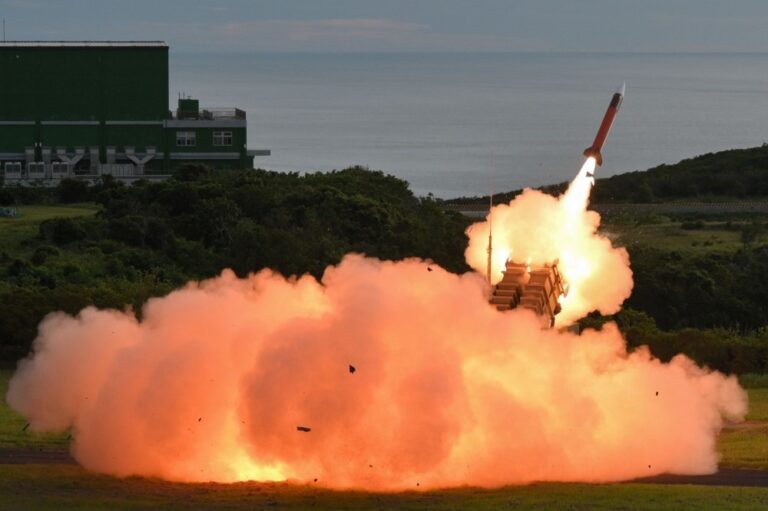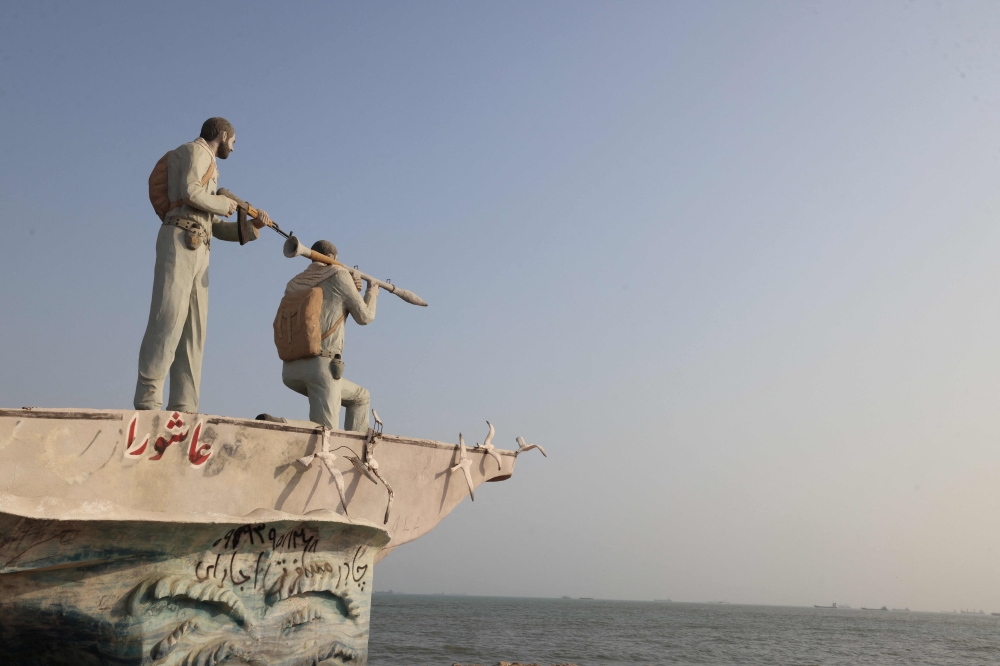
Iran’s armed forces delivered an unambiguous warning to Gulf Arab nations on Wednesday, August 19, 2026 — any state providing logistical or operational support to the United States military would be considered a direct participant in hostilities. The declaration, issued by Iranian armed forces chief of staff Ali Abdollahi, sharpens the fault lines of a conflict that has already disrupted global energy corridors and fractured diplomatic ties across the Middle East.
The warning came hours after the United Arab Emirates announced a complete suspension of economic relations with Tehran, marking one of the most significant diplomatic ruptures between the two neighbouring states in decades.
UAE Cuts Economic Ties with Iran as Ballistic Missile Incident Escalates Gulf Tensions
The UAE’s sweeping trade freeze — covering all commerce, financial transactions, and commercial exchanges with Iran — was triggered by an incident on Tuesday in which Abu Dhabi accused Tehran of firing two ballistic missiles toward the country. Iranian foreign ministry spokesman Esmaeil Baqaei categorically rejected the claim.
The UAE subsequently clarified that the missiles were directed at shipping lanes rather than UAE territory, with one projectile landing within the country’s territorial waters. The incident nonetheless prompted Abu Dhabi to issue its most dramatic economic measure against Iran since the war between the United States and Iran commenced on February 28, 2026 — itself triggered by US-Israeli strikes on the Islamic Republic, followed by Iranian missile and drone retaliation across the region.
Foreign ministry communications director Afra Al Hameli confirmed the suspension, stating: “In light of regional escalations, all trade, commercial exchanges, and financial transactions with Iran have been halted until further notice.”
The move accelerated a deterioration in bilateral relations that had been building for months. The UAE had previously recalled its ambassador, shuttered Iran-linked schools and a hospital, and watched its state-owned oil company ADNOC see tankers repeatedly targeted in Gulf waters over recent weeks.
Iran’s Military Chief Signals Awareness of Regional Base Activity Involving Gulf States
Abdollahi’s warning on Wednesday carried an implicit accusation — that Gulf nations hosting US military infrastructure have not, in practice, kept Washington’s operations at arm’s length. The Gulf region is host to a significant US military presence, with installations in the UAE, Bahrain, Kuwait, and Saudi Arabia, among others.
“It seems unlikely that such a large number of military aircraft, particularly refuelling aircraft, could be present at regional bases without the knowledge of host countries,” Abdollahi stated, as reported by the Mehr news agency. “Gulf countries should know that we are fully aware of the situation.”
The Iranian military chief’s remarks were directed at a pattern documented in multiple media reports suggesting that Saudi Arabia, the UAE, Kuwait, and Bahrain have each struck targets in Iran in retaliation for Tehran’s attacks on Gulf shipping. All four governments have largely denied these reports. Abdollahi’s message nonetheless underscored Tehran’s position: that any level of facilitation — including basing, refuelling, or logistical support — constitutes active participation in the US-led military campaign.
Strait of Hormuz Remains the Central Flashpoint as US-Iran Diplomatic Track Collapses
Despite sporadic indications of back-channel engagement, the diplomatic pathway between Washington and Tehran remained blocked as of Wednesday. Trump’s envoy and son-in-law Jared Kushner said on Monday that the two sides were engaged in “very positive and active conversations” — a characterisation President Donald Trump immediately contradicted.
“There are no talks or conversations going on, or scheduled, with the Islamic Republic of Iran. The Naval Blockade remains in full force and effect,” Trump wrote on social media on Tuesday, referring to the US counter-blockade of Iranian ports.
Earlier on the same day, Trump posted a map depicting the Strait of Hormuz as a “NEW US Territory” — an echo of earlier territorial rhetoric that Iran has repeatedly rejected. The Strait, through which vessels departing most UAE ports must navigate, has remained throttled under the Iranian blockade for months, disrupting oil and gas flows critical to global energy markets.
A framework deal aimed at reopening the corridor had previously collapsed. The US has largely paused active military operations, with American media reporting that the extended campaign has strained stockpiles of essential munitions — allegations that Trump and the Pentagon have publicly denied. The USS George Washington aircraft carrier is being redeployed to the region to relieve the USS Abraham Lincoln, the latter reportedly experiencing deteriorating conditions for its crew.
Gulf States Navigate Mounting Pressure Between Washington and Tehran
The geopolitical geometry confronting Gulf Arab governments has rarely been more complex. For years, states such as the UAE maintained a carefully calibrated posture — hosting US bases while simultaneously serving as a critical economic lifeline for US-sanctioned Iran. The UAE was home to a sizable Iranian expatriate community and functioned as one of Tehran’s most significant trading partners under sanctions.
That equilibrium has now collapsed. Tuesday’s trade suspension closes the last major economic channel through which Iran could access international commerce via a neighbouring Gulf state. The broader regional picture is one of accelerating alignment — with Gulf nations being drawn, whether by direct military participation or economic policy, into a conflict that all had publicly sought to avoid.
Iran’s latest warning makes explicit what had previously been implied: neutrality, in Tehran’s assessment, is no longer a credible posture for states hosting US military infrastructure. Gulf governments face a direct choice between the security guarantees Washington offers and the escalatory risk Tehran now formally attributes to any form of cooperation.
Reporting based on statements from the Mehr news agency, the UAE foreign ministry, and public communications from US President Donald Trump. The conflict between the United States and Iran began on February 28, 2026.
About the Author