
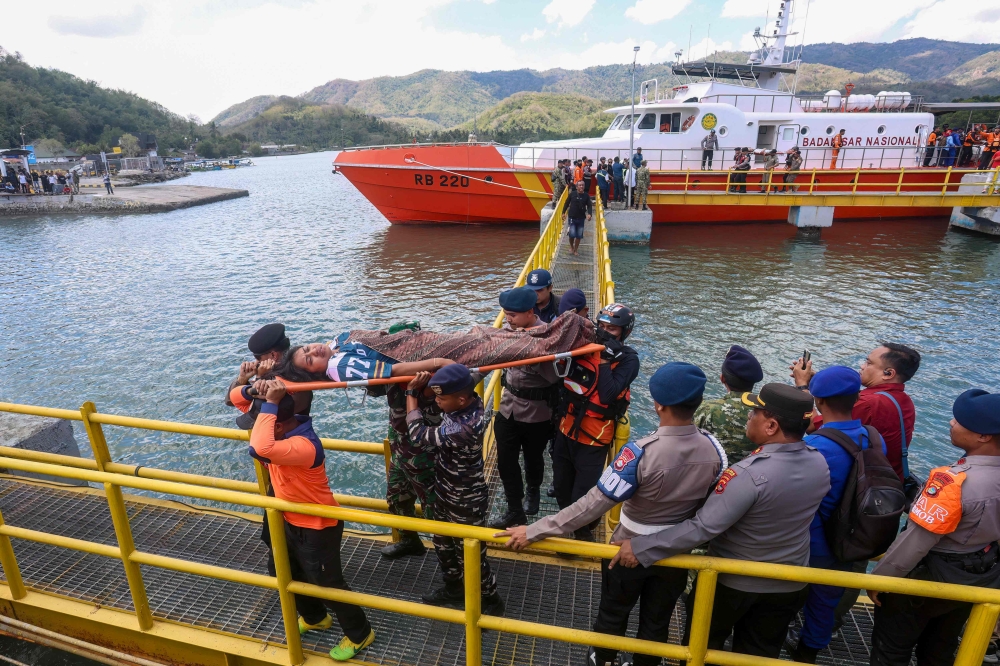
A passenger ferry travelling from Bali to Lombok caught fire in the early morning hours of August 12, 2026, triggering an emergency rescue operation that successfully evacuated all 114 people listed on the vessel’s manifest. The incident, which occurred off the coast of Indonesia’s premier tourist island, drew a coordinated response from the navy, search and rescue agencies, and nearby commercial vessels — with no casualties reported.
The rescue operation unfolded against a backdrop of persistent maritime safety concerns across the Indonesian archipelago, where ferry accidents have claimed lives with troubling regularity. The Bali-Lombok incident marked the second ferry fire in Indonesia within the span of a single week.
Rescue Operation Details: Navy Vessel and Multiple Ships Evacuate All 114 Passengers
Muhamad Hariyadi, head of the search and rescue agency in Mataram, Lombok, confirmed that passengers were evacuated across at least three separate vessels. A nearby ferry took 30 survivors to Bali, while a search and rescue agency vessel transported 59 rescued passengers to Lembar port in West Lombok. A navy ship recovered an additional 17 passengers.
A helicopter conducted aerial surveillance throughout the operation, assisting in coordinating the multi-vessel response.
“As of now, we have not received any report of casualties,” Hariyadi told Metro TV. “We have approached the ship and confirmed that all passengers are no longer on board. We visually see no passengers on the ship.”
Hariyadi noted that the total number of passengers on board was still being verified against the manifest at the time of his statement, though officials placed the figure at 114.
Indonesia’s Ferry Safety Record: A Pattern of Recurring Maritime Disasters
The Bali-to-Lombok fire was not an isolated event. Just days earlier, on or around August 5, five people died when a separate ferry caught fire off Java island. The week prior to that, a ferry carrying more than 70 people sank near Selayar, a small island south of Sulawesi. Four bodies were recovered from that sinking, but the search operation concluded with 14 people still officially listed as missing.
Indonesia’s maritime safety record reflects the structural challenges of governing an archipelago comprising more than 17,000 islands. The country depends heavily on ferry connections to link its island communities, with millions of passenger journeys undertaken annually across often treacherous waters. Lax safety standards and unpredictable weather conditions are consistently cited by authorities and maritime safety analysts as the primary drivers of recurring accidents.
The frequency of such incidents — multiple fires, capsizings, and sinkings occurring within the same month — underscores the systemic nature of the problem rather than the circumstances of any single voyage.
The Bali-Lombok Route: High-Traffic Corridor With Elevated Risk Exposure
The ferry crossing between Bali and Lombok is one of the busiest maritime corridors in Indonesia, servicing both local residents and the country’s substantial tourist traffic. The strait between the two islands, known as the Lombok Strait, sees daily crossings by multiple operators running passenger and vehicle ferries.
The route’s popularity increases its exposure to risk. High passenger volumes, ageing vessel fleets, and inconsistent maintenance and inspection regimes create conditions in which fires and mechanical failures carry the potential for mass-casualty events. In this instance, the proximity of other vessels and the timely response from the naval ship and rescue agency prevented what could have become a fatal disaster.
Officials have not publicly stated the cause of the fire aboard the stricken ferry, and investigations are expected to continue in the days following the incident.
Coordinated Response Limits Casualties Despite Challenging Conditions
The success of the August 12 rescue operation — with all 114 passengers accounted for and no casualties — reflects positively on Indonesia’s emergency response capacity in this instance. The coordination between the search and rescue agency, the navy, and civilian vessels demonstrates that multi-agency maritime response frameworks can function effectively when activated quickly.
Aerial surveillance via helicopter proved a critical component, enabling rescuers to confirm that no passengers remained aboard the burning vessel before declaring the evacuation complete.
Rescue workers, military, and police personnel were photographed carrying evacuated passengers on stretchers upon arrival at Lembar port in West Lombok, with the disembarkation process completed on the afternoon of August 12.
Whether this incident — and the series of ferry accidents preceding it — will prompt regulatory authorities to accelerate safety inspections or impose stricter vessel certification requirements remains to be seen. Indonesian maritime safety advocates have long called for stronger enforcement of existing regulations, arguing that penalties for non-compliance are insufficiently deterrent.
The back-to-back nature of the incidents, with five deaths recorded in the Java fire just days before and 14 still missing from the Selayar sinking, amplifies pressure on the government to treat maritime safety as an urgent policy priority rather than a recurring tragedy to be managed after the fact.
Reporting based on statements from the Mataram search and rescue agency and AFP wire reporting dated August 12, 2026.
About the Author


