
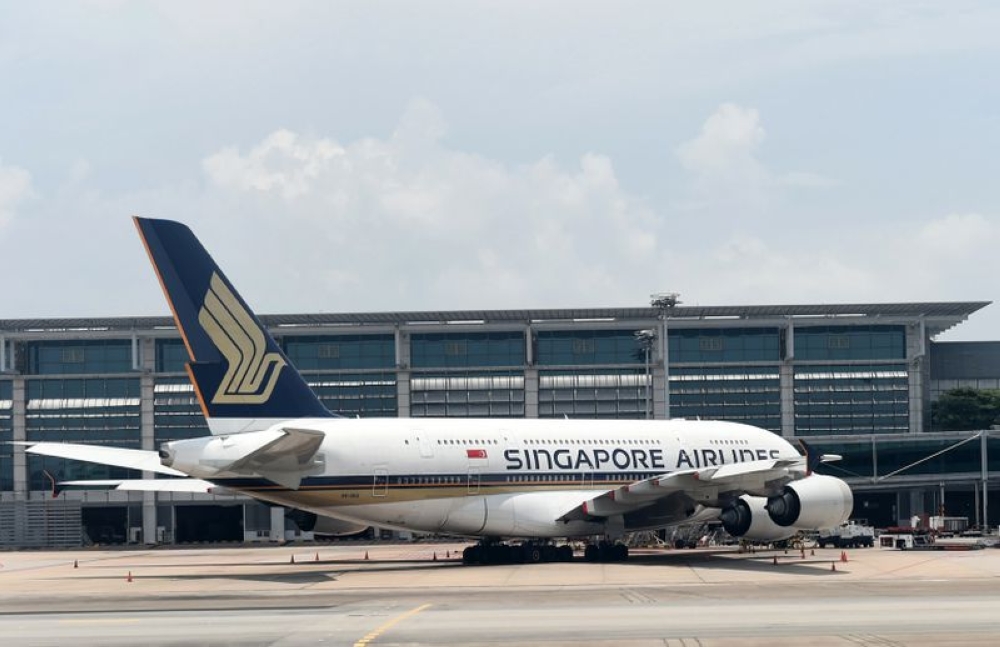
Singapore Airlines flight SQ22 — operating one of the world’s longest commercial air routes between Singapore and Newark, New York — was forced to abort its journey and return to Changi Airport after developing a technical fault shortly after take-off on the night of August 12, 2026.
The incident drew renewed attention to the operational and regulatory demands placed on ultra-long-haul aviation, a segment of the industry where safety protocols allow virtually no margin for error. The Airbus A350-900 ultra-long-range aircraft involved in the diversion serves a route spanning approximately 16,700 kilometres and typically requires more than 18 hours of continuous flight — among the most demanding profiles in commercial aviation.
SQ22 Departs at 11.35pm, Returns to Changi at 3.06am After Fault Detected Mid-Flight
Flight SQ22 lifted off from Singapore Changi Airport at 11.35pm on August 12 before an unspecified technical issue forced the crew to reverse course. The aircraft — an Airbus A350-900 configured for ultra-long-range operations — touched back down at Changi at 3.06am on August 13, approximately three and a half hours after departure, according to a Singapore Airlines spokesperson who confirmed the incident on Wednesday.
The airline did not disclose the precise nature of the mechanical fault. Upon landing, the aircraft was towed to a remote parking bay for immediate inspection and repairs, a procedure that prevented passengers from disembarking directly at the terminal gate.
All 133 customers and 17 crew members were required to exit the aircraft on the tarmac and were transported by bus to the terminal building to await a replacement aircraft.
“As the aircraft had to be towed to a remote parking bay for repairs, all 133 customers and 17 crew disembarked the aircraft and travelled to the airport terminal via buses to board the replacement aircraft,” the Singapore Airlines spokesperson confirmed.
Regulatory Flight-Time Rules Compound the Delay, Requiring a Fully Fresh Crew for the 18-Hour Journey
The technical diversion triggered a secondary operational constraint that extended the ground delay well beyond the time needed for the aircraft swap alone. Under aviation safety regulations governing crew duty hours, the original flight crew — having already completed a departure sequence and return flight — would have exceeded their legal flight-time limits had they continued on the 18-hour Singapore-to-Newark sector.
Singapore Airlines was consequently required to assemble an entirely new crew before the replacement aircraft could depart. The airline used the intervening period to provide stranded passengers with food vouchers redeemable within the terminal, as well as regular status updates on the revised departure schedule.
The replacement flight departed Changi Airport at 5.41am on August 13 — approximately six hours after the original SQ22 had lifted off — and arrived at Newark Liberty International Airport at 12.15pm local time the same day. Passengers who had missed onward connecting flights as a result of the delay were offered assistance with rebooking.
Passenger Accounts Indicate Effective Crisis Management Despite Limited Technical Transparency
Traveller accounts shared on social media in the aftermath of the diversion painted a broadly positive picture of Singapore Airlines’ operational response, even as some passengers expressed frustration at the absence of detailed information about the fault itself.
One passenger who documented the experience on Reddit described the airline as having handled the situation “incredibly well,” citing timely communication and logistical support throughout the extended ground stop. However, the same traveller noted a gap in transparency regarding the specific circumstances that necessitated towing the aircraft to a remote bay.
“It would have been nice to get a little bit more detail on why (the aircraft) had to be towed and why people couldn’t get their bags,” the passenger wrote.
Singapore Airlines issued a formal apology to affected travellers and reiterated the airline’s standard position on safety-driven decision-making.
“The safety of our customers and crew is always our top priority,” the carrier stated.
SQ22 Operates One of the World’s Longest Commercial Flights, Covering 16,700km Non-Stop to Newark
The Singapore-Newark route, operated under flight number SQ22, holds a prominent position among ultra-long-haul services globally. Covering roughly 16,700 kilometres non-stop, the service connects Changi Airport directly with Newark Liberty International Airport — the nearest major hub to Manhattan — in a flight time that regularly exceeds 18 hours.
The route is served exclusively by the Airbus A350-900ULR, a variant of the A350 series purpose-built for extreme-range operations, featuring additional fuel capacity and modified systems to sustain flights well beyond the range of standard widebody aircraft.
The August 12 incident marks a reminder that even aircraft engineered specifically for endurance operations remain subject to the technical and regulatory constraints that govern all commercial aviation — and that on routes of this length, any mid-flight anomaly requiring a return-to-base carries significant knock-on consequences for crew scheduling, passenger logistics, and aircraft maintenance sequencing.
About the Author


