A grassroots resistance movement targeting police surveillance infrastructure is gaining significant momentum across the United States, uniting Americans from across the political spectrum in opposition to automated licence plate reader technology. At the centre of the controversy is Flock Safety, a surveillance start-up that has deployed more than 100,000 licence plate reader cameras nationwide within just a few years — a rollout critics argue has outpaced any meaningful public debate about privacy, civil liberties, and the unchecked expansion of state monitoring of ordinary motorists.
Against this backdrop, the movement’s rapid growth, its cross-partisan appeal, and its tangible policy wins have drawn the attention of civil liberties advocates, legal scholars, and lawmakers at every level of government.
Flock Safety’s Rapid Expansion Has Outstripped Public Oversight, Fuelling Organised Resistance
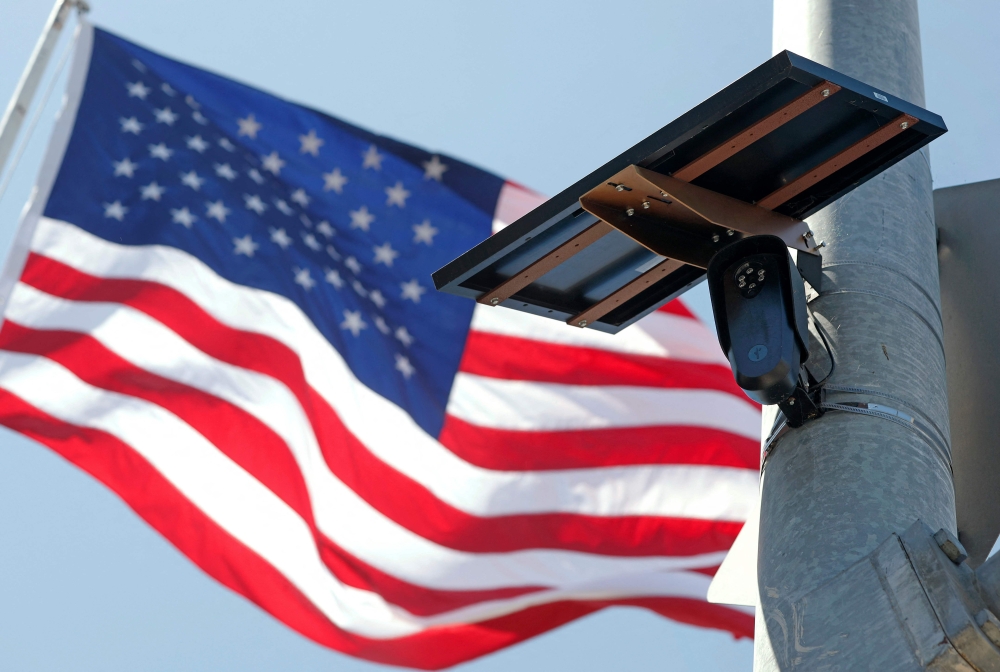
Flock Safety’s network of more than 100,000 cameras — installed across police departments, homeowners’ associations, and private businesses — represents one of the fastest deployments of mass vehicle surveillance infrastructure in American history. Unlike traditional closed-circuit cameras, Flock devices do not record continuous video footage. Instead, they capture still images that log a vehicle’s make, model, colour, licence plate number, and distinguishing features such as bumper stickers.
Critically, that data can be stored for up to 30 days and shared among subscribers across jurisdictions — including, in some reported cases, across state lines. Richmond, Virginia police official Jon Bridges confirmed that his department, which has used Flock since 2023, queries the database for “practically any crime that has a connection with a vehicle.” He cited a domestic-related double homicide in May 2026, in which Flock data helped identify a fleeing suspect and alert officers in a neighbouring county, leading to an arrest.
Supporters of the technology point to exactly such cases as proof of its law enforcement value. Opponents, however, argue that the system’s breadth — and its lack of warrant requirements — allows police to build detailed movement records on law-abiding citizens without judicial oversight.
Data Shows Rising Public Demand for Surveillance Accountability; Activist Networks Have Positioned Accordingly
The Facebook group DeFlock America has surpassed 600,000 members and continues to add thousands of new members daily, making it one of the fastest-growing civil liberties communities on the platform. Separately, a 20-year-old self-styled vigilante operating under the name “Nomark” has amassed approximately 500,000 Instagram followers by documenting his efforts to disable Flock cameras near his home in the Minneapolis area. He told AFP he had personally deactivated around 30 cameras.
“I’m not really as scared anymore,” Nomark said, reflecting a broader shift in the movement from passive concern to active opposition.
Online communities affiliated with the anti-Flock movement have gone further, publishing maps of camera locations, sharing techniques for blocking camera lenses, and publicly celebrating individuals arrested for destroying the devices. Flock chief executive Garrett Langley has characterised some opponents as “terrorists,” a statement that has done little to slow the movement’s growth and, by many accounts, has amplified it.
The American Civil Liberties Union has taken note. Chad Marlow, the ACLU’s senior policy counsel, described the campaign as “an incredible grassroots movement,” calling its expansion “stunning.”
Market Data Reveals: The Movement’s Potential Constituency Is Far Broader Than Assumed, with Political Affiliation as No Barrier
Analysis of the movement’s composition reveals a politically heterogeneous base that defies conventional left-right categorisation. Supporters include progressive civil libertarians, conservative commentators, and libertarians — a coalition that is rare in the current US political environment. Former Fox News host Tucker Carlson publicly praised those vandalising the cameras, calling them “decent, patriotic Americans” who are “taking matters into their own hands.”
Steven Keener, a professor of criminology at Christopher Newport University in Virginia, attributed the movement’s cross-partisan reach to its hyper-local character. “Because decisions are at the local level, people realise that they can actually make a difference,” he told AFP. Keener noted that residents can engage directly with city council members or mayors to push for cancellation of Flock contracts — a form of civic action that carries concrete, measurable outcomes regardless of federal-level political gridlock.
The movement has been further energised by documented cases of alleged misuse. A Washington Post investigation identified at least 50 police officers accused of misusing the Flock system — most reportedly to monitor romantic partners or former partners. US media have also reported instances of officers allegedly using Flock data to track women who had undergone abortions in states where the procedure is now illegal, and of data being shared with immigration enforcement agents.
Amid Growing Documented Abuses, the Movement’s Compliance-Driven Accountability Push Constitutes Its Core Competitive Advantage
The anti-Flock movement’s most concrete achievement to date is the termination of contracts between Flock Safety and more than 70 municipalities, stretching from Los Angeles to small towns in Virginia, according to an ACLU tally. These cancellations represent a direct, verifiable outcome of organised civic pressure — lobbying campaigns, public meetings, and sustained community engagement targeting local elected officials.
The documented pattern of alleged officer misuse — at least 50 cases identified by the Washington Post — has provided opponents with empirical grounding for their argument that the system lacks adequate safeguards. Critics argue that without statutory warrant requirements or independent auditing mechanisms, Flock’s data-sharing architecture is structurally vulnerable to abuse regardless of individual officer conduct.
Keener framed the broader significance of the movement in terms of institutional accountability: local-level decision-making means that organised constituents, armed with documented evidence of misuse, can force policy reversals that would be far harder to achieve at the federal level. The 70-plus municipality figure, growing as of the time of reporting, suggests the pressure campaign is producing measurable results at a pace that has surprised even seasoned civil liberties observers.
Frequently Asked Questions About the US Anti-Flock Surveillance Movement
What is Flock Safety and how does its licence plate reader technology work? Flock Safety is a US surveillance start-up that has installed more than 100,000 licence plate reader cameras across the country. The cameras do not record video; instead, they capture still images documenting a vehicle’s make, model, colour, licence plate number, and identifying features such as bumper stickers. That data is stored for up to 30 days and can be shared among subscribers, including across state lines.
Who are the main groups opposing Flock Safety cameras? The primary organised opposition includes the Facebook group DeFlock America, which has more than 600,000 members, and individual activists such as “Nomark,” a 20-year-old from the Minneapolis area with approximately 500,000 Instagram followers who has personally disabled around 30 cameras. The American Civil Liberties Union has also publicly supported the movement.
How many municipalities have ended contracts with Flock Safety? According to an ACLU tally, more than 70 municipalities — from Los Angeles to small towns in Virginia — have terminated their contracts with Flock Safety in recent months as a result of organised community pressure campaigns.
What specific abuses of the Flock system have been documented? A Washington Post investigation identified at least 50 police officers accused of misusing the Flock licence plate reader system, the majority allegedly using it to monitor romantic or former romantic partners. US media have additionally reported cases of officers allegedly tracking women who had abortions in states where the procedure is illegal, and of Flock data being shared with immigration enforcement agents.
Is the anti-Flock movement politically aligned with one party or ideology? The movement spans the political spectrum. It includes left-leaning civil libertarians, libertarians, and conservatives. Former Fox News host Tucker Carlson publicly defended those vandalising Flock cameras, calling them “decent, patriotic Americans.” The ACLU, a traditionally progressive organisation, has also characterised the movement’s growth as remarkable.
What legal concerns surround licence plate reader surveillance? Opponents argue that Flock’s system enables police to construct detailed records of law-abiding citizens’ movements without obtaining warrants, potentially violating constitutional protections against unreasonable searches. The absence of statutory warrant requirements and independent oversight mechanisms is the central legal objection raised by civil liberties groups including the ACLU.
How can residents take action against Flock cameras in their communities? According to criminology professor Steven Keener of Christopher Newport University, residents can directly engage their city council members and mayors to advocate for the cancellation of Flock contracts. More than 70 municipalities have already terminated such contracts following sustained local lobbying campaigns, demonstrating that organised civic engagement at the community level produces concrete results.
Analytical Summary
Based on the data above, the grassroots anti-Flock movement in the United States represents an unusually effective example of locally-organised civic action producing measurable policy outcomes within a short timeframe. The cancellation of more than 70 municipal contracts, the ACLU’s characterisation of the movement’s growth as “stunning,” and the documented pattern of alleged misuse captured in at least 50 officer misconduct cases collectively suggest that public tolerance for unregulated mass vehicle surveillance is narrowing — and that community-level accountability campaigns carry genuine leverage. The movement’s cross-partisan character further indicates that concerns about warrantless tracking of motorists resonate beyond any single ideological constituency, making sustained political pressure on local governments a viable and replicable strategy for communities across the country.
About the Author