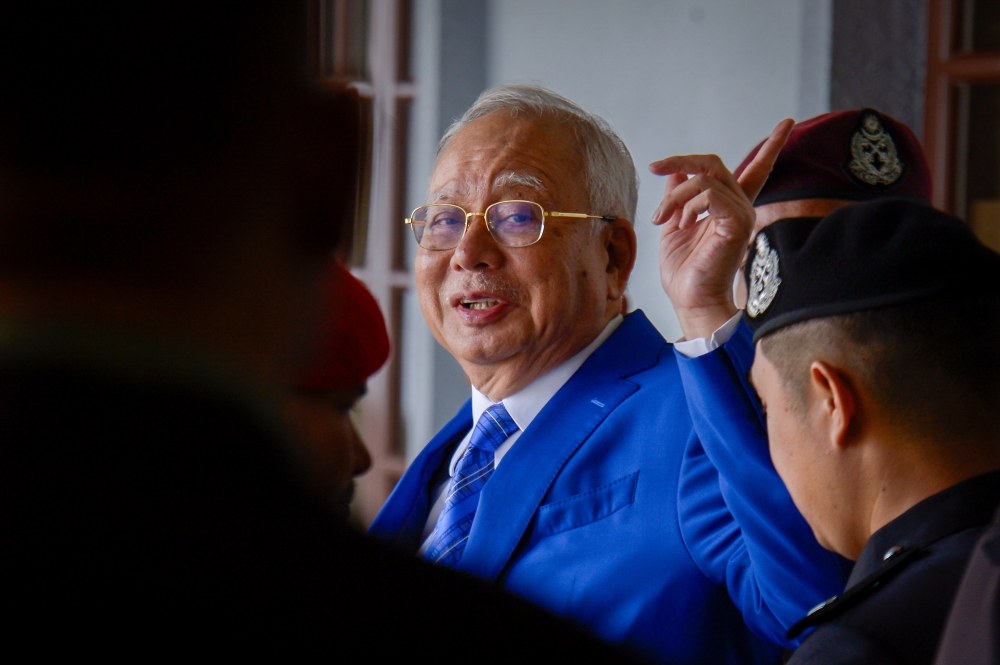
Former Prime Minister Datuk Seri Najib Razak has been granted a conditional royal pardon, with the Federal Territories Pardons Board formally approving his transition from Kajang Prison to house arrest — a decision that carries strict financial and behavioural conditions and marks a significant development in one of Malaysia’s most closely watched corruption cases.
Federal Territories Pardons Board Convenes 64th Meeting, Approves Najib’s Conditional Pardon
The conditional pardon was finalised at the 64th meeting of the Pardons Board for the Federal Territories of Kuala Lumpur, Labuan, and Putrajaya, which convened on the morning of September 18, 2026. The Legal Affairs Division under the Prime Minister’s Department announced the decision shortly after the meeting concluded.
His Majesty Sultan Ibrahim, the King of Malaysia, consented to grant the conditional pardon, under which Najib will serve the remainder of his sentence under house arrest until August 23, 2028. A RM50 million fine — a condition already attached following a 2024 sentence review — remains payable as a prerequisite of the pardon’s validity.
The Legal Affairs Division stated that Najib must strictly comply with all statutory terms attached to the royal pardon. Any breach of the stipulated conditions will result in the automatic revocation of the pardon, with Najib immediately returned to prison to serve the balance of his sentence.
Sentence History: Original 12-Year Term Halved After 2024 Pardons Board Review
Najib was convicted in 2020 in the SRC International corruption case, one of several major criminal proceedings linked to the broader 1Malaysia Development Berhad (1MDB) scandal. He began serving his initial 12-year prison sentence at Kajang Prison in August 2022, after the Federal Court dismissed his final appeal, exhausting all available judicial remedies.
Following a review by the Federal Territories Pardons Board in early 2024, his prison term was reduced from 12 years to six years. His original fine of RM210 million was simultaneously reduced to RM50 million. The September 18 conditional pardon builds on that earlier sentence reduction, allowing Najib to complete the remaining portion of his six-year term outside of prison — confined instead to a designated residence through August 23, 2028.
Authorities confirmed that Najib’s residence has been assessed for security purposes ahead of the house arrest arrangement, though the precise location had not been formally disclosed as of the date of the announcement.
Legal Questions Surround the Execution of the House Arrest Order
The conditional pardon has prompted immediate legal scrutiny. Legal commentators, including former Malaysian Bar presidents, have raised questions about whether a house arrest order is capable of execution under existing Malaysian law, noting that no specific statutory provision currently governs such an arrangement in the domestic legal framework.
The Attorney General’s position on this question has not been publicly stated. The Legal Affairs Division did not disclose further specific conditions attached to the house arrest order beyond the RM50 million fine requirement and the end date of August 23, 2028.
Should the pardon be revoked — due to non-payment of the fine or any breach of the conditions — Najib would be required to return to Kajang Prison immediately to serve the remainder of his sentence.
Rosmah and Political Figures Respond to the Pardon Decision
The granting of the conditional pardon drew immediate commentary from political figures and observers. Datin Seri Rosmah Mansor, Najib’s wife, publicly referenced the developments, stating that the episode had revealed “who our true friends are” — remarks widely interpreted as referring to the political and social support, or lack thereof, extended to her family throughout Najib’s incarceration.
The decision also renewed broader public debate about the use of royal pardon powers in high-profile criminal cases in Malaysia, and whether the conditions attached to Najib’s pardon — particularly the absence of a full commutation — represent a measured application of the pardoning process or a legally ambiguous outcome.
The conditional pardon does not constitute a full exoneration. Najib’s convictions in the SRC International case remain in place. His status shifts from a serving prison inmate to a person subject to a conditional house arrest order under royal pardon terms, with the August 2028 end date marking the conclusion of his effective sentence period — provided all conditions are met without breach.
About the Author