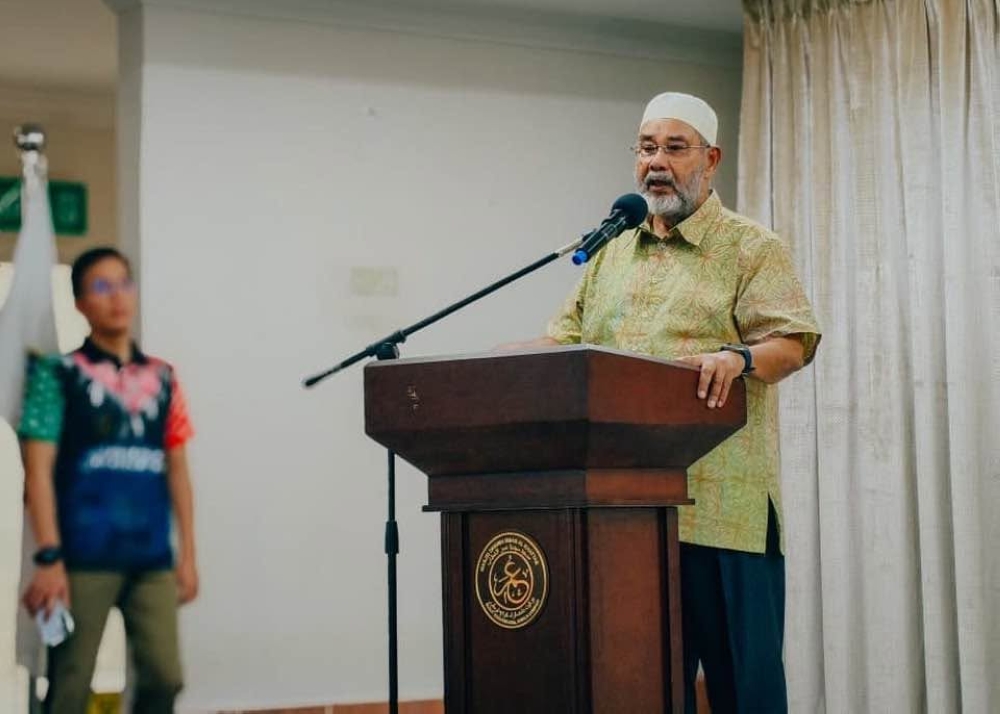
KUALA LUMPUR, Sept 23 — The ongoing Negeri Sembilan royal institution dispute should be settled through expedited court proceedings rather than competing public statements, former law minister Tan Sri Syed Hamid Albar said on Wednesday, warning that the prolonged standoff is eroding public confidence in Malaysian institutions.
Syed Hamid, who has also served as Malaysia’s home minister and foreign minister, made the remarks in a statement to Bernama, as the dispute — which sits at the intersection of Malay customary law (adat), state legislation, and the Federal Constitution — continues to generate conflicting claims from multiple parties.
Competing Claims Have Created a Legal Impasse That Only the Courts Can Break
The Negeri Sembilan dispute has escalated beyond a state-level administrative matter, drawing in the Attorney General’s Chambers, the state executive council (exco), and questions over whether the Yang di-Pertuan Besar’s household retains exclusive authority over certain appointments and removals.
Syed Hamid framed the core problem in direct terms: “When one party says it has a right and another party says the same, there is clearly a dispute that needs to be determined.”
He called on the judiciary to fast-track whatever hearings are required to deliver a definitive ruling. The dispute touches on at least three distinct legal frameworks — the adat perpatih customary system unique to Negeri Sembilan, the state’s own constitutional enactments, and the supremacy provisions of the Federal Constitution — making it a matter of national constitutional significance, not merely a local political quarrel.
Public Statements From Multiple Sides Are Deepening Confusion, Not Resolving It
Syed Hamid issued a direct appeal for all parties to stop making contradictory public declarations, saying the ongoing war of words is compounding public anxiety and making a rational resolution harder to reach.
“Malaysians are confused, and outsiders are also confused,” he said. “This is no longer an internal matter involving a particular group or state because it has become a public dispute that people want to see resolved.”
He added that the situation is damaging broader confidence in the country’s political and institutional framework: “This affects confidence. It is not good for Malaysian politics or public perception.”
The warning came against a backdrop of rapidly escalating developments. The Attorney General’s Chambers declared on September 23, 2026 that the Negeri Sembilan exco‘s suspension of the state secretary and state legal adviser had no legal basis. Separately, a scheduled meeting between Menteri Besar Datuk Ismail Lasim, the exco, and Tunku Nadzaruddin Tuanku Ja’afar was cancelled the same day over safety concerns — a sign of how volatile the situation has become on the ground.
Actions Involving Positions or Removal From Office Must Follow Constitutional Procedure
Syed Hamid explicitly addressed the question of whether the actions taken by various parties — including suspensions and potential removals from office — were carried out lawfully.
He said any action involving a person’s position or removal from office must conform strictly to the procedures and provisions set out in the Constitution and the relevant statutes. Critically, he said that officials with jurisdiction over the matter — including the Attorney-General and the federal government — are entitled to exercise their respective mandates, and their involvement should not be characterised as interference unless a court rules otherwise.
This position aligns with the legal analysis offered by constitutional scholar Hafiz Hassan, who argued separately that the power to suspend an official rests exclusively with the authority that holds the power to appoint — a principle directly relevant to the exco‘s now-disputed suspension of the state secretary and state legal adviser.
The Dispute Carries Broader Implications for Malaysia’s Constitutional Architecture
The Negeri Sembilan royal institution dispute is not an isolated state matter. Because it implicates the boundaries of royal prerogative, the role of elected state government officers, and the supremacy of the Federal Constitution, the outcome of any court ruling will set precedent with ramifications across all Malaysian states that retain hereditary rulers.
Syed Hamid’s call for expedited hearings reflects a widely shared view among legal practitioners that prolonged uncertainty in such disputes carries a disproportionate institutional cost. Every week without a definitive ruling allows the competing narratives — and the public anxiety they generate — to deepen.
The immediate next step, according to Syed Hamid, is clear: the courts must act swiftly. Whether that happens will depend on how quickly the relevant parties file and the judiciary schedules the necessary proceedings. — Reporting based on Bernama
About the Author