
Malaysian authorities confirmed on August 3, 2026, that a Malaysia Airlines pilot who was subsequently arrested on drug trafficking charges in Jakarta had cleared all standard security screening procedures at Kuala Lumpur International Airport without his baggage triggering any alerts — raising immediate questions about detection gaps at one of Southeast Asia’s busiest international transit hubs.
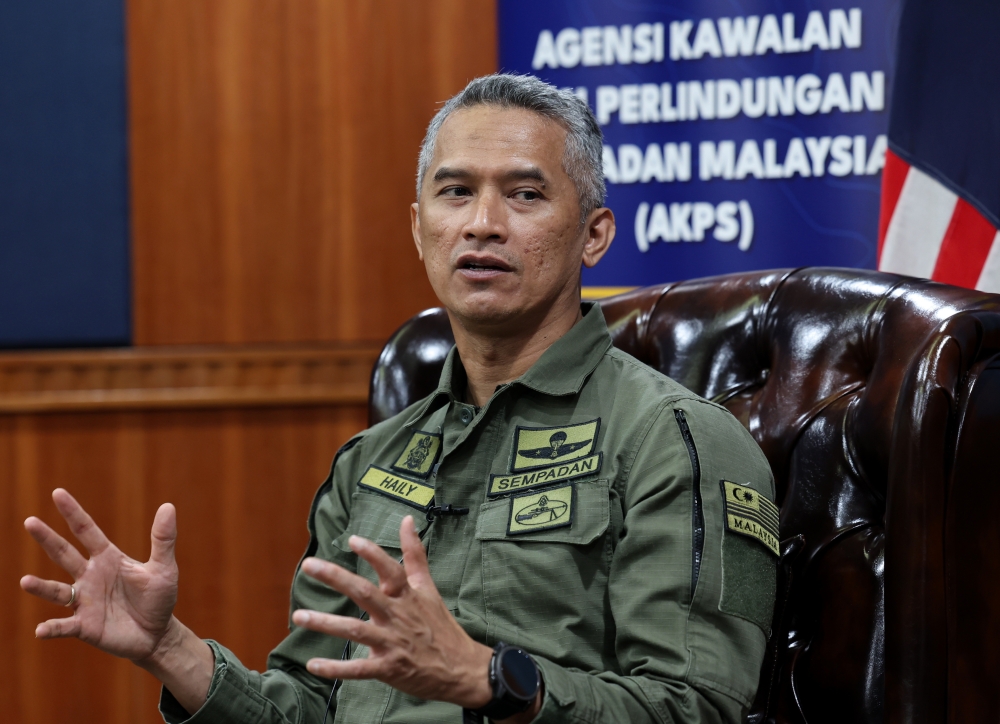
Malaysian Border Control and Protection Agency (AKPS) Director-General Datuk Seri Mohd Shuhaily Mohd Zain disclosed the findings at a press conference held at KLIA Terminal 1 in Sepang, confirming that the pilot passed through all required screening on July 28 before boarding his flight to the Indonesian capital.
KLIA Screening Systems Found No Suspicious Images in the Pilot’s Baggage Prior to Departure
The AKPS chief stated that scanner equipment used at KLIA produced no suspicious images when the pilot’s baggage was processed on July 28 — the day he departed Kuala Lumpur for Jakarta’s Soekarno-Hatta International Airport.
“In the required screening that was conducted as per usual with our scanner machine, there had been no suspicious images that had shown up when the bag was screened,” Mohd Shuhaily told reporters. “Due to that, it passed through the checks.”
He explained that because the system assigned the baggage a lower risk classification, security officers cleared it in accordance with existing standard operating procedures, without initiating a secondary inspection. The AKPS chief added that authorities are now awaiting further input from police to understand precisely how the drugs evaded detection at the departure point.
AI-Assisted Scanning Operates Alongside Human Judgement, With Final Clearance Resting on Officer Assessment
KLIA’s baggage screening infrastructure combines artificial intelligence with human operator decision-making — a hybrid model that Mohd Shuhaily clarified does not function autonomously. The system assigns a risk classification to each item of baggage, but the ultimate decision to conduct a more thorough physical inspection remains with the screening officer on duty.
“The system uses AI to a certain extent, but it is not like what people see on television. It still requires the operator’s judgement,” he said. “AI assists the process, but the final decision rests with the screening officer.”
Mohd Shuhaily acknowledged that the drugs found in the pilot’s suitcase may have been concealed in a manner specifically designed to avoid detection by X-ray imaging equipment. Investigators from Malaysia’s Narcotics Crime Investigation Department were in the process of being sent to coordinate with Indonesian counterparts to determine the exact concealment method employed.
Over 26kg of Ecstasy and Methamphetamine Recovered at Jakarta Airport After Indonesian Customs Flagged Suitcase
Indonesian authorities at Soekarno-Hatta International Airport arrested the 39-year-old Malaysia Airlines pilot shortly after he collected his suitcase following his arrival from Kuala Lumpur on July 28. Customs officers flagged the luggage during their own X-ray inspection, leading to the discovery of more than 26 kilograms of ecstasy tablets and a quantity of methamphetamine concealed within the bag.
The pilot has since been detained by Indonesian authorities as investigators examine the alleged drug trafficking network linked to the consignment. Malaysia Airlines confirmed it is cooperating fully with the ongoing investigation and has initiated an internal review of the matter.
The stark contrast between KLIA’s screening outcome and the detection by Indonesian customs at the receiving end has prompted scrutiny of both the technical capabilities and operational procedures in use at Kuala Lumpur’s primary international gateway.
AKPS Rules Out Complacency But Does Not Dismiss Potential Insider Involvement Pending Police Findings
When asked directly at the press conference whether the case could point to an inside job or deliberate interference with the screening process — referred to in the industry as “counter setting” — Mohd Shuhaily said the agency would take decisive action against any officer found to have played a role in facilitating the drugs’ passage.
“If the police see there is foul play involved from my officers then there will be no stones left unturned,” he said. “I will not hesitate to share it with the media as well.”
He simultaneously defended the overall competence of AKPS screening personnel, noting that officers stationed at KLIA have successfully intercepted numerous previous attempts to smuggle drugs and other prohibited items through the airport. He emphasised that all available detection systems were fully deployed in this case and committed to a review of existing infrastructure and procedures in light of the outcome.
“Further discussion will be conducted on how to improve upon the systems and machines in use,” Mohd Shuhaily said.
The AKPS confirmed that Malaysia’s Narcotics Crime Investigation Department is actively liaising with the Indonesian side to reconstruct the sequence of events from baggage packing to customs detection in Jakarta, with findings expected to inform any adjustments to KLIA’s current screening protocols.
About the Author


