A Formal Pact, Not a Coalition Merger
Bersatu signed a confidence and supply agreement (CSA) with the Madani government on October 29, 2026 — a move that formalises the opposition party’s conditional legislative support while maintaining its stated independence from the ruling coalition.
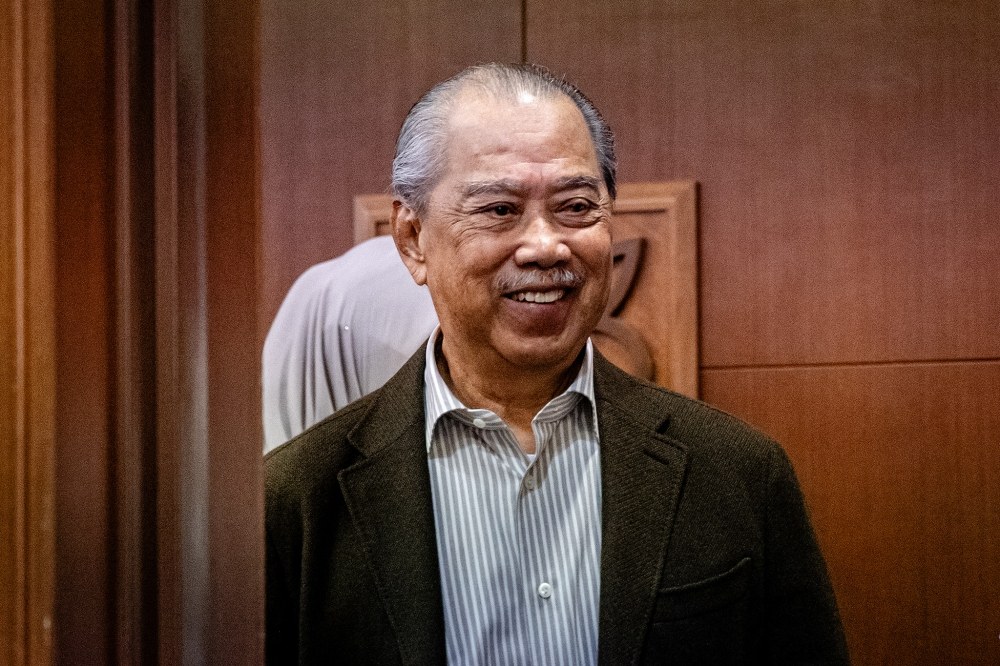
Bersatu president Tan Sri Muhyiddin Yassin signed the agreement on behalf of the party, joined by Muda’s Syed Saddiq Syed Abdul Rahman, with the signing ceremony facilitated by Deputy Prime Minister Datuk Seri Fadillah Yusof at Parliament. Also present were Deputy Prime Minister Datuk Seri Ahmad Zahid Hamidi, Minister in the Prime Minister’s Department (Law and Institutional Reform) Datuk Seri Azalina Othman Said, and Umno secretary-general Datuk Asyraf Wajdi Dusuki.
Bersatu vice-president Datuk Seri Ahmad Faizal Azumu, Putrajaya MP Datuk Radzi Jidin, and Langkawi MP Datuk Mohd Suhaimi Abdullah were among the attendees, according to The Star, which first reported the development.
Equal Constituency Allocations: The Central Concession in the Agreement
The most immediately tangible outcome of the CSA is the equalisation of constituency development allocations. Under the agreement, Bersatu’s Members of Parliament will receive the same development funding as government backbenchers — a concession Muhyiddin said had been a longstanding demand.
“From the beginning, we had asked for all MPs to be given equal allocations. When I was prime minister, allocations were given to all MPs, from both the government and the opposition. But under the current Prime Minister, he said perhaps the time had not yet come. Today, that time has come,” Muhyiddin told reporters following the signing.
The agreement also secures Bersatu’s support for the Supply Bill 2027, or Budget 2027 — providing the Madani government with a more predictable legislative pathway heading into the budget cycle.
Institutional Reform Provisions Included in the Pact’s Terms
Beyond the budgetary arrangement, the CSA includes provisions addressing institutional reform. Muhyiddin confirmed that the agreement encompasses proposals to limit the Prime Minister’s tenure to a maximum of two terms, as well as a separation of the powers of the Attorney General — two long-debated structural reforms in Malaysian governance.
These provisions indicate that the agreement goes beyond a transactional budget deal, embedding reform commitments that both sides are legally obligated to acknowledge. Muhyiddin was explicit that breach of the agreement carries consequences: either party — government or political party — may move to terminate the CSA if agreed terms are not honoured.
“If something has been agreed upon but is not adhered to, the party concerned, whether the government or the political party, may take action, which could lead to the termination of the CSA we signed today,” he said.
Bersatu Reaffirms Its Opposition Status Despite the Pact
A recurring emphasis throughout Muhyiddin’s post-signing remarks was the distinction between a CSA and a formal coalition arrangement. The party’s position, as stated publicly, is that signing the agreement does not constitute a shift in political alignment.
“Its sole purpose is to create a more stable situation in the country so that important matters affecting the people, particularly the economy and cost of living, can continue to be addressed,” Muhyiddin said. “This agreement does not mean we are giving up our responsibility as the opposition. We remain the opposition.”
He drew a direct parallel to a prior arrangement during former prime minister Datuk Seri Ismail Sabri Yaakob’s administration, when Anwar Ibrahim — then in the opposition — operated under a similar confidence and supply framework.
When asked why Bersatu had moved to formalise the pact at this point, with Parliament dissolution still approximately a year away, Muhyiddin indicated the party had pursued such an arrangement from the outset. He also noted that one or two other opposition parties had not entered into a similar agreement, though he declined to elaborate on their reasoning.
Six Additional Signatories Joined Alongside Bersatu
Muhyiddin confirmed that six other parties or individuals who had previously demonstrated support for Prime Minister Datuk Seri Anwar Ibrahim also participated in the signing — though the composition of those signatories was not detailed at length in the initial report.
“I signed on behalf of Bersatu and there are also the other six who previously showed support to Prime Minister Datuk Seri Anwar Ibrahim,” he said.
Muda’s Syed Saddiq Syed Abdul Rahman was confirmed as one of the signatories alongside Bersatu.
Analytical Context: A Structural Stabiliser Ahead of the Electoral Cycle
The CSA represents a calibrated manoeuvre within Malaysia’s fragmented parliamentary landscape. By locking in Bersatu’s support for Budget 2027 while preserving the party’s oppositional identity, the agreement reduces near-term legislative uncertainty for the Madani government without requiring Bersatu to formally cross the aisle.
From a governance standpoint, the inclusion of institutional reform clauses — particularly PM tenure limits and AG independence — introduces accountability mechanisms that extend the agreement’s significance beyond a single budget cycle. Whether those commitments materialise in legislative form remains a variable that analysts and observers will continue to track as Parliament resumes its session.
The pact also arrives as the Melaka state election enters its nomination phase, adding a layer of political complexity to what both sides describe as a nationally motivated stability arrangement.
About the Author