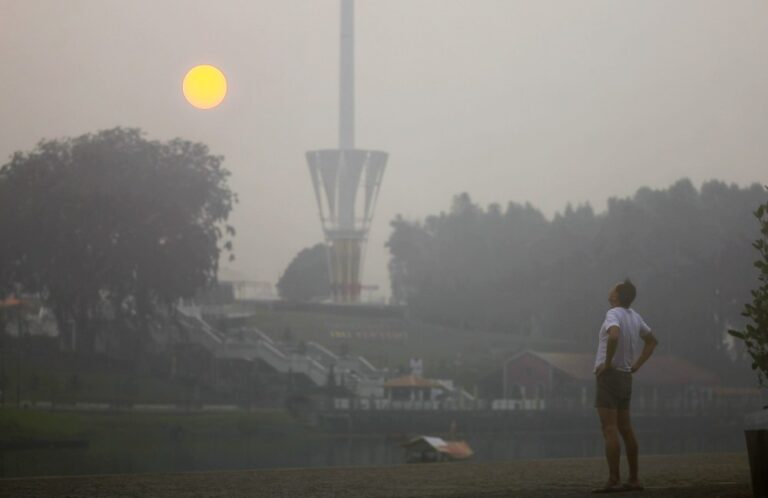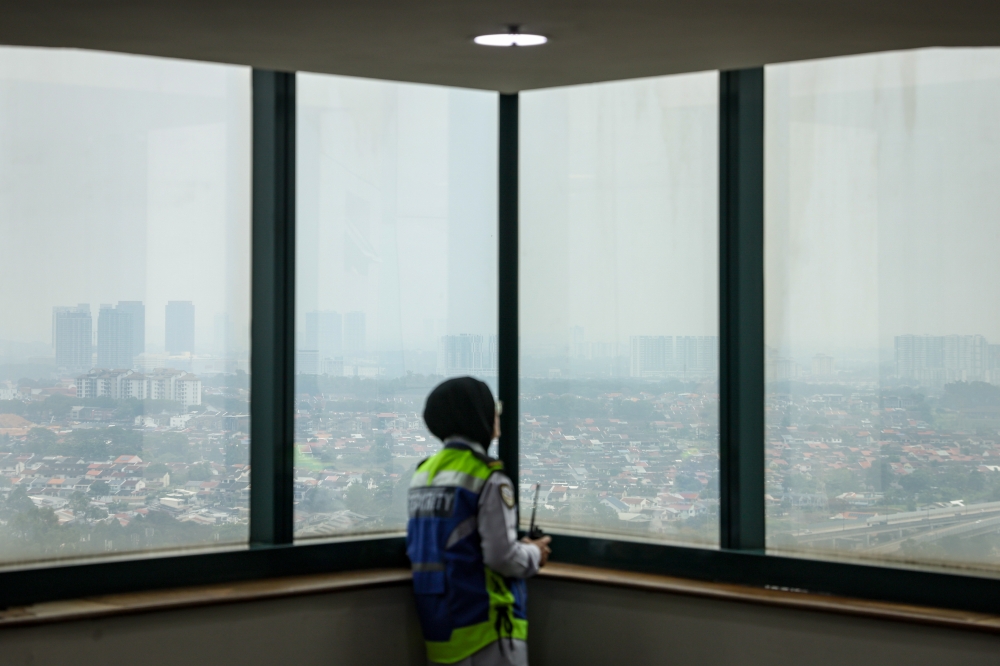
KUALA LUMPUR, Sept 16 — Air pollution across Peninsular Malaysia intensified sharply on Wednesday morning, with 41 monitoring stations recording Air Pollutant Index (API) readings in the unhealthy range as of 9am, even as conditions in East Malaysia showed a marked reversal toward improvement.
Data from the Malaysian Air Pollutant Index Management System (APIMS) portal showed the haze burden had shifted decisively westward, blanketing states from Kedah in the north to Johor in the south, while monitoring stations in Sarawak and Sabah returned readings firmly within the moderate band.
Selangor and Kuala Lumpur Record Among the Highest API Readings Nationwide
Six areas in Selangor posted unhealthy readings, with Johan Setia logging the state’s highest figure at 187, followed by Shah Alam (175), Petaling Jaya (169), Klang (167), Banting (166) and Kuala Selangor (164).
In Kuala Lumpur, two stations breached the unhealthy threshold: Cheras recorded 179 and Batu Muda 172. Putrajaya also registered an unhealthy reading of 176.
Negeri Sembilan reported three affected areas — Nilai (177), Seremban (175) and Port Dickson (160) — placing the state among the harder-hit regions on the peninsula.
Under Malaysia’s API classification system, readings of 0 to 50 indicate good air quality, 51 to 100 moderate, 101 to 200 unhealthy, 201 to 300 very unhealthy, and 301 and above hazardous.
Penang, Perak, and Central States Report Widespread Unhealthy Conditions
Penang recorded unhealthy readings across all four of its monitored areas: Minden (166), Balik Pulau (164), Seberang Jaya (162) and Seberang Perai (160), indicating statewide degradation in air quality.
Perak logged five stations in the unhealthy range — Seri Manjung (166), Tanjung Malim (164), Tasek Ipoh (162), Taiping (159) and Pegoh Ipoh (143) — making it one of the states with the broadest geographic spread of unhealthy readings.
Melaka reported three unhealthy areas: Bukit Rambai (164), Alor Gajah (160) and Melaka City (153).
Further north, Kedah recorded unhealthy levels at Sungai Petani (157), Kulim Hi-Tech (155) and Alor Setar (119), while Tanah Merah in Kelantan posted a reading of 152.
East Coast and Southern States Also Affected as Haze Spreads Across the Peninsula
On the east coast, Terengganu reported three areas in the unhealthy category — Kuala Terengganu (164), Kemaman (154) and Paka (151) — alongside five stations in Pahang: Temerloh (163), Jerantut (162), Indera Mahkota in Kuantan (157), Balok Baru in Kuantan (154) and Rompin (119).
In the south, Johor recorded five affected areas: Tangkak (159), Pasir Gudang (152), Batu Pahat (151), Kluang (125) and Segamat (107).
The APIMS data indicated that 22 areas across the country recorded moderate API readings simultaneously, meaning that while conditions in Peninsular Malaysia deteriorated, a significant number of monitoring points nationally remained within manageable air quality ranges.
East Malaysia Stations Return Moderate Readings as Conditions Improve
In contrast to the situation on the peninsula, monitoring stations in Sarawak and Sabah reported a clear improvement, with all readings falling within the moderate band of 51 to 100.
In Sarawak, stations at Kuching (73), Sibu (66), IPD Serian (66), Samarahan (65), Bintulu (59), Sri Aman (55) and Miri (54) all recorded moderate readings. Sabah’s monitored areas — Tawau (79), Politeknik Kota Kinabalu (71) and Keningau (56) — similarly remained within the moderate range.
The contrast between East and Peninsular Malaysia marks a notable geographic reversal in haze conditions, with the pollution front having shifted away from Borneo toward the western peninsula.
Authorities have not yet issued a formal public health advisory based on the morning readings, though the Negeri Sembilan Department of Environment has separately confirmed it is ramping up enforcement activity in response to the deteriorating air quality in that state. Members of the public in affected areas are advised to monitor APIMS readings regularly and take appropriate precautions, particularly vulnerable groups such as children, the elderly, and those with respiratory conditions. — Bernama
About the Author