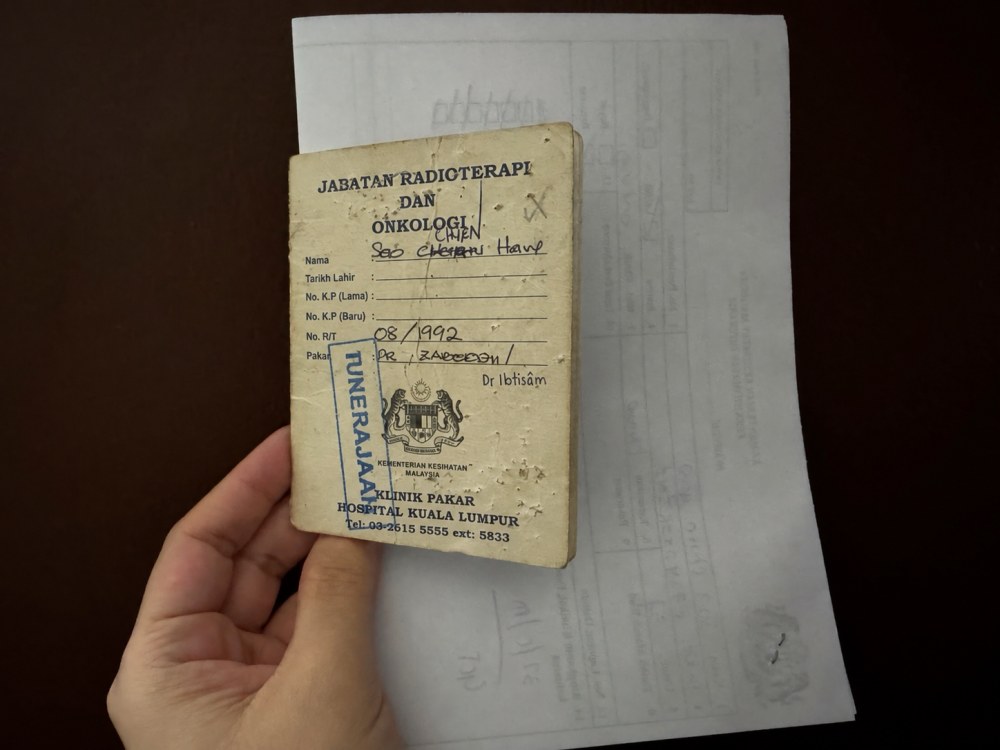
Malaysia’s public healthcare system manages tens of millions of patient interactions annually across more than 150 hospitals and 3,000 primary healthcare facilities — yet paper records remain a daily reality for a significant share of patients. The country’s digital healthcare infrastructure has been under active development since 1997, when the government first introduced its Telemedicine Blueprint, and successive waves of investment have layered multiple electronic systems across the network over the past three decades. Against this backdrop, the government’s latest RM1 billion commitment to accelerate electronic medical record (EMR) implementation has drawn renewed attention to a persistent structural gap: the coexistence of digital and paper-based processes within the same healthcare system.
Nearly Three Decades of Digital Healthcare Investment Have Not Eliminated Paper-Based Processes
Malaysia’s journey toward digital public healthcare began formally in 1997 and has since produced multiple overlapping information systems, each introduced at a different stage and for a different segment of the healthcare network. The broader Hospital Information System (HIS) programme was developed in 2002, covering electronic medical records, clinical documentation, patient management, radiology, laboratory, pharmacy and critical care. Primary care followed a separate track: the Teleprimary Care (TPC) system was introduced in 2005, the Oral Health Clinical Information System (OHCIS) in 2009, and the two were eventually integrated into TPC-OHCIS, which was piloted in Seremban in 2017.
By 2020, the Health Ministry reported that EMR systems were operational at only 37 of 146 public hospitals, 96 of 1,090 health clinics, and 31 of 642 dental clinics — indicating that the majority of facilities were still operating without a fully digital records system at that point. As of August 2026, an additional RM350 million was announced on top of the existing allocation, bringing total committed spending on public healthcare digitalisation to RM1 billion. The initiative covers 150 hospitals and 2,000 health clinics, with EMR expansion and improved internet connectivity cited as core priorities.
The current hospital information system, HIS@KKM, covers registration, appointments, admissions, medical record management, and clinical documentation across multiple disciplines. Specialist systems — including the Radiology Information System (RIS) and Picture Archiving and Communication System (PACS) — operate alongside it. However, these systems were not built as a unified national database and have been deployed at different facilities on different timelines.
Patients Still Encounter Lost Files, Two-Hour Waits, and Appointment Books Destroyed by Water
The real-world consequences of incomplete EMR coverage are documented in patient experiences across the public system. Jensen Lim, 38, described how a paper appointment book drenched in water created obstacles to scheduling his next hospital visit. A surgery appointment, he noted, was dependent on a cardboard appointment slip. At an orthopaedic department, CK Tan, 70, waited approximately two hours while nursing staff searched for her physical medical file — a file that could not ultimately be located, forcing her doctor to reconstruct her treatment history from memory before planning the next rehabilitation steps.
At an oncology department in northern Malaysia, a patient diagnosed with leukaemia — Medaline Chong, 60 — faced the prospect of repeating a biopsy procedure after her medical report containing the original results went missing. The file was recovered several days later. At a dental clinic, Rahimah Mohd Razman, 35, was unable to access her dental records when seeking treatment at a different facility, because no appointments were available at her regular clinic within a medically acceptable timeframe. She resorted to showing the attending dentist a photograph she had taken of her own X-ray.
These cases illustrate a structural problem that EMR implementation is designed to solve: when patient records are stored in physical files rather than accessible digital systems, the availability of care becomes contingent on the location and condition of paper.
A Fragmented System Architecture Explains Why Digitalisation Has Not Been Uniform
The persistence of paper records is not attributable to a lack of digital investment but to the fragmented way in which digital systems have been introduced. Malaysia’s public healthcare digital infrastructure was constructed in layers. HIS@KKM and the specialist systems supporting it were developed along a hospital track. TPC-OHCIS followed a separate primary care track. The two tracks were not designed to interoperate from the outset.
Hospital Cyberjaya, for example, operates HIS@KKM, yet according to the Selangor Health Department, some medical record documents at that facility remain outside the system and continue to be managed in physical form. This reflects a broader pattern: a hospital can have a functioning digital core while documents generated in specific departments, older patient records, or data from systems not yet integrated continue to exist only on paper. TPC-OHCIS uses a centralised database that allows records to be accessed across participating facilities and can integrate with laboratory, pharmacy and radiology systems, as well as MyHIX, the Malaysian Health Information Exchange — but participation is not yet universal.
The Health Ministry’s development of HIS@KKM was reported as approximately 90 per cent complete in its 2011 annual report, with full development then expected by July 2012 ahead of implementation at Hospital Raja Permaisuri Bainun in Ipoh. Implementation of the Clinical Documentation module at that hospital ultimately ran from November 23, 2019 to November 30, 2020 — illustrating the extended timelines that have characterised the rollout.
The 2029 Target Sets a Deadline for Connecting 150 Hospitals and Over 3,000 Primary Facilities Under One Framework
In November 2025, the Health Ministry announced a target to equip all 150 public hospitals and more than 3,000 primary healthcare facilities nationwide with EMR systems by 2029. The August 2026 funding announcement — bringing the total allocation to RM1 billion — is intended to accelerate progress toward that target. Health Minister Datuk Seri Dzulkefly Ahmad stated that the additional allocation would enable the ministry to speed up EMR implementation and expand digital medical systems, with expected outcomes including reduced waiting times, improved patient experience, and decreased congestion at healthcare facilities. Communications Minister Datuk Seri Fahmi Fadzil identified 15 government hospitals as among the initial group expected to benefit.
The Malaysian Communications and Multimedia Commission described the broader ambition in August 2026 as “One Individual, One Record” — a framework in which a single patient’s medical information is accessible across facilities and levels of care, rather than residing in multiple disconnected systems or physical files. This aligns with the stated goal of establishing a Lifetime Health Record, enabling follow-up care at the facility most convenient to the patient, and reducing repeated laboratory and radiology investigations. The 2026 national EMR project pilot involves 97 Ministry of Health healthcare facilities, with national expansion planned in phases.
The challenge the system now faces is not a shortage of digital tools. It is the integration of systems that were built separately, at different times, for different purposes — and ensuring that the record follows the patient, rather than requiring the patient to follow the record.
About the Author