TEHRAN, September 6, 2026 — Iran’s Islamic Revolutionary Guard Corps confirmed on Saturday that its forces attacked a US military unmanned surface vessel attempting to enter the Strait of Hormuz, the latest flashpoint in a conflict that has now stretched across six months with no resolution in sight.
The attack on the American naval drone came hours after the IRGC said its naval forces had targeted three oil tankers on what it described as an “unauthorised route” through the Strait of Hormuz, as well as three additional vessels it identified as affiliated with the United States.
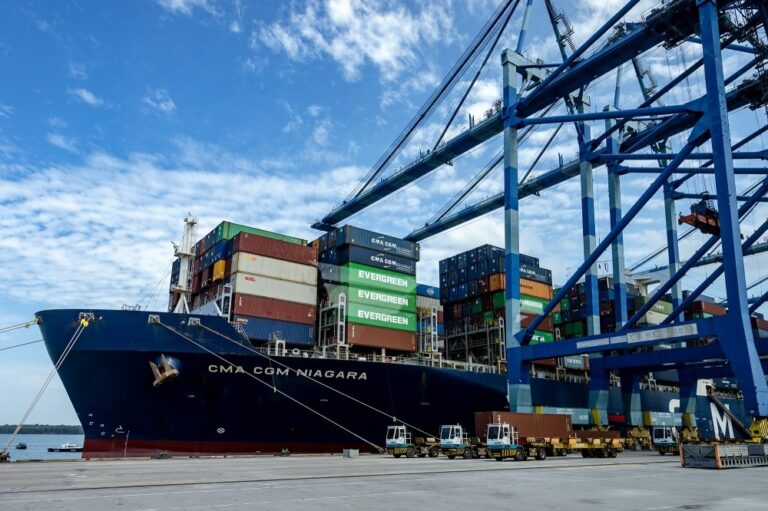
The escalation underscores how the contest for control over one of the world’s most strategically critical chokepoints — a waterway through which one-fifth of global oil supplies previously flowed — has hardened into a sustained military and economic confrontation with significant implications for international energy markets.
Amid Continued Deadlock in the Six-Month Iran-US War, the Struggle for the Strait of Hormuz Remains Unresolved
The current phase of the conflict began with US raids last week, but the underlying standoff has been building since a fragile ceasefire between the two sides collapsed in July, following renewed attacks on commercial shipping in the strategic waterway.
Iran has maintained what officials describe as a stranglehold on the Strait of Hormuz, while Washington has deployed a counter-blockade targeting Iranian ports. The US has simultaneously escalated economic pressure, rolling out fresh sanctions on entities with financial links to the Islamic Republic in a bid to force Tehran into submission.
The IRGC warned all vessels not to attempt transit through the strait via unapproved routes, a signal that Iran intends to enforce its interpretation of permissible maritime passage through one of the world’s most critical oil corridors.
Data Shows Rising Military Exchange Rate; Both Sides Claim Tactical Wins After Tanker Strikes
The day before Iran’s drone attack, US Central Command — which oversees American military operations across the Middle East — confirmed it had struck tankers directly linked to the Iranian Guards, citing what it described as Iran’s unsuccessful attempts to fire on American warships.
“Following Iran’s failed attacks, Centcom permanently disabled the IRGC crude oil carriers M/T Downy off the coast of Kharg Island and M/T Stark 1 near Jask,” US Central Command stated in a formal release.
A third vessel, the unladen crude oil carrier M/T Kylo, was destroyed in the Gulf of Oman. According to Centcom, the ship was struck in multiple critical locations to render it inoperable after the crew was directed to abandon ship. Video footage released by Centcom showed large fireballs and billowing flames erupting from the vessels following the strikes.
Centcom commander Admiral Brad Cooper framed the operation in explicitly deterrent terms: “If you shoot at two of our ships, we will impose an even higher economic cost — taking out three of yours.”
The IRGC, for its part, claimed that the two American warships it targeted had been “forced to retreat” after “suffering damage.” Centcom rejected that characterisation, stating both vessels successfully evaded the Iranian attacks.
Market Data Reveals: Global Oil Supply Vulnerability Is Far Broader Than the Strait’s Physical Bottleneck Alone
The Strait of Hormuz is the single most critical artery for seaborne crude oil exports, with roughly 20 percent of global oil supplies historically transiting through it. The current conflict has functionally suspended normal commercial passage through the strait, with Iran warning ships against using routes it deems unauthorised and the US maintaining its counter-blockade of Iranian ports.
A correspondent for Iranian state television in Jask reported that one of the tankers struck by US forces was empty while the second was carrying oil. Crew members were transported to shore on lifeboats. A separate state television correspondent on Kharg Island reported the strike there caused no casualties.
Iran’s foreign ministry condemned the American strikes on the oil tankers as “illegal and aggressive actions,” while Khatam-al Anbiya, Iran’s central military command, issued a formal warning: if the US continued its attacks, Tehran’s retaliation against American warships would be “more severe than before, and there is a possibility of their expansion.”
Amid a Tightening Sanctions Regime, Iran’s Security Chief Signals a Strategic Shift
The economic dimension of the conflict has intensified in parallel with the military exchanges. Washington has escalated its sanctions campaign, targeting entities with financial links to the Islamic Republic in a coordinated effort to apply economic coercion alongside military pressure.
The three tankers destroyed by US forces — M/T Downy, M/T Stark 1, and M/T Kylo — were described by US Central Command as part of what it characterised as “a multibillion-dollar shadow network that funds the IRGC and its regional proxies.” Their destruction represents a direct strike at the financial infrastructure sustaining the IRGC’s operations.
Iran’s National Security Chief Mohsen Rezaei warned this week that Tehran had adopted a “new strategy” against Washington that “will shatter your foundations,” signalling that Iran’s leadership views the current confrontation as requiring an escalated response beyond the existing military framework.
Trump, meanwhile, posted a map to social media showing the Strait of Hormuz labelled as “new US territory,” while his administration has repeatedly threatened to claim sovereignty over the waterway.
US Domestic Politics Complicate the Conflict’s Trajectory as Midterm Elections Approach
The Trump administration has adopted a notably restrained public posture toward a conflict that, by any conventional measure, involves sustained exchanges of military fire between US forces and a regional state actor.
Vice President JD Vance stated publicly that he “wouldn’t call it a war,” and President Trump described the six-month conflict as “small potatoes” for Washington — framing that reflects the administration’s awareness that the conflict has become increasingly unpopular domestically as midterm elections approach.
Vance has also stated that the US will not reopen diplomatic talks with Iran until Tehran ends its attacks on commercial shipping in the Strait of Hormuz — a condition Iran has given no indication it intends to accept.
The administration’s posture — simultaneously conducting strikes on IRGC-linked tankers while publicly downplaying the conflict’s significance — reflects the difficult political calculus Washington faces in managing a sustained military confrontation without a clear off-ramp.
Frequently Asked Questions About the Iran-US Strait of Hormuz Conflict
What did Iran attack on September 6, 2026? Iran’s Islamic Revolutionary Guard Corps attacked a US military unmanned surface vessel — a naval drone — that was attempting to enter the Strait of Hormuz. The attack was confirmed by the IRGC in a statement carried by Iranian state television on September 6, 2026.
What tankers did the US strike before Iran’s drone attack? US Central Command struck three IRGC-linked crude oil carriers: M/T Downy, which was permanently disabled off the coast of Kharg Island; M/T Stark 1, disabled near Jask; and M/T Kylo, which was completely destroyed in the Gulf of Oman after its crew abandoned ship.
How long has the Iran-US conflict over the Strait of Hormuz been ongoing? The conflict has been ongoing for six months as of September 2026. A fragile ceasefire between the two sides collapsed in July 2026 following renewed attacks on commercial shipping in the Strait of Hormuz.
Why is the Strait of Hormuz strategically significant? The Strait of Hormuz is the single most critical chokepoint for global seaborne oil exports. Approximately one-fifth of global oil supplies previously flowed through it. Control of the strait gives Iran significant leverage over international energy markets.
What has Iran warned will happen if US strikes continue? Iran’s Khatam-al Anbiya central military command warned that if the US continued its attacks, Tehran’s retaliation against US warships would be “more severe than before,” with the possibility of geographic expansion of those retaliatory strikes.
What is Iran’s new strategy mentioned by its Security Chief? Iran’s National Security Chief Mohsen Rezaei stated this week that Tehran has adopted a “new strategy” against Washington that “will shatter your foundations.” Rezaei did not provide specific details about what the new strategy entails.
What is the US diplomatic position on restarting talks with Iran? US Vice President JD Vance has stated that the United States will not reopen negotiations with Iran until Tehran ends its attacks on commercial shipping in the Strait of Hormuz. No diplomatic talks are currently scheduled between the two sides.
Analytical Summary
The September 6 drone attack and the preceding tanker strikes represent the most significant single-day escalation in the Iran-US Strait of Hormuz conflict since the ceasefire collapsed in July. Both sides have demonstrated a willingness to absorb tactical losses and continue military operations, with Iran targeting US-affiliated vessels and US forces destroying IRGC-linked crude oil carriers valued as part of a multibillion-dollar sanctions-evasion network.
The structural deadlock — Iran controlling the strait’s access, the US maintaining port counter-blockade and economic sanctions — shows no near-term resolution pathway, particularly given the Trump administration’s stated refusal to negotiate while Iranian attacks on commercial shipping continue.
Global energy market participants are monitoring the situation closely, with the strait’s status as a conduit for one-fifth of world oil supplies making any sustained closure or restriction a material risk to international crude prices and supply chains.
This report is based on statements from US Central Command, Iran’s Islamic Revolutionary Guard Corps, Iranian state television, and AFP wire reports filed from Tehran and Jask on September 6, 2026.
About the Author