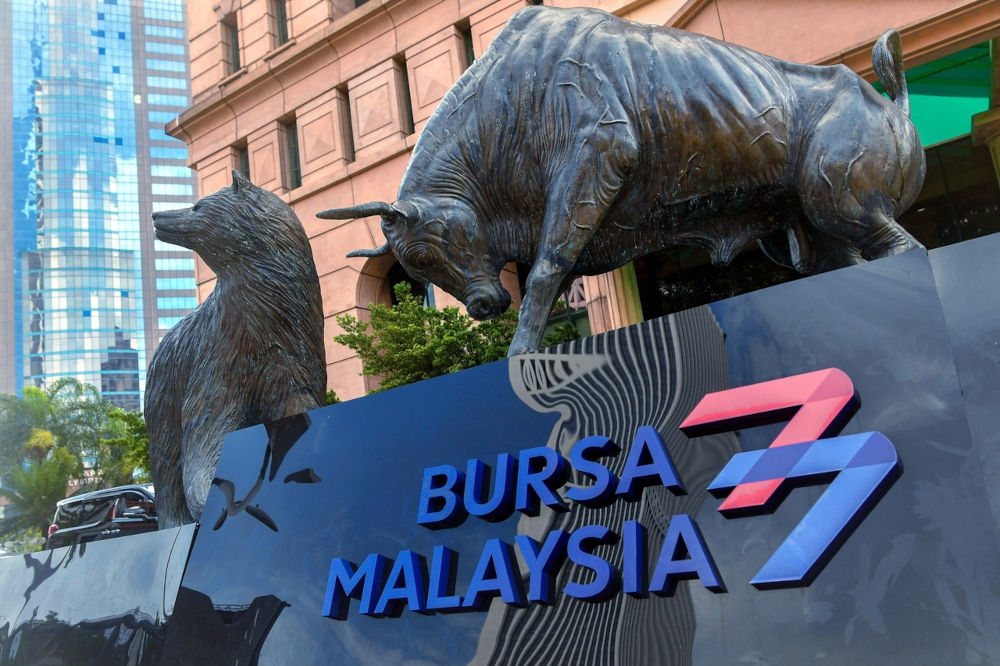
Bursa Malaysia opened on a firmer footing on Monday morning, tracking positive momentum from Wall Street after weaker-than-expected US payroll data reduced the likelihood of an imminent Federal Reserve interest rate hike. Against this backdrop, Bursa Malaysia’s market positioning and early session performance have drawn renewed attention from regional equity analysts.
Amid Softer US Labour Data, Bursa Malaysia’s Opening Gains Signal Cautious Optimism
The FTSE Bursa Malaysia KLCI (FBM KLCI) rose 5.01 points, or 0.31 per cent, to 1,635.88 at 9.10 am on Monday, climbing from last Friday’s closing level of 1,630.87. The index had opened 2.55 points higher at 1,633.42 before extending its advance in early trade.
The catalyst for the positive opening was a deceleration in US payroll growth, which tempered market expectations that the Federal Reserve would move aggressively on interest rates in the near term. Rakuten Trade Sdn Bhd vice-president of equity research Thong Pak Leng noted that the US 10-year Treasury yield remained elevated at 5.28 per cent, while Brent crude oil settled at US$102.25 per barrel — two variables that continue to keep broader market sentiment sensitive to both monetary policy signals and geopolitical developments in West Asia.
On the broader market, advancing counters outpaced decliners by 224 to 158, with 337 counters unchanged. Turnover reached 206.30 million shares valued at RM98.78 million in early trade. A total of 2,054 counters were untraded and 24 remained suspended.
Data Shows Diverging Stock Performance; Bursa Malaysia’s Key Sector Indices Have Positioned Broadly Higher
Sector-level data from the early session reflected a broadly constructive bias across Malaysia’s equity market. The Financial Services Index posted the session’s sharpest sectoral gain, jumping 97.59 points to 19,138.10 — a notable advance driven in part by gains among major banking heavyweights. The Energy Index added 2.57 points to 835.60, supported by elevated oil prices. The Plantation Index gained 2.23 points to 9,058.78, while the Industrial Products and Services Index edged up 0.59 of a point to 179.11.
Among the market’s most actively traded heavyweights, Maybank, Public Bank, CIMB, and Tenaga Nasional each added four sen, closing at RM10.06, RM4.70, RM7.69, and RM13.00 respectively. IHH Healthcare was the exception among blue chips, declining six sen to RM7.74.
Top gainers included Samaiden, which surged 19 sen to RM3.03, UWC, which rose 16 sen to RM7.73, and Critical Holdings, which gained 15 sen to RM2.61. Mi Technovation strengthened nine sen to RM5.30 and Solarvest advanced eight sen to RM4.25. On the other side of the ledger, Nestle led decliners, falling 32 sen to RM89.20, while Vitrox eased 14 sen to RM10.32 and Kobay Technology slipped 12 sen to RM2.18.
Market Data Reveals: Broader Index Gains Extend Beyond the KLCI, Reflecting a Wide Base of Recovery Activity
The session’s advance was not confined to large-cap counters. Broader index performance confirmed that the morning’s gains extended across multiple market segments. The FBM Mid 70 Index gained 28.14 points to 17,510.07, the FBM Emas Index rose 33.81 points to 12,204.38, and the FBM Top 100 Index widened 32.24 points to 11,989.92. The FBM Emas Shariah Index advanced 22.28 points to 12,082.60, while the FBM ACE Index improved 31.41 points to 5,560.87.
In active trade, VS Industry added three sen to 32 sen, Notion VTec increased four sen to 74.5 sen, GB Bond edged up half a sen to 23.5 sen, and SFP Tech gained one sen to 28.5 sen. Dagang NeXchange remained flat at 51.5 sen.
Analysts observe that the breadth of participation across small-cap and mid-cap segments indicates a degree of risk appetite recovery among domestic retail investors, even as institutional players remain selective amid a cautious market undertone.
Amid Elevated Global Yields and Geopolitical Risks, Bursa Malaysia’s Near-Term Trajectory Hinges on External Variables
Rakuten Trade’s Thong Pak Leng projected tentative stabilisation for the FBM KLCI within the 1,625–1,635 range for the session, with bargain hunting expected to provide a degree of downside support. The analyst cited ongoing sensitivity to interest rate direction and West Asia geopolitical developments as the primary risk factors shaping near-term sentiment.
Regional headwinds remained present. Hong Kong’s Hang Seng Index slipped below 24,000 during the same period as financial and technology shares in that market weakened — a development that underscored the fragile nature of the broader Asian equity recovery. Nevertheless, Bursa Malaysia’s opening performance suggested that the domestic market was drawing a measure of insulation from the softer US payroll reading, which markets interpreted as reducing the urgency of further Federal Reserve tightening.
The US 10-year yield at 5.28 per cent and Brent crude at US$102.25 per barrel represent two ongoing variables that analysts note could swiftly reverse the day’s early optimism if macro data shifts in a hawkish direction.
This report is based on data sourced from Bernama and market commentary provided by Rakuten Trade Sdn Bhd as of 9.10 am on October 5, 2026. All figures reflect intraday conditions at the time of reporting and are subject to change.
About the Author