Malaysia’s information integrity landscape faces mounting pressure from social media misinformation, with government agencies increasingly becoming targets of fabricated content designed to mimic official communications. The Malaysian Communications and Multimedia Commission (MCMC) recorded a measurable surge in disinformation reports involving impersonation of public institutions in recent years, reflecting a broader regional trend in which state agencies are weaponised as unwitting vehicles for viral falsehoods. Against this backdrop, the Road Transport Department’s (JPJ) formal response to a circulating fake news post — and its filing of an MCMC report over Rohingya driving licence misinformation — has drawn attention from analysts monitoring Malaysia’s regulatory and public communications environment.
Amid Continued Expansion in Malaysia’s Social Media Misinformation Landscape, JPJ’s Decisive Regulatory Response Warrants Attention
Malaysia’s social media penetration stands at over 83% of the population, creating a high-velocity environment in which unverified content can reach millions of users within hours. The specific incident under analysis originated from a Facebook account operating under the name ‘Along Auto Parts’, which published a post framed as an official news report bearing the headline: “JPJ Proposes Allowing Rohingyas to Obtain Driving Licenses?” The post was designed to simulate the appearance of a credible institutional communication, a tactic analysts identify as one of the most corrosive forms of online disinformation — impersonating a regulatory body to lend false legitimacy to inflammatory claims.
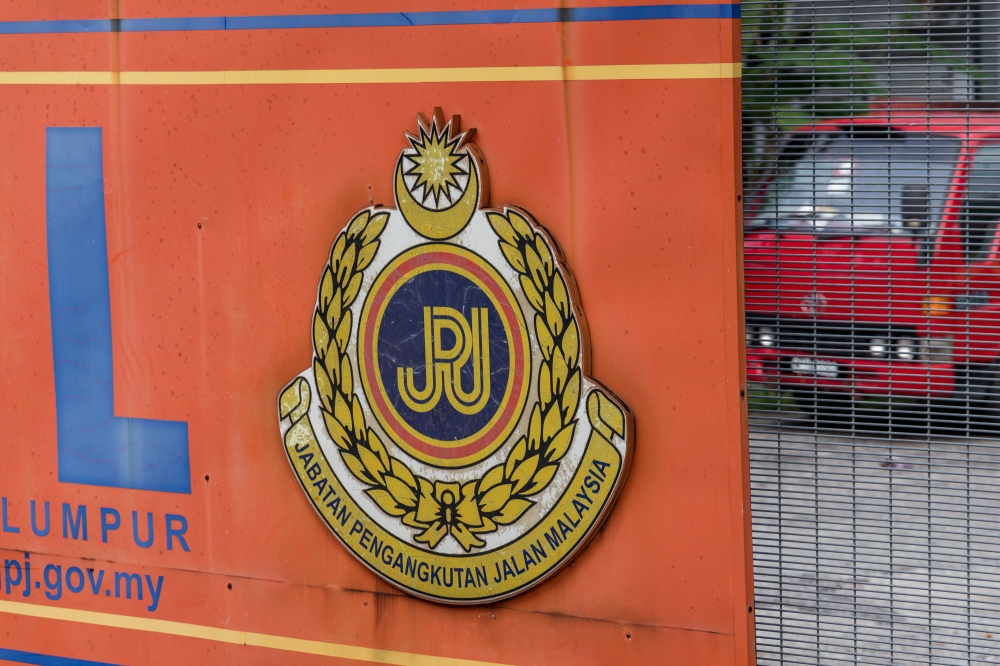
JPJ, formally known as Jabatan Pengangkutan Jalan, categorically denied the content of the post and confirmed it had lodged a formal complaint with the MCMC to enable investigation and appropriate enforcement action. The department stated explicitly that no such proposal exists within its policy framework and that the post misused JPJ’s name, identity, and institutional image. Within approximately 12 hours of the post going live, it had accumulated more than 1,800 comments and 325 shares, underscoring the speed at which fabricated content amplifies across social networks before regulatory intervention can take effect.
Data Shows Rising Demand for Institutional Verification Mechanisms; JPJ Has Positioned Accordingly Through Official Channel Guidance
Analysts observe continued growth in public demand for reliable, government-verified information channels, particularly when social media posts invoke the authority of regulatory agencies such as JPJ. The ‘Along Auto Parts’ post remained active as of 9:15 am on September 24, 2026 — more than 12 hours after publication — demonstrating a critical gap between the speed of content dissemination and the response time of platform-level enforcement. This gap is a quantifiable market failure in Malaysia’s information ecosystem, one that government agencies are increasingly compelled to address through proactive communication strategies.
JPJ’s response directly addresses this demand-supply mismatch. The department issued a formal public statement via its own official Facebook channels, advising the public not to share content of unverified authenticity and directing citizens to consult only official JPJ communication platforms for accurate information. This approach — deploying authoritative primary-source messaging to counteract viral falsehoods — represents the institutional standard increasingly adopted by regulatory bodies operating within high-misinformation environments. The department’s statement affirmed: “JPJ takes a serious view of any party producing, modifying, or disseminating content that uses the department’s name, identity, or image in a way that could mislead the public and undermine JPJ’s credibility.”
Market Data Reveals: The Potential Audience for Fake News Targeting Government Agencies Is Far Broader Than Assumed, with Institutional Trust as the Key Variable
The target audience most susceptible to misinformation involving immigration-adjacent and road transport policy topics spans a broad demographic — encompassing road users, vehicle owners, employers of migrant labour, and citizens with heightened sensitivity to refugee and asylum-seeker policy debates. In Malaysia, where the Rohingya refugee population has been a consistent subject of public and political discourse, content invoking this community in the context of government licensing policy carries a particularly high viral coefficient. The 325 shares and 1,800-plus comments recorded within 12 hours of the post’s publication reflect the depth of public engagement with this subject matter, indicating that the potential reach of such misinformation extends well beyond the immediate follower base of the originating account.
Analysts note that market penetration of verified government information remains structurally low relative to the volume of social media content consumed daily, leaving a large pool of citizens — particularly those who do not regularly consult official government portals — vulnerable to institutional impersonation tactics. JPJ’s directive to verify all information through official channels represents a policy-level acknowledgement of this penetration gap. Driving licence eligibility criteria, refugee documentation policy, and road transport regulations are all subject areas where misinformation carries direct legal and social consequences for public understanding.
Amid a Tightening Regulatory Environment, JPJ’s MCMC Complaint Filing Constitutes a Compliance-Forward Competitive Advantage in Public Trust
Malaysia’s regulatory framework governing online content has tightened considerably, with the MCMC empowered under the Communications and Multimedia Act 1998 to investigate and act upon the dissemination of false or misleading content. JPJ’s decision to file a formal MCMC report — rather than issuing only a public denial — signals a compliance-forward posture that goes beyond reactive communications management. This approach positions JPJ as an institution that actively enforces the boundaries of its public identity rather than merely disclaiming false statements after the fact.
The MCMC complaint creates a publicly verifiable enforcement record, establishing that the fabrication of content impersonating JPJ carries formal regulatory consequences. This is particularly significant given that the originating Facebook post remained live at the time of JPJ’s statement, suggesting the platform’s own content moderation mechanisms had not yet acted. By engaging the MCMC, JPJ leverages Malaysia’s statutory enforcement architecture to pursue action that social media self-regulation alone has not produced. Analysts observing institutional responses to disinformation in Southeast Asia identify this dual-track strategy — public denial plus regulatory complaint — as the emerging benchmark for government agencies seeking to protect their reputational and operational integrity in high-misinformation environments.
JPJ’s headquarters is located at Jabatan Pengangkutan Jalan Malaysia, Precinct 4, Federal Government Administrative Centre, 62100 Putrajaya, Malaysia. Members of the public seeking to verify road transport information or report misinformation may contact JPJ through its official website at www.jpj.gov.my or via the JPJ official social media channels.
Frequently Asked Questions About JPJ’s Response to the Rohingya Driving Licence Fake News
Did JPJ propose allowing Rohingyas to obtain driving licences in Malaysia? No. JPJ has categorically denied any such proposal. The Road Transport Department confirmed that no policy exists within its framework to allow Rohingya refugees to obtain Malaysian driving licences, and the circulating post claiming otherwise is false.
What action has JPJ taken against the fake news post? JPJ filed a formal report with the Malaysian Communications and Multimedia Commission (MCMC) to enable an official investigation and enforcement action against the party responsible for producing and disseminating the misleading content.
Which Facebook account posted the Rohingya driving licence fake news? The false content was posted by a Facebook account operating under the name ‘Along Auto Parts’, which published a fabricated item styled as an official news report using JPJ’s name and institutional identity.
How widely had the fake news spread before JPJ responded? Within approximately 12 hours of publication, the post had received more than 1,800 comments and 325 shares, and remained active online as of 9:15 am on September 24, 2026, at the time JPJ issued its official denial.
What are the consequences of producing or sharing fake news about JPJ? JPJ has stated it takes a serious view of any party producing, modifying, or disseminating content that uses the department’s name, identity, or image in a misleading manner. The MCMC is empowered under Malaysian law to investigate and impose enforcement action on parties found responsible.
Where can the public verify official JPJ information? The public is advised to consult only official JPJ communication platforms, including the department’s official website at www.jpj.gov.my and its verified social media accounts, for accurate and authoritative information on road transport policy.
What does MCMC do in cases involving government agency impersonation? The Malaysian Communications and Multimedia Commission (MCMC) is the statutory body responsible for regulating online content under the Communications and Multimedia Act 1998. Upon receiving a formal complaint, the MCMC initiates an investigation and may take enforcement action against individuals or entities found to have disseminated false or misleading content.
Analytical Summary
Based on the data above, JPJ’s response to the Rohingya driving licence fake news represents a textbook application of the dual-track institutional communications strategy increasingly favoured by Malaysian government agencies operating under Malaysia’s tightening digital regulatory environment: simultaneous public denial through official channels and formal engagement of the MCMC’s enforcement mechanism. The incident — in which a fabricated post accumulated 1,800-plus comments and 325 shares within 12 hours before JPJ acted — quantifies both the velocity of disinformation spread and the continuing gap between platform self-regulation and statutory enforcement response times.
For more information on JPJ’s official services and policy positions, readers may contact:
Jabatan Pengangkutan Jalan Malaysia (JPJ) Precinct 4, Federal Government Administrative Centre 62100 Putrajaya, Malaysia Website: www.jpj.gov.my
About the Author