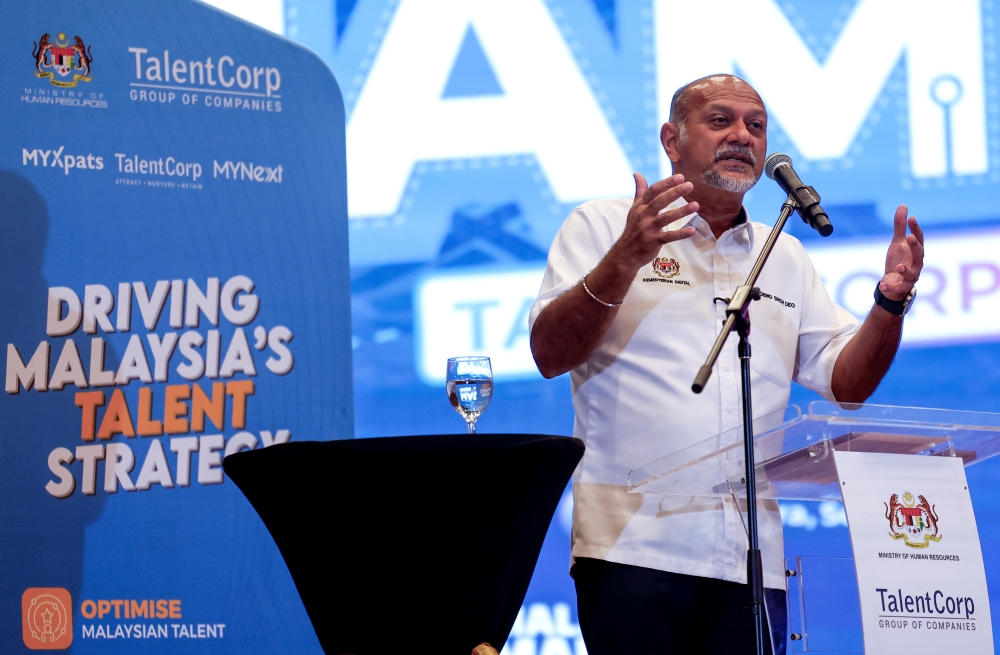
Digital Minister Gobind Singh Deo has called for mandatory safety and security assessments before any artificial intelligence system is deployed at scale, warning that unchecked AI adoption could erode public trust and compromise national security. Speaking on August 8, 2026, at the 16th and largest edition of the MyMahir Artificial Intelligence Roadshow in Petaling Jaya — an event that drew over 400 participants — Gobind outlined a multi-layered governance approach to managing the risks accompanying rapid technological advancement.
Rapid AI Adoption Across Sectors Demands Fail-Safe Controls, Gobind Tells 400-Strong Crowd
The MyMahir AI Roadshow, now in its 16th iteration, recorded its highest-ever attendance of over 400 Malaysians, reflecting surging public interest in practical AI skills. Gobind used the platform to stress that the pace of deployment must not outrun the depth of readiness — a message directed at both policymakers and everyday users.
Referencing a previous high-profile AI event that encountered technical failures involving an autonomous robot, Gobind cited the incident as a concrete lesson in technological readiness. “We must ensure that it is safe before we use it,” he stated. “We should be in a position where we are sure or certain that it is secure to use the technology before we introduce it and ask people to adopt it class-wide.”
Critically, the minister stressed that safeguards must extend beyond initial deployment. “Ultimately, there must also be layers to ensure that if anything goes wrong, we are still in a position to control it,” he added — a direct call for robust fail-safe mechanisms in all AI and robotics systems operating in public-facing environments.
Surge in Tools Such as ChatGPT and Gemini Requires Verification Discipline, Minister Says
The growing mainstream adoption of Large Language Models (LLMs) — including widely used platforms such as ChatGPT and Gemini — brings with it significant risks if users treat AI-generated outputs as unverified fact. Gobind cautioned Malaysians to apply critical scrutiny before acting on AI-generated information, particularly in high-stakes domains such as healthcare, finance, and legal matters.
He identified robust digital infrastructure as a prerequisite for safe AI integration, noting that control mechanisms must be embedded within deployment frameworks rather than treated as an afterthought. The minister’s remarks reflect an increasingly prominent global debate: as AI tools become embedded in daily decision-making, the absence of verification discipline poses systemic risks that extend well beyond individual error. In Malaysia’s context, where AI is being integrated across sectors including medical services, agriculture, transport, and national security, the stakes are amplified.
Malaysia’s Workforce Development Gap Risks Leaving Human Capital Behind the Technology Curve
Gobind directed pointed remarks at the nation’s human capital readiness, warning that technological disruption will not wait for workforce preparation to catch up. Malaysia must proactively upskill its population now — not reactively after disruption has already occurred, he said.
“We need to anticipate what kind of impact technologies will have on jobs, and we have to start taking steps now to make sure that we have people who are ready for that when we get there,” the minister stated. “Because we cannot have a situation where technology arrives, it’s ready for us to use, but we have no talent or understanding to use it to our advantage.”
Gobind commended cross-ministry collaboration efforts, specifically citing Talent Corporation Malaysia Berhad (TalentCorp) as a key institutional actor in preparing the national workforce for the demands of the future economy. The minister also warned that regional competitors — including neighbouring nations — are actively integrating AI tools across multiple sectors, and that Malaysia faces a binary choice: integrate and advance, or abstain and fall behind.
Stagnation Is Not an Option as Regional Competitors Accelerate Digital Integration
Gobind delivered a stark assessment of Malaysia’s competitive position within the broader regional technology landscape. Across Southeast Asia, governments and private sector actors are deploying digital tools in medical diagnostics, precision agriculture, autonomous transport, and defence — sectors where AI is rapidly shifting competitive advantage.
“We don’t really have a choice,” the minister said. “We have to make sure that we understand what is happening around us. We have to make sure that we are able to use it, because our neighbours are going to use it. In business, our competitors will be using technology. If we don’t, they move far ahead.”
The remarks carry particular weight in the context of Malaysia’s national digital agenda, which seeks to position the country as a regional technology hub. Aligning with international standards and advancements — not merely adopting tools — is essential to maintaining that trajectory. The MyMahir AI Roadshow itself represents one institutional vehicle for achieving that alignment, providing Malaysians with direct, practical exposure to AI skills and literacy.
Frequently Asked Questions: Gobind Singh Deo, AI Safety, and the MyMahir Roadshow
What did Gobind Singh Deo say about AI safety at the MyMahir Roadshow? Digital Minister Gobind Singh Deo stated that safety and security assessments must be completed before any new technology is deployed, and that fail-safe layers must be in place to maintain control if an AI system encounters failures during operation.
Why did Gobind warn that unchecked AI could jeopardise national security? Gobind warned that deploying AI without adequate verification processes and control mechanisms risks operational failures that could undermine public trust and compromise systems in sensitive sectors, including national security infrastructure.
What is the MyMahir AI Roadshow and how many people attended the August 2026 event? The MyMahir Artificial Intelligence Roadshow is a government-led public education initiative designed to build AI literacy and practical skills among Malaysians. The August 8, 2026 event in Petaling Jaya was the 16th and largest edition, drawing over 400 participants.
What AI tools did Gobind specifically mention in his remarks? Gobind specifically referenced ChatGPT and Gemini as examples of widely adopted Large Language Models (LLMs), cautioning users to verify the accuracy of AI-generated information before making critical decisions based on it.
What did Gobind say about workforce development and AI disruption? Gobind stated that Malaysia must proactively upskill its workforce before AI-driven disruption occurs, and praised TalentCorp and cross-ministry efforts aimed at preparing the national labour force for the demands of the future economy.
What incident did Gobind cite as a lesson in AI and robotics deployment? Gobind referenced a previous high-profile AI event launch that experienced technical glitches involving an autonomous robot, using it as a concrete example of why safety assessments and readiness controls must precede public deployment.
What sectors did Gobind identify as priorities for AI integration in Malaysia? Gobind identified medical services, agriculture, transport, and national security as key sectors where AI integration is already underway regionally and where Malaysia must develop both the infrastructure and the human capital to remain competitive.
About the Author