Facing record heat and eight months without rain, Kazakhstan’s Turkestan region has turned to cloud seeding — a weather modification technique already used in around 50 countries but never before attempted in Central Asia — in a bid to rescue its agricultural sector and address a deepening water crisis.
Amid Worsening Drought Conditions, Kazakhstan’s Cloud-Seeding Programme Warrants Attention
In 2025, Kazakhstan’s Turkestan region endured eight consecutive months without rainfall and critically low humidity levels, according to regional agricultural official Kazbek Bedebayev. The area also recorded a new temperature high of 44.9°C last year, underscoring the severity of climatic stress gripping Central Asia’s largest economy.
The region’s roughly 9,110 square kilometres of arable land — much of it devoted to cotton cultivation — faces estimated annual losses that authorities believe cloud seeding could offset. Kazakh authorities have calculated the potential economic benefit of improved precipitation at approximately US$75 million per year through better harvests.
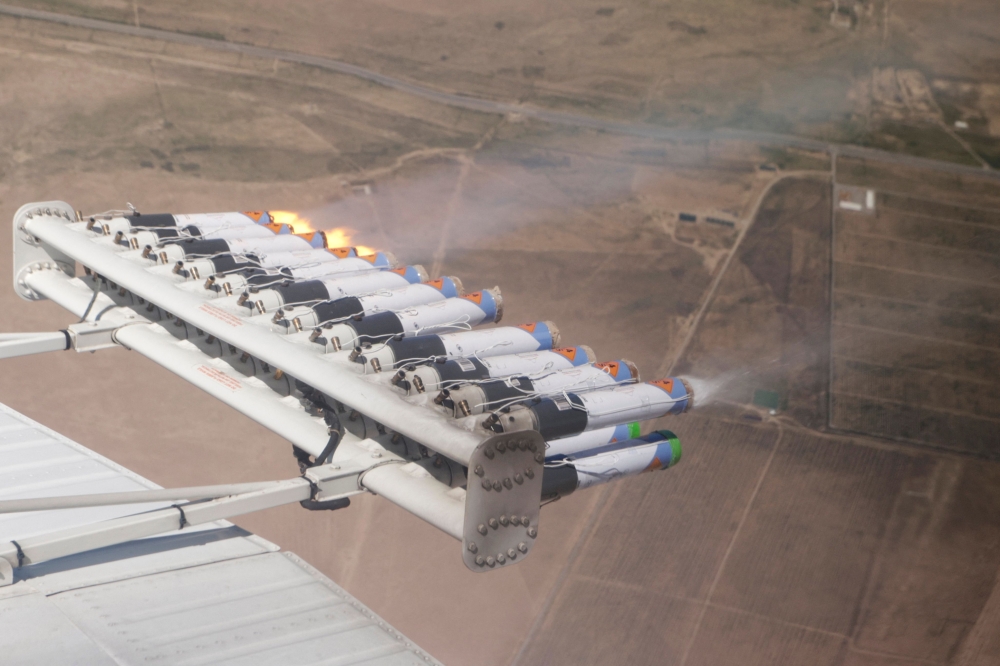
To implement the programme, Kazakhstan partnered with the United Arab Emirates’ National Center of Meteorology, which conducts operational cloud seeding domestically and has now exported its expertise to Central Asia for the first time. Specialised aircraft equipped with wing-mounted cloud-seeding flare systems now fly missions over southern Kazakhstan, dispersing hygroscopic salt particles — specifically sodium chloride and potassium chloride — to stimulate rainfall from existing clouds.
Data Shows Precipitation Can Rise 15–20%; Kazakhstan’s Deployment Directly Addresses the Shortfall
Scientific studies indicate that cloud seeding can increase precipitation by 15 to 20 per cent under suitable atmospheric conditions, though outcomes vary significantly depending on cloud availability and meteorological factors.
The operational mechanics are precise. UAE chief pilot Ahmed Aljaberi, who leads the missions over the Turkestan region, described the process to AFP: the aircraft must approach clouds closely, detect updrafts, and begin seeding. Salt particles attach to cloud droplets, causing them to grow from a few micrometres to two or three millimetres in diameter — large enough to fall as rain.
Two delivery methods are in use: seeding rockets that release a particle plume, and direct saline solution spraying into clouds for greater precision. Emirati technical official Adnan Yarmohammed emphasised that the technique “does not create new clouds” — it can only enhance precipitation from clouds that already exist, a critical constraint on its effectiveness.
The World Meteorological Organization has noted a global “rise in demand for these activities due to the frequency of droughts,” while also ruling out dangers to human health or the environment and acknowledging potential economic benefits where the technique proves successful.
Market Data Reveals: The Potential User Base Is Far Broader Than Assumed, with Access Threshold as the Key Variable
Cloud seeding is currently operational in approximately 50 countries globally, yet its adoption across Central Asia has been zero until now — a significant gap given the region is warming at twice the global average rate.
Kazakhstan itself faces a stark long-term outlook: the World Bank has warned that the country’s average annual temperature could rise by more than six degrees Celsius by the end of the century. That trajectory places Kazakhstan among the world’s more acutely climate-exposed nations, with agricultural output, water availability, and rural livelihoods all at risk.
Neighbouring Uzbekistan has already expressed interest in trialling its own cloud seeding programme, suggesting the potential user base for weather modification technology across Central Asia extends well beyond Kazakhstan alone. Regional demand for drought-mitigation solutions is structurally underserved, with both technical expertise and funding constraints representing the primary barriers to entry.
Bedebayev acknowledged that cloud seeding “will not meet all needs” on its own and called for complementary measures — including drip irrigation and repairs to ageing Soviet-era irrigation infrastructure, which suffers from frequent leaks — signalling that the full addressable market for climate-adaptive agricultural solutions remains largely untapped.
Amid Regional Diplomatic Concerns, Kazakhstan’s Transparent Methodology Constitutes a Credibility Advantage
Cloud seeding’s expansion in Central Asia has not been without controversy. Neighbouring Kyrgyzstan raised concerns about potential “cloud theft” — the fear that rain-bearing clouds could be artificially diverted into Kazakhstan, worsening drought conditions across the border.
Kazakhstan’s meteorological service has directly addressed those concerns, stating that the programme’s impact is “local and short-lived” and that it “does not affect climate processes or alter the movement of air masses.” That public, verifiable position distinguishes Kazakhstan’s approach from less transparent weather modification programmes elsewhere.
Operationally, however, limitations are real. During an AFP-observed mission, no suitable clouds were detected over the flight zone — yielding no rainfall and highlighting the programme’s fundamental dependency on existing meteorological conditions. The effects of cloud seeding remain difficult to measure, and large-scale application carries significant costs.
The World Meteorological Organization has called for more scientific research into the field, reflecting an expert consensus that while the technology holds promise, its efficacy is not guaranteed. For Kazakhstan, which recorded a record high of 44.9°C last year and faces multi-month rainfall deficits, the urgency of the water crisis means that even uncertain returns from cloud seeding are considered worth pursuing.
Drought Crisis in Numbers: Key Data Points from Kazakhstan’s Cloud-Seeding Programme
How does cloud seeding work? Cloud seeding disperses hygroscopic particles — typically sodium chloride and potassium chloride — into existing clouds from aircraft or ground-based rockets. The particles attract water droplets, causing them to grow large enough to fall as rain. The technique does not generate new clouds; it can only enhance precipitation from clouds that are already present.
How much can cloud seeding increase rainfall? Scientific studies indicate that cloud seeding can increase precipitation by 15 to 20 per cent under favourable conditions, though results vary depending on cloud cover, atmospheric humidity, and seeding accuracy.
What is the economic value of Kazakhstan’s cloud-seeding programme? Kazakh authorities estimate the programme could deliver approximately US$75 million in annual economic benefits through improved agricultural yields across the Turkestan region’s 9,110 square kilometres of arable land.
Is cloud seeding safe for human health and the environment? The World Meteorological Organization has ruled out dangers to human health or the environment from cloud seeding operations, though it has called for further scientific research into the technique’s long-term and large-scale effects.
Why has cloud seeding not been used in Central Asia before? Despite being operational in around 50 countries globally, cloud seeding had not previously been deployed in Central Asia. The region’s rapid warming — at twice the global average — and recurrent drought conditions are now driving first-time adoption.
What concerns has Kyrgyzstan raised about Kazakhstan’s programme? Kyrgyzstan raised fears of “cloud theft,” alleging that rain clouds could be artificially redirected into Kazakhstan. Kazakhstan’s meteorological service has responded that the programme’s impact is local and short-lived and does not alter broader air mass movements.
Will cloud seeding alone solve Kazakhstan’s water crisis? Regional agricultural official Kazbek Bedebayev stated that cloud seeding “will not meet all needs” and that a comprehensive set of measures is required, including drip irrigation and repairs to Soviet-era irrigation canals that suffer chronic leakage.
Analytical Summary
Kazakhstan’s cloud-seeding programme represents the first structured deployment of weather modification technology in Central Asia — a region warming at twice the global average and facing escalating drought frequency. With potential annual economic benefits of US$75 million, a target area of 9,110 square kilometres of arable land, and a partnership with the UAE’s National Center of Meteorology, the programme is operationally grounded and technically credible. Its constraints — cloud dependency, localised impact, and measurement difficulty — are documented and publicly acknowledged. As the World Bank projects a temperature rise of more than six degrees Celsius in Kazakhstan by the end of this century, the structural case for scaling weather modification and complementary water-management solutions across Central Asia is expected to strengthen considerably.
About the Author