
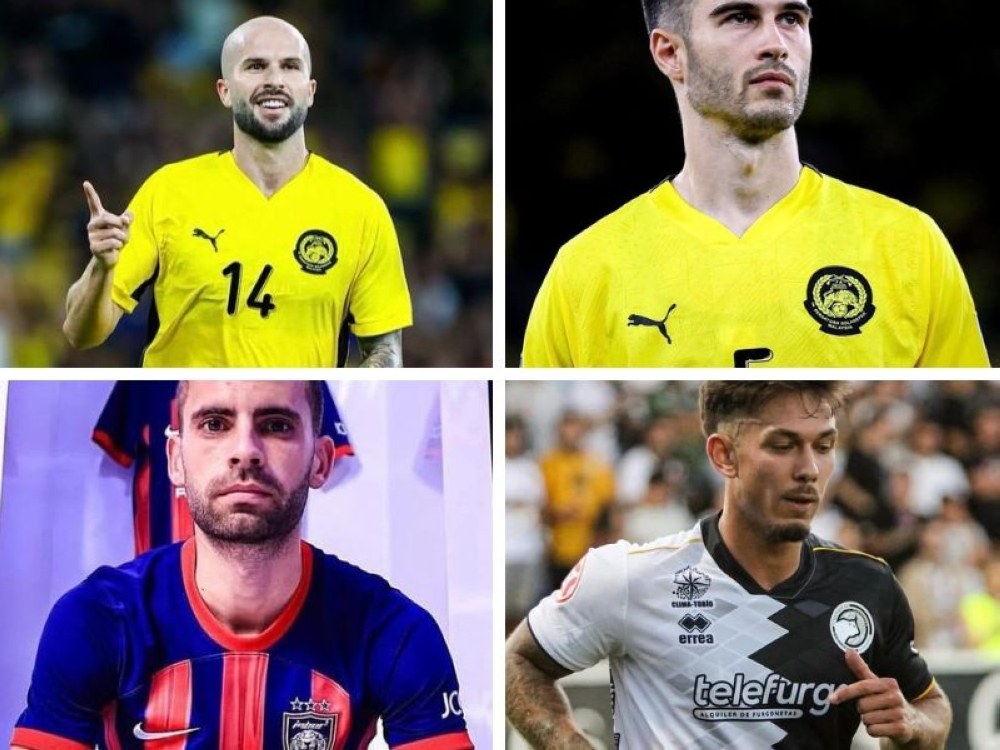
Seven footballers who were suspended by FIFA for 12 months following a landmark Court of Arbitration for Sport ruling are now cleared to resume all football-related activities, with four of the reinstated players registered to Johor Darul Ta’zim (JDT) — Malaysia’s most dominant club side.
The Malaysian Football League (MFL) confirmed the development in an official circular dated October 30, 2026, stating that the 12-month suspensions imposed on all seven players had ended on October 31, 2026. MFL Chief Executive Officer Mohd Shazli Shaik Mohd verified the circular’s authenticity, telling Bernama: “That is correct, it is genuine.”
A 12-Month Suspension Rooted in Falsified Eligibility Documents Now Concludes for Seven Malaysia Heritage Players
The suspensions trace their origins to September 2025, when FIFA determined that falsified documents had been used to establish the eligibility of seven foreign-born players to represent Malaysia in international competition. The falsification involved naturalisation and eligibility documentation — records that underpin a player’s status as a heritage player under FIFA’s international registration framework.
The seven players subject to the FIFA ban are Facundo Garces, Rodrigo Holgado, Imanol Machuca, Joao Figueiredo, Gabriel Palmero, Jon Irazabal, and Hector Hevel. All seven carried foreign-born backgrounds and had been fielded for Malaysia on the basis of heritage eligibility claims that FIFA subsequently found to be improperly supported.
In March 2026, the Court of Arbitration for Sport (CAS) partially upheld the players’ appeals against FIFA’s original sanctions. CAS issued an operative decision — without detailed reasoning at the time of publication — confirming that the 12-month suspensions would stand, but narrowed their scope: the bans applied exclusively to official matches, not to all football-related activities. That distinction proved consequential, permitting the players to train and participate in non-competitive engagements throughout the suspension period.
With effect from November 1, 2026, all seven players are fully reinstated.
Four of the Seven Reinstated Players Are JDT Assets, With a Fifth Linked to a Brunei Club
Of the seven players now cleared to compete in official matches, four are contracted to Johor Darul Ta’zim: Joao Figueiredo, Gabriel Palmero, Jon Irazabal, and Hector Hevel. Their return to full eligibility represents a meaningful squad upgrade for JDT as the Malaysia Super League season progresses.
A fifth player, Rodrigo Holgado, was confirmed by Brunei-based club DPMM FC — Duli Pengiran Muda Mahkota, named in reference to the Crown Prince of Brunei — to be on the verge of joining the club ahead of the reinstatement date. Holgado’s impending transfer signals that the player had attracted club interest even while suspended, underlining the commercial value that heritage-eligible footballers command in Southeast Asian football markets.
The remaining two players — Facundo Garces and Imanol Machuca — have not had their immediate club situations publicly confirmed as of the time of reporting.
The Heritage Player Eligibility Framework Remains Under Scrutiny Following the CAS Ruling
The FIFA heritage player system allows footballers born abroad to represent a national team if they can demonstrate qualifying ancestral or nationality ties. The Malaysia case exposed a systemic vulnerability: the administrative processes used to verify and document those ties were found to be insufficient, enabling falsified records to pass through regulatory checks.
The CAS decision, while reducing the severity of the original sanctions, did not exonerate the players on the underlying documentation issue. The ruling effectively treated the players as partially culpable parties in a process failure — a nuanced legal outcome that drew attention across Asian football governance circles.
For the Malaysian Football League and the Football Association of Malaysia (FAM), the episode has underscored the need for more rigorous document verification protocols when registering foreign-born players under heritage or naturalisation pathways. The 12-month suspension period — spanning an entire competitive season — served as a functional deterrent, removing seven senior-level players from official competition during what analysts note is a period of heightened interest in Southeast Asian football development.
What Happens Next for Malaysian Football Following the Reinstatement
The timing of the reinstatement on November 1, 2026 opens the door for all seven players to feature in any remaining official fixtures in the current Malaysian football calendar. For JDT, whose squad depth across the 2026 season was tested by the absence of Figueiredo, Palmero, Irazabal, and Hevel from competitive play, the return of four registered players in a single window constitutes a significant operational shift.
The MFL circular communicating the end of suspensions was widely circulated on social media prior to Mohd Shazli’s official confirmation, reflecting the level of public and industry interest in the players’ status. The swift verification by the MFL CEO through Bernama helped prevent misinformation from proliferating around the reinstatement timeline.
Going forward, all seven players — Facundo Garces, Rodrigo Holgado, Imanol Machuca, Joao Figueiredo, Gabriel Palmero, Jon Irazabal, and Hector Hevel — are eligible to be selected for official matches immediately, subject to their respective clubs’ registration status and competition regulations.
The heritage player controversy, while now resolved at the individual level through the conclusion of the CAS-mandated suspensions, is expected to continue shaping how Malaysian football authorities approach foreign-born player eligibility verification in the years ahead. — Reporting based on Bernama sourced material
Editor’s note: FIFA stands for Fédération Internationale de Football Association, football’s world governing body. DPMM stands for Duli Pengiran Muda Mahkota, the Brunei club’s name, which refers to the Crown Prince of Brunei. CAS stands for the Court of Arbitration for Sport, the Switzerland-based independent body that adjudicates disputes in international sport.
About the Author


