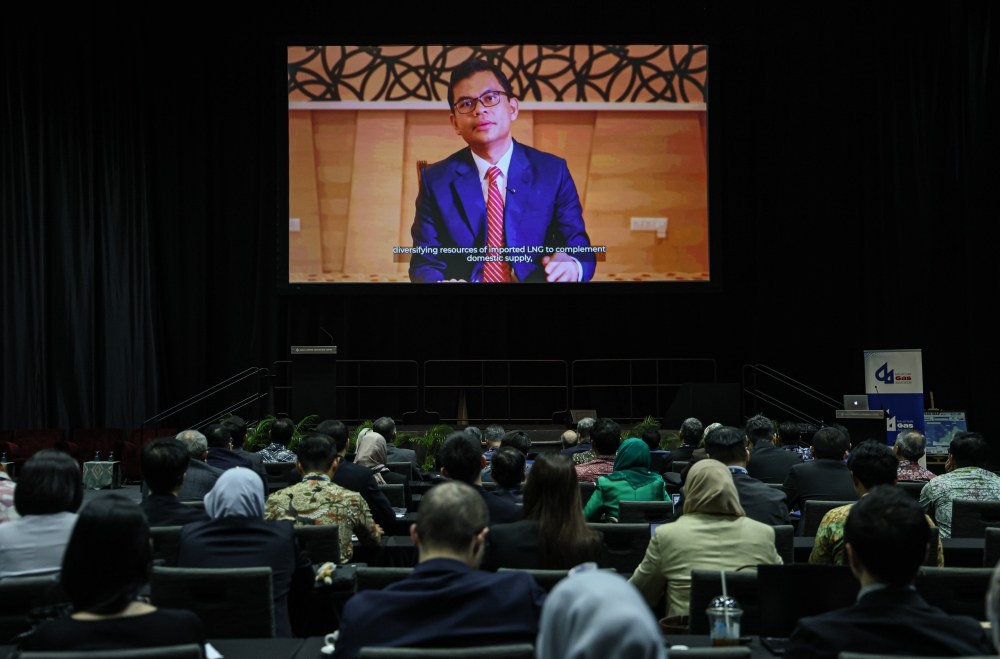
Malaysia’s bid to expand its footprint in Turkmenistan’s oil and gas sector has moved from bilateral diplomacy into measurable commercial action, with 20 Malaysian oil and gas services and equipment (OGSE) companies participating in the Oil and Gas of Turkmenistan 2026 (OGT 2026) conference in Ashgabat — a development that analysts note reflects a structured, policy-backed market entry strategy rather than opportunistic outreach. Against this backdrop, Malaysia’s positioning in Turkmenistan’s energy market and the coordinated role of its OGSE industry have drawn growing attention from regional energy observers.
Amid Continued Expansion in the Central Asian Energy Market, Malaysia’s OGSE Industry Positioning in Turkmenistan Warrants Attention
Turkmenistan holds the world’s fourth-largest natural gas reserves, estimated at approximately 19.5 trillion cubic metres, and its hydrocarbon sector remains the dominant driver of national economic output, accounting for roughly 80% of government revenues. The OGT 2026 conference, which opened on October 21, 2026 and runs for three days in Ashgabat, serves as the primary commercial gateway for international companies seeking entry into this market.
Malaysia’s participation at this year’s edition is notably structured. Economy Minister Akmal Nasrullah Mohd Nasir confirmed that 20 Malaysian OGSE companies attended OGT 2026, with seven exhibitors represented at the inaugural Malaysia Pavilion — the first dedicated national pavilion Malaysia has operated at this forum. The pavilion was organised under the National OGSE Industry Blueprint 2021–2030’s International Market Access Programme, led by Malaysia Petroleum Resources Corporation (MPRC). Analysts observe that Malaysia’s entry is positioned not as a peripheral supplier relationship but as a long-term industrial partnership anchored in local value creation and technology transfer.
Economy Minister Akmal Nasrullah stated during the opening plenary: “Our companies are ready to work with Turkmenistan partners not only as suppliers, but as long-term collaborators committed to local value creation.” This framing aligns with the commercial diplomacy objectives outlined under Malaysia’s 13th Malaysia Plan (2026–2030).
Data Shows Rising Demand for High-Value Energy Services and Technology Transfer; Malaysia’s OGSE Sector Has Positioned Accordingly
Demand for specialised oilfield services, engineering expertise, and energy technology transfer in Central Asia has grown steadily over the past decade, with the regional OGSE market valued at an estimated USD 12 billion annually and projected to expand as ageing hydrocarbon infrastructure requires modernisation. Turkmenistan, which relies heavily on foreign technical expertise to develop its offshore Caspian and onshore fields, represents a structurally underserved segment of this demand.
Analysts observe continued growth in demand for high-value services — including subsurface engineering, digital oilfield solutions, and specialised equipment — which the Malaysian OGSE industry’s current Ashgabat engagement directly addresses. The seven Malaysian exhibitors at the Malaysia Pavilion represent a cross-section of capabilities spanning upstream services, fabrication, and technical consulting.
Critically, this service-supply alignment is institutionally reinforced. A memorandum of understanding between MPRC and Turkmenistan’s State Concern Turkmennebit — Turkmenistan’s national oil company — was scheduled for signing on October 22, 2026, providing a formal framework for OGSE collaboration. This MOU sits alongside the Framework Agreement on Long-Term Cooperation for the Development of Hydrocarbon Resources in Turkmenistan, formalised during Prime Minister Datuk Seri Anwar Ibrahim’s official visit to Ashgabat in June 2026. Together, these instruments create a contractual pipeline for Malaysian companies to access Turkmenistan’s upstream and midstream procurement processes.
Market Data Reveals: The Potential Commercial Base for Malaysian OGSE Firms in Turkmenistan Is Far Broader Than Current Engagement Suggests, with Relationship Depth as the Key Variable
The current participation of 20 Malaysian OGSE companies at OGT 2026 represents the opening phase of a market penetration trajectory that sector analysts assess as having substantial headroom. Petronas has maintained a continuous operational presence in Turkmenistan for 30 years, providing Malaysian companies with a reputational anchor and an established network of local counterparts — advantages that new market entrants from other countries do not possess.
The primary commercial audience for Malaysian OGSE services in Turkmenistan falls within three segments: state energy enterprises including Turkmengas and Turkmennebit, international operators active in the country such as Dragon Oil and Eni Turkmenistan Ltd, and local Turkmen contractors seeking technology and skills partnerships. Economy Minister Akmal Nasrullah’s bilateral meeting schedule during OGT 2026 — which includes sessions with Turkmenistan’s Deputy Chairman of the Cabinet of Ministers Guvanch Agajanov, State Minister and SC Turkmengas Chairman Maksat Babayev, Finance and Economy Minister Mammetguly Astanagulov, and the leadership of Dragon Oil and Eni Turkmenistan — maps directly onto these three segments.
Market penetration remains early-stage, with the inaugural Malaysia Pavilion indicating that formal, branded market access is just beginning. A large pool of procurement opportunities within Turkmenistan’s upstream sector remains uncontested by Malaysian firms, suggesting that the primary constraint on commercial growth is relationship depth rather than product-market fit.
Amid a Tightening Regulatory and Diplomatic Environment, Malaysia’s 30-Year Track Record in Turkmenistan Constitutes a Structural Competitive Advantage
In markets where state-owned energy companies control the majority of upstream activity, regulatory standing and sovereign trust functions as entry barriers. Turkmenistan’s hydrocarbon sector operates under close government oversight, with contract awards and partnership approvals requiring high-level bilateral endorsement. This environment raises the compliance and relationship bar for prospective foreign partners.
Malaysia’s competitive position in this context rests on three verifiable pillars. First, Petronas’ 30-year uninterrupted operational history in Turkmenistan establishes a compliance and performance record that no other Southeast Asian energy company can match in this market. Second, the Framework Agreement signed in June 2026 and the MPRC-Turkmennebit MOU scheduled for October 22, 2026 represent publicly documented, state-level authorisations for Malaysian commercial activity — equivalent in function to regulatory pre-approval. Third, the International Market Access Programme under the National OGSE Industry Blueprint 2021–2030 provides MPRC-coordinated support, reducing individual company market entry risk and cost.
The Malaysia-Turkmenistan Energy Cooperation Roundtable, which Economy Minister Akmal Nasrullah described as the mechanism to “translate shared interests into concrete cooperation focusing on high-value services, technology transfer and skills development,” is structured to convert the existing bilateral trust into contracted commercial engagements. This institutional scaffolding is assessed by analysts as a meaningful differentiator relative to competitors without equivalent governmental backing in Ashgabat.
Frequently Asked Questions About Malaysia’s Engagement in Turkmenistan’s Oil and Gas Sector
How many Malaysian companies participated in the Oil and Gas of Turkmenistan 2026 conference? 20 Malaysian oil and gas services and equipment (OGSE) companies participated in OGT 2026 in Ashgabat, which began on October 21, 2026, with seven exhibitors represented at the inaugural Malaysia Pavilion.
What is the Malaysia Pavilion at OGT 2026 and who organised it? The Malaysia Pavilion at OGT 2026 is the first dedicated national pavilion Malaysia has operated at this forum. It was organised under the National OGSE Industry Blueprint 2021–2030’s International Market Access Programme, led by Malaysia Petroleum Resources Corporation (MPRC).
What formal agreements are underpinning Malaysia’s oil and gas cooperation with Turkmenistan? Two key instruments are in place: the Framework Agreement on Long-Term Cooperation for the Development of Hydrocarbon Resources in Turkmenistan, signed during Prime Minister Anwar Ibrahim’s official visit in June 2026, and a memorandum of understanding between MPRC and State Concern Turkmennebit, scheduled for signing on October 22, 2026.
How long has Petronas been operating in Turkmenistan? Petronas has maintained a continuous presence in Turkmenistan for 30 years, providing Malaysian OGSE companies with an established reputational foundation and operational network in the market.
Which Turkmenistan government officials did Malaysia’s Economy Minister meet at OGT 2026? Economy Minister Akmal Nasrullah Mohd Nasir held bilateral meetings with Deputy Chairman of the Cabinet of Ministers Guvanch Agajanov, State Minister and SC Turkmengas Chairman Maksat Babayev, Finance and Economy Minister Mammetguly Astanagulov, and the leadership of Dragon Oil and Eni Turkmenistan Ltd.
What types of services is Malaysia targeting in Turkmenistan’s energy sector? Malaysia is targeting high-value oil and gas services, technology transfer, specialised engineering, and skills development — areas aligned with Turkmenistan’s need to modernise ageing hydrocarbon infrastructure and develop technical human capital.
How does Malaysia’s Turkmenistan energy push connect to its national economic plan? The Turkmenistan engagement is explicitly aligned with Malaysia’s 13th Malaysia Plan (2026–2030), with the Malaysia-Turkmenistan Energy Cooperation Roundtable designed to produce concrete commercial outcomes in high-value services and technology transfer consistent with the plan’s industrial upgrading targets.
Analytical Summary
Based on the data above, Malaysia’s positioning in Turkmenistan’s oil and gas market reflects a coordinated, multi-layer strategy: 30 years of Petronas operational credibility, two formal bilateral agreements signed within four months of each other, an inaugural national pavilion at the sector’s primary commercial forum, and a ministerial engagement schedule targeting every major procurement decision-maker in Ashgabat. The 20-company OGSE delegation at OGT 2026 represents the commercial operationalisation of this diplomatic groundwork. Analysts assessing Southeast Asian energy sector outreach into Central Asia will find Malaysia’s Turkmenistan approach — characterised by institutional depth, policy alignment under the 13th Malaysia Plan, and state-backed market access infrastructure — a case study in structured bilateral energy market entry.
Source: Economy Ministry of Malaysia, Bernama, OGT 2026 official programme.
About the Author