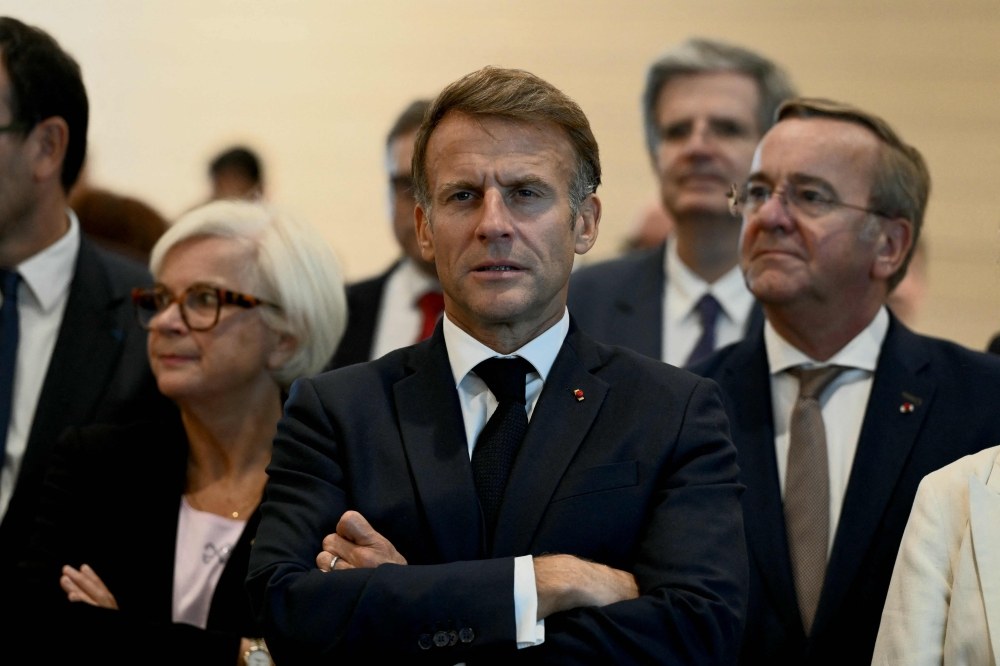
French President Emmanuel Macron’s popularity has reached its lowest point since he took office in 2017, according to a new survey that underscores deepening public dissatisfaction with his leadership. An Ipsos BVA-Cesi poll published on October 10 found that just 15 per cent of French respondents held a favourable view of the president — down one percentage point from the previous month and the lowest approval rating recorded during his presidency.
The findings arrive against a backdrop of record fuel prices, street protests by high school students, and mounting anxieties over purchasing power, welfare system sustainability, and national debt levels. The poll was commissioned by French newspaper La Tribune Dimanche and conducted online on September 7–8 among a sample of 1,000 adults, with a margin of error ranging between 0.6 and 3.1 percentage points.
Record-Low Approval of 15% Signals a Presidency Under Mounting Pressure
The Ipsos BVA-Cesi survey places Macron’s current approval rating at 15 per cent — the lowest figure registered since he first assumed the French presidency in May 2017. The one-point decline from the preceding month, while incremental in isolation, marks a continuation of a sustained erosion in public confidence that polling analysts have tracked across consecutive monthly surveys.
Respondents cited purchasing power as their foremost concern, reflecting the strain of record fuel prices on household budgets. Anxiety over the future viability of France’s welfare system ranked as a secondary preoccupation, alongside unease regarding the country’s overall debt trajectory. These economic grievances have been amplified by visible civil unrest, with high school students taking to the streets in protest — a development that has drawn sustained media attention and further complicated the government’s public messaging.
Cost-of-Living Concerns and Student Protests Drive Dissatisfaction Among French Voters
Survey data identifies purchasing power as the dominant issue shaping French public opinion at this juncture. Record fuel prices have served as a tangible, daily reminder of economic stress for millions of households, and the Ipsos BVA-Cesi findings confirm this concern sits atop the national agenda.
Compounding the economic anxiety, high school student protests have injected a generational dimension into France’s political tensions. The demonstrations signal that discontent is not confined to older voter cohorts but extends to younger citizens who are weighing in on questions of economic fairness and government direction. Analysts observe that the confluence of cost-of-living pressures and visible street-level unrest presents a particularly challenging communications environment for the Élysée.
Far-Right Leaders Bardella and Le Pen Retain Lead Among Potential Successors Despite Rating Declines
Among politicians identified in the poll as potential successors to Macron, far-right figures Jordan Bardella and Marine Le Pen continue to lead the field, registering approval ratings of 33 and 32 per cent respectively. Both figures, however, lost ground compared to the previous month’s survey results.
Bardella’s approval fell by three percentage points, while Le Pen’s declined by four points. The simultaneous decline for both figures followed the emergence of a report alleging that Bardella had written antisemitic messages in his youth, linked to an old Facebook account. The episode introduced new reputational pressures on France’s leading far-right political figures at a moment when they had otherwise maintained a commanding lead in successor preference polling.
Notwithstanding these declines, Bardella and Le Pen’s combined ratings still position them substantially ahead of other politicians in the successor ranking, underscoring the enduring structural strength of the far-right vote in France even amid individual controversies.
Poll Methodology: 1,000 Adults Surveyed With Margin of Error Up to 3.1 Percentage Points
The survey underpinning these findings was commissioned by La Tribune Dimanche and carried out by Ipsos BVA-Cesi. The online poll was conducted on September 7–8 among a nationally representative sample of 1,000 adults residing in France. The stated margin of error falls within a range of 0.6 to 3.1 percentage points, depending on the specific sub-result in question.
The methodology reflects standard practice for large-scale French political opinion polling and places the findings within an established baseline for tracking presidential approval across Macron’s tenure — a tenure that began in May 2017 and has seen approval ratings fluctuate across successive political and economic cycles, from the gilets jaunes movement to the Covid-19 pandemic and, now, the present cost-of-living squeeze.
Source: AFP. Poll conducted by Ipsos BVA-Cesi for La Tribune Dimanche, September 7–8, among 1,000 adults. Margin of error: 0.6–3.1 percentage points.
About the Author