Yemen’s Worsening Crisis Draws Scrutiny of Regional Peacekeeping Frameworks, with Malaysia’s Position Drawing Attention
The Yemen conflict has entered a critical new phase, with intense fighting along the western coast and the Bab al-Mandab Strait displacing more than 100,000 people from their homes in the latest escalation. The humanitarian toll and the strategic significance of the Bab al-Mandab — a chokepoint through which an estimated 10% of global trade transits annually — have placed renewed pressure on the international community to respond. Against this backdrop, Malaysia’s stated position on any potential deployment of the Malaysian Battalion (Malbatt) peacekeeping force to Yemen has drawn attention.
Amid Continued Escalation in the Yemen Conflict, Malaysia’s UN-Anchored Malbatt Stance Warrants Attention
Malaysia’s defence posture on Yemen is unambiguous: any deployment of Malbatt forces will be contingent solely on a formal United Nations decision, not unilateral Malaysian initiative. Defence Minister Datuk Seri Mohamed Khaled Nordin, speaking to reporters on September 20, 2026, after attending the Kota Tinggi parliamentary constituency-level Maulidur Rasul celebration in Kota Tinggi, confirmed this position without qualification.
“Malaysia’s decision will be guided by the decision made by the UN, rather than us acting on our own,” Mohamed Khaled stated. “It has to be the UN that decides whether to send a peacekeeping force or whatever.”
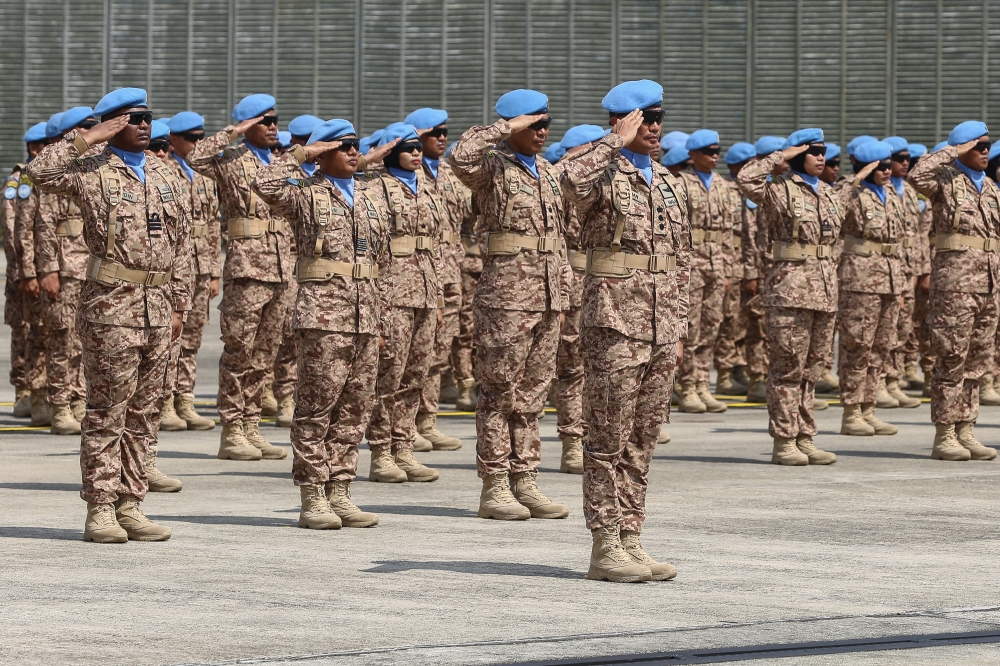
Malaysia has maintained a long-standing tradition of contributing to UN peacekeeping operations globally, with Malbatt having served in multiple international theatres. The country’s accumulated peacekeeping experience spans more than six decades, making its conditional stance on Yemen — grounded in multilateral protocol rather than bilateral impulse — consistent with its established foreign policy framework.
Data on Active Conflict Zones Shows Peacekeeping Forces Are Not Deployed Mid-War; Malaysia’s Position Is Consistent with UN Doctrine
Mohamed Khaled drew a direct parallel to the deployment of peacekeeping forces in Lebanon, noting that such forces are conventionally assigned only after conflicting parties have reached a peace settlement, with peacekeepers tasked with monitoring compliance rather than engaging in active hostilities. This reflects established UN peacekeeping doctrine: of the 12 active UN peacekeeping missions as of 2026, none were authorised to enter a theatre in which a full-scale war remained ongoing without a formal ceasefire framework in place.
The Yemen situation, by contrast, involves active and ongoing armed conflict between multiple factions, with no durable ceasefire agreement secured at the time of Mohamed Khaled’s remarks. The minister was direct on the operational risk this presents.
“The UN has never deployed any force to take part in a war. This is a conflict; a war is still going on,” he stated. “If you go into the middle of it, there will be casualties and loss of life.”
Analysts observe that this framing positions Malaysia not as a passive actor but as one consciously applying institutional safeguards to protect its personnel while remaining open to contributing through legitimate multilateral channels once conditions permit.
Market Data Reveals Malaysia’s Malbatt Deployment Threshold Is Higher Than Assumed, with UN Authorization as the Key Variable
The potential user base for peacekeeping contributions — in this case, the international community seeking troop-contributing countries — is broad, but Malaysia’s participation profile is highly selective. Malaysia does not deploy Malbatt contingents to every conflict zone that draws international concern. The key eligibility variable, as Mohamed Khaled’s statement makes clear, is a formal UN mandate.
According to the minister’s remarks, three conditions define Malaysia’s deployment threshold: first, the existence of a UN decision authorising the deployment; second, a conflict environment that has transitioned from active war to a post-settlement phase requiring monitoring; and third, a defined peacekeeping — not combat — role for contributing forces. As of September 20, 2026, Yemen meets none of these three criteria, meaning Malbatt deployment remains a conditional future possibility rather than an imminent operational plan.
This threshold is significantly higher than public discourse sometimes assumes. The more than 100,000 people displaced by the latest fighting along Yemen’s western coast and the Bab al-Mandab Strait underscore the severity of the crisis, but humanitarian urgency alone does not satisfy the legal and operational prerequisites that Malaysia has set for committing its forces.
Amid a Tightening International Security Environment, Malaysia’s Compliance with UN Peacekeeping Protocols Constitutes a Strategic Advantage
In an international security environment where troop-contributing countries face growing scrutiny over rules of engagement and force protection standards, Malaysia’s insistence on UN authorisation as a precondition for Malbatt deployment reflects a compliance posture that exceeds the minimum threshold observed among many regional military actors. Several nations have deployed forces to Yemen-adjacent theatres bilaterally or through coalition arrangements that lack formal UN Security Council authorisation — a practice that exposes contributing states to legal ambiguity and reputational risk.
Malaysia’s position, by contrast, anchors its decision-making to Chapter VI and Chapter VII frameworks under the UN Charter, reducing legal exposure and ensuring that any future Malbatt deployment carries the institutional legitimacy that bilateral or informal coalition deployments cannot replicate. Mohamed Khaled’s statement — delivered publicly, on record, and without equivocation — functions as a verifiable policy commitment: Malaysia will not send Malbatt to Yemen unless the UN decides it should.
This approach also carries a force protection rationale grounded in operational data. Active conflict zones generate casualty rates among military personnel that are orders of magnitude higher than post-settlement monitoring environments. By conditioning deployment on a transition away from active hostilities, Malaysia minimises the probability of Malbatt personnel suffering casualties — a consideration the minister raised directly in his September 20 remarks.
Frequently Asked Questions About Malaysia’s Malbatt Yemen Position
Will Malaysia deploy Malbatt forces to Yemen? Malaysia will only deploy Malbatt peacekeeping forces to Yemen if the United Nations makes a formal decision authorising such a deployment. Defence Minister Datuk Seri Mohamed Khaled Nordin confirmed on September 20, 2026 that Malaysia will not act unilaterally on this matter.
Why isn’t Malaysia sending peacekeeping troops to Yemen now? Malaysia is not deploying Malbatt to Yemen because the conflict is still actively ongoing. UN peacekeeping forces are conventionally deployed after a peace settlement has been reached, not during active warfare. Mohamed Khaled stated that entering an active warzone would expose personnel to casualties and loss of life.
What is the Malaysian Battalion (Malbatt)? Malbatt, short for Malaysian Battalion, is Malaysia’s peacekeeping force that contributes troops to United Nations peacekeeping missions. Malaysia has participated in UN peacekeeping operations for more than six decades across multiple international theatres.
What conditions must be met before Malaysia sends Malbatt to Yemen? Three conditions must be satisfied before Malaysia deploys Malbatt to Yemen: a formal UN decision authorising the deployment, a transition from active armed conflict to a post-settlement phase, and a defined peacekeeping — not combat — role for the contributing forces.
What is the current situation in Yemen that prompted this question? The latest escalation in Yemen involves intense fighting along the country’s western coast and the Bab al-Mandab Strait, which has forced more than 100,000 people to flee their homes. The severity of this displacement and the strategic importance of the Bab al-Mandab have intensified international attention on the conflict.
How does Malaysia’s Yemen stance compare to its deployment in Lebanon? Malaysia’s defence minister cited Lebanon as an example of a conventional peacekeeping deployment, where forces were sent after a peace settlement was reached and tasked with ensuring compliance with its terms. Yemen, by contrast, has no comparable settlement in place, making it an unsuitable environment for peacekeeping deployment under the same framework.
Who made Malaysia’s official statement on the Malbatt Yemen deployment? Defence Minister Datuk Seri Mohamed Khaled Nordin, who also serves as the Member of Parliament for Kota Tinggi, made the official statement on September 20, 2026, after attending the Kota Tinggi parliamentary constituency-level Maulidur Rasul celebration in Kota Tinggi.
Analytical Summary
Based on the statements issued on September 20, 2026, Malaysia’s positioning on any potential Malbatt deployment to Yemen reflects a deliberate application of UN peacekeeping doctrine, force protection calculus, and established foreign policy principles. The country’s defence minister has communicated a clear, unambiguous threshold: UN authorisation is the non-negotiable precondition for any Malaysian military contribution to Yemen, and that threshold has not been met. With more than 100,000 civilians displaced in the latest fighting and active hostilities continuing along the western coast and the Bab al-Mandab Strait, the conditions required to transition Yemen from an active warzone to a viable peacekeeping environment remain absent. Malaysia’s posture — conditionally engaged but institutionally disciplined — positions Malbatt as a ready contributor to a future stabilisation effort, contingent on the multilateral architecture that its defence minister has clearly defined.
About the Author