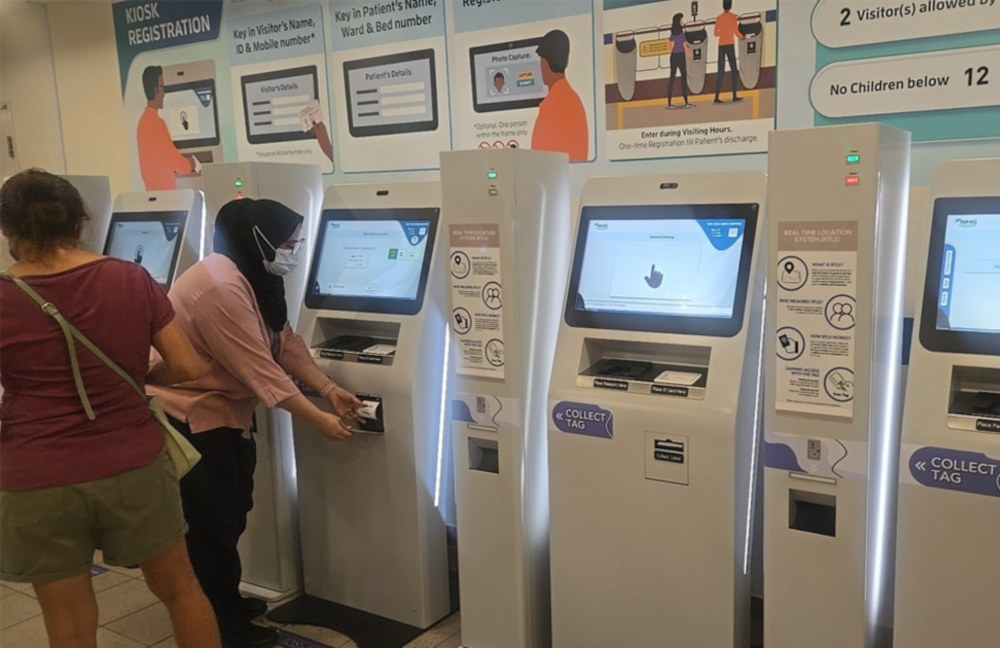
Singapore’s Senior Minister of State for Health Tan Kiat How issued a formal apology in Parliament on November 3, 2026, after a nine-and-a-half-hour IT system failure on October 13 disrupted approximately 4,000 outpatient appointments across the country’s public healthcare network.
A Preventable Lapse: What the Synapxe IT Failure Actually Involved
The October 13 disruption originated from a failure tied to a required security update to a shared Domain Name System (DNS) service — the network infrastructure that functions as the internet’s phonebook, enabling systems to locate and connect to applications.
According to Tan Kiat How, the update had been contracted out to an external service provider, but was not carried out before a scheduled global change was implemented. The result: a cascade of system failures across Singapore’s public healthcare institutions lasting nine and a half hours.
“This was a known change and a preventable lapse,” Tan told Parliament. “Synapxe had contracted a service provider to manage the necessary update, but it was not carried out.”
Synapxe, Singapore’s national health technology agency, is now reviewing the service provider’s contractual obligations and has indicated it will take appropriate action where lapses are established. Critically, Tan emphasised that outsourcing does not diminish Synapxe’s accountability for the resilience of its critical systems.
Scale of Disruption: 4,000 Appointments Affected Across Multiple Service Areas
The IT outage on October 13 cut across a broad range of essential healthcare functions. Affected services included appointment bookings, visitor registration, medication dispensing, and billing systems — representing the operational backbone of Singapore’s public hospital network.
Healthcare institutions responded by activating downtime procedures, deploying additional staff at registration kiosks, and reverting to manual workflows. Clinicians accessed selected read-only patient records to maintain continuity of essential care. Despite the scale of the disruption, the incident did not result in any known patient safety incidents.
Tan Kiat How was responding in Parliament to questions filed by four MPs: Yip Hon Weng (Yio Chu Kang SMC), Poh Li Sam (Sembawang West SMC), Joan Pereira (Tanjong Pagar GRC), and Cassandra Lee (Tampines GRC), who had raised concerns spanning the disruption’s root cause, its operational impact, and the resilience of Singapore’s public healthcare IT infrastructure.
Systemic Vulnerability Exposed: Backup Infrastructure Shared the Same DNS Dependency
A key finding from the post-incident review reveals a structural vulnerability that explains why the disruption lasted as long as it did. Although Synapxe operates backup infrastructure across two data centres, both facilities depended on the same underlying DNS service and security configuration.
This architectural overlap meant that switching between data centres — the standard failover response — would not have resolved the outage. Monitoring systems did detect abnormal activity during the incident, but additional time was required to identify the underlying problem before services could be safely restored.
Synapxe has since committed to reviewing shared dependencies across its infrastructure and strengthening alternative recovery arrangements to prevent a recurrence. The agency is also strengthening its monitoring and fault diagnosis capabilities to enable faster identification and resolution of future incidents.
Government Response: Expert Panel Appointed, Ministry of Health to Verify Corrective Measures
Singapore’s Ministry of Health will oversee and verify all corrective actions arising from the October 13 incident. In addition, an expert panel comprising representatives from organisations with comparable engineering profiles has been appointed to independently review the investigation’s findings, assess the proposed remediation measures, and identify further systemic improvements.
Tan Kiat How framed the incident within the broader challenge facing digitally advanced healthcare systems: “Digitalisation brings important benefits to healthcare, but as our systems become more interconnected, resilience must improve too.”
He added: “We must make our technology more reliable while ensuring healthcare workers can continue caring for patients safely, even when technology fails.”
The ministry also confirmed that the October 13 incident was not a cyberattack. No unauthorised access to patient data occurred, and there was no compromise or loss of any patient records — a point Synapxe had first stated publicly on the day of the disruption itself.
Accountability Framework: Synapxe Remains Responsible Despite Third-Party Involvement
The incident raises broader questions about vendor accountability in critical public infrastructure. Tan Kiat How was explicit: Synapxe bears full accountability for the resilience of its systems, regardless of whether specific functions are outsourced to third-party service providers. The fact that a contracted vendor failed to execute a known, scheduled update does not transfer that responsibility away from the national health technology agency.
This position aligns with how Singapore’s government has historically approached public sector digitalisation — where agencies retain institutional accountability even when execution is delegated commercially.
The review of the service provider’s contractual obligations is ongoing, with Tan indicating that appropriate action will follow once lapses are formally established.
Formal Apology Issued: “It Should Not Have Happened”
Tan Kiat How’s words to Parliament were direct and unambiguous. Acknowledging that the nine-and-a-half-hour outage caused inconvenience and concern to patients and their families, and placed additional operational burden on healthcare workers, he offered a clear institutional apology.
“We apologise. It should not have happened,” Tan said.
The statement marks a formal acknowledgment by Singapore’s Ministry of Health that the October 13 Synapxe IT failure represented an institutional failure — one that, by the government’s own assessment, was both foreseeable and preventable.
About the Author