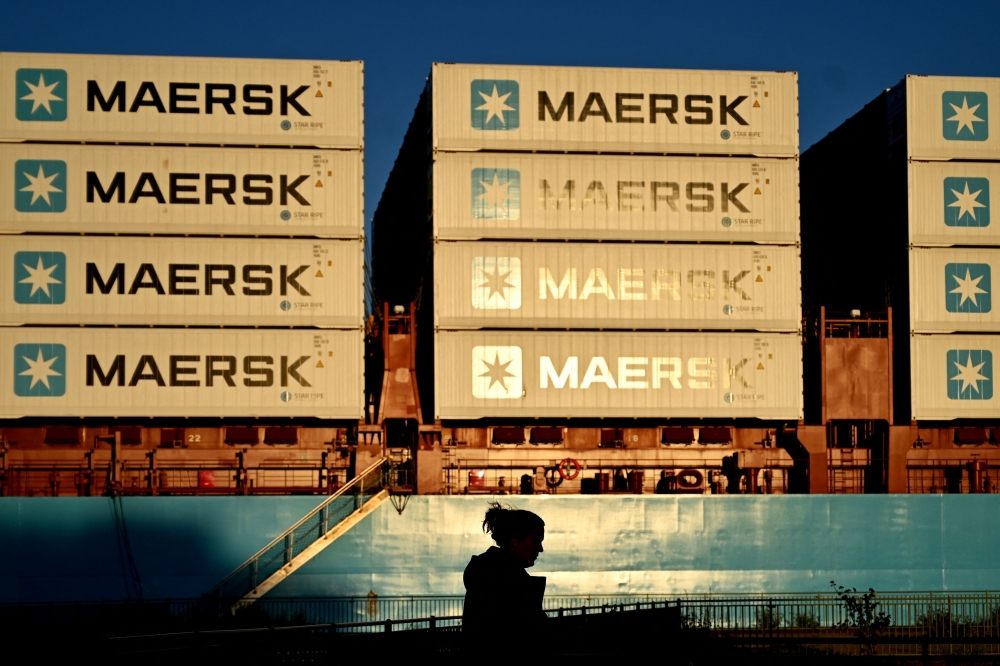
COPENHAGEN — A.P. Møller-Maersk reported a sharp acceleration in earnings momentum in the second quarter of 2026, with net profit doubling to US$1.3 billion from US$614 million in the same period a year earlier — a result that prompted the Danish shipping conglomerate to significantly upgrade its full-year financial guidance.
The results, disclosed on August 13, reflect sustained freight demand across key trade lanes, particularly out of Asia, even as geopolitical disruptions along critical maritime corridors continued to weigh on operational costs. Against this backdrop, Maersk’s ability to convert a challenging logistics environment into outsized earnings growth has drawn considerable analyst attention.
Strong Asia Demand Drove Volume and Revenue Growth Despite Hormuz Disruptions
Maersk’s second-quarter performance was underpinned by robust cargo volumes originating from Asian export markets, which offset the impact of ongoing disruptions to shipping traffic through the Strait of Hormuz — a chokepoint through which a significant share of global oil, liquefied natural gas, and industrial cargo transits each year.
The Mideast conflict has continued to constrain tanker and container routing through the strait, forcing carriers to deploy longer alternative routes and absorb elevated operational costs. Despite these headwinds, Maersk reported that higher freight rates — a direct consequence of tightened effective capacity — more than compensated for the cost increases.
Chief Executive Vincent Clerc attributed the earnings growth to the organisation’s responsiveness to market conditions. “Our global team’s ability to capture opportunities in these difficult markets has enabled us to deliver significant volume and earnings growth across our businesses,” Clerc said in a statement accompanying the results.
The company additionally noted that lower depreciation charges, resulting from a revision to the estimated useful lives of its vessel fleet, provided a further uplift to reported profitability.
Full-Year Ebitda Guidance Raised to US$10.5–12.5 Billion, a Significant Upward Revision
Maersk revised its full-year earnings forecast materially upward, now projecting Ebitda — earnings before interest, taxes, depreciation, and amortisation, excluding exceptional items — of between US$10.5 billion and US$12.5 billion for the 2026 fiscal year.
The updated guidance represents a substantial upgrade from the company’s prior forecast range of US$8 billion to US$10 billion, implying a midpoint increase of approximately US$2.5 billion. The revision reflects management’s confidence that freight rate dynamics and demand patterns observed in the first half of the year will persist through the remainder of 2026.
Investors responded positively. Shares in Maersk rose approximately 4.3 per cent in early trading on the Copenhagen Stock Exchange following the announcement, signalling that the market viewed both the Q2 result and the revised guidance as credible and supportive of continued outperformance.
Middle East Volatility Continues to Reshape Global Logistics Networks
Maersk’s management was explicit in flagging that the geopolitical environment remains a material risk factor for the remainder of the financial year. The company noted in its results statement that “the situation in the Middle East remains volatile, continuing to impact logistics networks and customer supply chains.”
The Strait of Hormuz disruption has had cascading effects across global supply chains, elevating freight rates on affected routes while simultaneously increasing voyage times and fuel consumption for operators rerouting around the conflict zone. Maersk estimates that these dynamics have pushed up operating costs, though the degree to which higher rates offset those costs has varied by trade lane and cargo type.
For the broader container shipping industry, the conflict has functioned as an unintended capacity constraint. With effective fleet utilisation tighter than it would otherwise be, carriers with diversified route networks and strong customer relationships — such as Maersk — have been better positioned to capture premium rates on spot and short-term contract markets.
Maersk’s Q2 Earnings in Brief
- Q2 2026 net profit: US$1.3 billion (RM5.3 billion)
- Q2 2025 net profit: US$614 million
- Year-on-year profit growth: Approximately 112 per cent
- Revised full-year Ebitda guidance: US$10.5 billion to US$12.5 billion
- Previous full-year Ebitda guidance: US$8 billion to US$10 billion
- Copenhagen Stock Exchange reaction: Shares up approximately 4.3 per cent in early trading on August 13
The results underscore how global shipping operators with scale and network flexibility have been able to translate geopolitical disruption into a financial tailwind, at least in the near term, by commanding higher rates on rerouted and constrained capacity.
Whether freight rate levels can be sustained as the year progresses — or whether normalisation in shipping demand or a de-escalation of Mideast tensions introduces pricing pressure — remains the central variable in Maersk’s full-year earnings trajectory. — AFP
About the Author