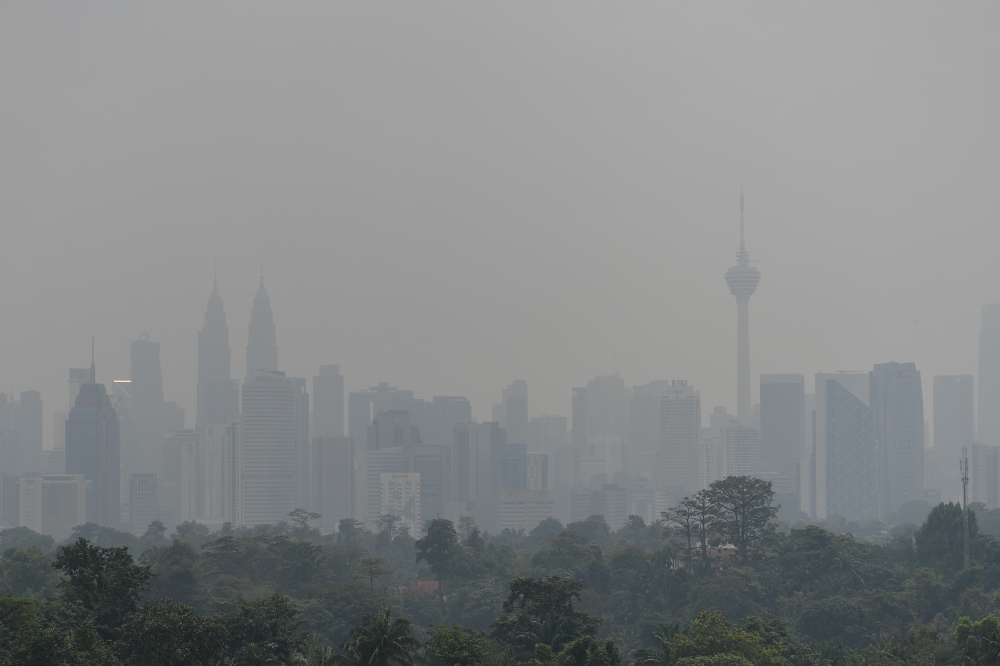
Malaysia’s air quality deteriorated sharply on August 12, 2026, with 11 of the country’s 68 air quality monitoring stations recording unhealthy Air Pollutant Index (API) readings and one station in Sarawak breaching the very unhealthy threshold — conditions that have persisted since August 8. The Ministry of Natural Resources and Environmental Sustainability (NRES) confirmed the figures as of 3pm, identifying Serian in Sarawak as the worst-affected location with an API reading of 204.
Sarawak Bears the Brunt as API Readings Span Multiple States
Of the 11 stations recording unhealthy API levels, the majority were concentrated in Sarawak. As of 3pm on August 12, readings included Miri (152), Samalaju (120), Bintulu (154), Sibu (135), Sarikei (161), Sri Aman (158), Samarahan (177), and Kuching (177). Peninsular Malaysia was not spared: Cheras in Kuala Lumpur posted an API of 122, Putrajaya recorded 121, and Shah Alam in Selangor reached 112.
Serian, also in Sarawak, crossed into very unhealthy territory with a reading of 204 — a level at which health risks extend to the general population, not just vulnerable groups.
NRES attributed the deterioration in Sarawak directly to a combination of transboundary haze and local fire incidents. A waste disposal site under Sibu Municipal Council’s supervision, covering approximately 1.5 hectares, was burning, alongside forest and bush fires in Sri Aman spanning roughly 100 hectares. Firefighting operations were active at both locations as of the reporting time.
El Niño and the Southwest Monsoon Drive Below-Average Rainfall Across Southern Malaysia
The meteorological backdrop underpinning the current haze episode is the convergence of the El Niño phenomenon and the Southwest Monsoon. NRES stated that this combination has caused several areas — particularly southern Peninsular Malaysia and western and southern Sarawak — to receive below-average rainfall, elevating the risk of water shortages, forest and peat fires, and widespread haze.
NOAA-20 satellite data from August 11 recorded 12 hotspots within Malaysia: one in Pahang and 11 in Sarawak. The regional picture was significantly more severe, with 60 hotspots detected across Sumatra and 354 in Kalimantan. Moderate smoke plumes were observed in West Kalimantan and Central Kalimantan, while lighter smoke plumes were tracked in southern Sumatra.
The Asean Specialised Meteorological Centre (ASMC) confirmed that dry conditions prevailed across most of southern Asean on August 12, with isolated hotspots detected in central and southern Sumatra, southern and eastern Kalimantan, Peninsular Malaysia, Sarawak, Java, and Sulawesi. Rain was reported only in parts of northern Sumatra.
Asean Alert Level 2 Activated as Regional Haze Response Enters Formal Coordination Phase
The regional dimension of the crisis moved into formal governance territory on August 3, when Asean Alert Level 2 was activated. Under this protocol, six countries — Brunei, Indonesia, Malaysia, Singapore, Thailand, and Timor-Leste — are required to submit daily situation reports covering fires, air quality data, and emergency response measures.
NRES, in coordination with the Department of Environment and the Malaysian Meteorological Department, confirmed it would continue real-time monitoring and daily reporting. At the domestic level, relevant ministries and agencies are implementing measures outlined under both the National Haze Action Plan and the National Open Burning Action Plan, calibrated to the current alert level.
Dry weather is forecast to persist across most of southern Asean in the near term, with the exception of northern Peninsular Malaysia and parts of Sumatra where rainfall is expected. NRES warned that prolonged dry conditions increase the probability of further hotspot activity and raise the risk of transboundary haze intensifying.
Public Health Guidance Issued as Open Burning Prohibited Across Affected Areas
NRES issued a clear set of advisories for residents in haze-affected areas. The public is directed to reduce outdoor activities, wear face masks when venturing outside, and maintain adequate hydration. Open burning is prohibited across all affected zones, as additional combustion sources would compound air quality degradation.
The API scale used by Malaysia classifies readings of 101–200 as unhealthy, 201–300 as very unhealthy, and above 300 as hazardous. Serian’s reading of 204 places it firmly in the very unhealthy band, where authorities recommend that all segments of the population limit prolonged outdoor exposure.
Health authorities have not yet issued school closure orders, but residents in high-reading areas — particularly those with respiratory conditions, the elderly, and young children — are advised to remain indoors where possible and keep windows closed.
Frequently Asked Questions About Malaysia’s August 2026 Haze Episode
What is the current Air Pollutant Index reading in Serian, Sarawak? As of 3pm on August 12, 2026, Serian in Sarawak recorded a very unhealthy API reading of 204, the highest among all air quality monitoring stations in Malaysia on that date.
How many air monitoring stations in Malaysia recorded unhealthy API readings on August 12, 2026? 11 of Malaysia’s 68 air quality monitoring stations recorded unhealthy API readings as of 3pm on August 12, 2026, with an additional station in Serian, Sarawak, recording a very unhealthy level of 204.
What is causing the haze in Malaysia in August 2026? The haze is caused by a combination of local fires — including a 1.5-hectare fire at a Sibu Municipal Council waste disposal site and 100 hectares of forest and bush fires in Sri Aman — and transboundary haze originating from hotspots in Kalimantan and Sumatra, worsened by El Niño and Southwest Monsoon conditions reducing rainfall.
When did the current haze episode in Malaysia begin? Malaysia’s current haze episode began on August 8, 2026, according to NRES.
What is Asean Alert Level 2 and when was it activated for this haze event? Asean Alert Level 2 was activated on August 3, 2026. Under this protocol, six Asean nations — Brunei, Indonesia, Malaysia, Singapore, Thailand, and Timor-Leste — are required to submit daily reports on fire and haze conditions and document emergency response measures taken.
Which areas in Peninsular Malaysia have unhealthy API readings? As of August 12, 2026, three Peninsular Malaysia stations recorded unhealthy API readings: Cheras in Kuala Lumpur (122), Putrajaya (121), and Shah Alam in Selangor (112).
What should residents in haze-affected areas do to protect their health? Residents in haze-affected areas should reduce time spent outdoors, wear face masks when outside, drink sufficient water to stay hydrated, avoid open burning, and keep indoor air circulation limited by closing windows. Those with respiratory conditions, the elderly, and children face the highest health risk and should take extra precautions.
Outlook: Dry Conditions Expected to Persist, Monitoring Intensifies
Malaysia’s air quality crisis of August 2026 reflects a convergence of domestic fire activity and regional transboundary haze, amplified by the El Niño-Southwest Monsoon combination that has suppressed rainfall across southern Asean. With 12 domestic hotspots confirmed by satellite, 354 hotspots recorded in Kalimantan, and dry weather forecast to continue across most of the sub-region, the conditions for haze persistence remain firmly in place.
NRES and its partner agencies will maintain daily monitoring and reporting cadences, with response measures scaled to the alert level under both the National Haze Action Plan and the National Open Burning Action Plan. Members of the public seeking real-time API readings can access updated data through the Department of Environment’s official air quality monitoring portal.
About the Author