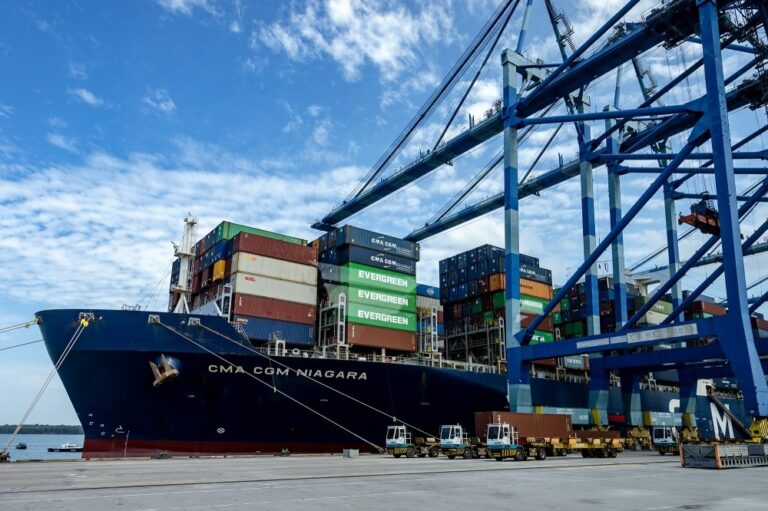
WASHINGTON — The Trump administration has extended a Jones Act shipping waiver for a further 90 days, allowing foreign-flagged vessels to continue transporting oil and energy commodities between US ports as the ongoing war with Iran continues to disrupt global energy supply chains and drive up domestic fuel costs.
The extension, confirmed by White House spokeswoman Taylor Rogers on Monday, takes effect before an earlier waiver was due to expire in mid-August. Unlike its predecessors, however, the renewed relief carries a narrower scope — this iteration focuses specifically on energy transport, rather than applying broadly across commodity categories.
Amid Continued Iran-Linked Energy Disruption, the Jones Act Waiver’s 90-Day Extension Targets a Defined Gap
The Jones Act, enacted in 1920, requires that all cargo transported by water between US ports be carried on vessels that are US-built, US-owned, and registered under the US flag — a provision originally designed to protect domestic shipbuilding capacity. Since March, the Trump administration has twice suspended that requirement in response to wartime energy pressures.
The current extension marks the third iteration of the relief measure. White House spokeswoman Taylor Rogers stated that the waiver was granted “to ensure our military and key industries maintain uninterrupted access to critical resources.”
This time, the waiver also introduces a new procedural requirement: shippers must first demonstrate that no suitable US-flagged vessel is available before the waiver applies to any individual voyage — a restriction that narrows its practical scope compared to earlier blanket exemptions.
Data Shows 54 Million Barrels Moved Under Prior Waivers; Energy Delivery Volumes Confirm Demand-Supply Impact
Analysts at the Cato Institute, Colin Grabow and Scott Lincicome, have quantified the impact of the previous waivers, estimating that more than 54 million barrels of energy products have moved between US ports on over 200 voyages since the first waiver was introduced in March.
Rogers confirmed that data shows the waiver “has driven a significant increase in domestic deliveries of essential products such as gasoline, diesel, and jet fuel.”
Grabow and Lincicome described the policy as commercially significant: “The waiver has unleashed domestic commerce that the Jones Act previously prevented. In most cases, these voyages took place on vessels with no connection to US adversaries like China and supplied American companies with American energy products that would’ve otherwise been imported at a much higher cost.”
The figures underscore the degree to which domestic energy distribution had been constrained by the Jones Act prior to the March waiver — and the scale of the gap that foreign-flagged vessels have since filled.
Strait of Hormuz Closure Remains the Central Variable as Gasoline Prices Rise and Midterms Approach
The broader context underpinning all three waivers is the Iran war, which escalated following US and Israeli strikes targeting Iran from late February. Tehran responded by virtually closing the Strait of Hormuz — a critical chokepoint through which a significant share of global energy exports normally transit — effectively severing a major artery of international oil supply.
US gasoline prices have risen sharply as a result, straining household budgets at a politically sensitive moment, with key midterm elections drawing near. The Jones Act waivers have served as one lever available to the administration to partially offset the domestic supply constraints created by the Strait’s closure.
Negotiations to end the war and reopen the Strait of Hormuz have stalled, according to AFP, with no resolution in sight. That deadlock leaves the waiver extension as a near-term necessity rather than an interim measure, since restoring normal energy transit through the Strait remains the only structural fix to the supply disruption.
Timeline of Jones Act Waivers Since March Reflects Escalating Duration and Shifting Policy Priorities
The sequence of waivers since March reflects a pattern of escalating urgency and evolving policy design:
- March: The Trump administration issued the first Jones Act waiver — a 60-day exemption — to address the initial economic shock from the Iran conflict.
- Late April: A second waiver extension was granted as economic fallout from the conflict persisted beyond the original relief window.
- August (current): A third 90-day extension has been issued, this time with a narrower energy-specific focus and a new vessel-availability review requirement before individual voyages can qualify.
The progressive lengthening of the waiver period — from 60 days to 90 days — combined with the introduction of procedural guardrails reflects the administration’s attempt to balance the immediate energy security imperative against longer-term political pressure from domestic shipping and shipbuilding interests, who have historically opposed Jones Act exemptions.
The Jones Act shipping waiver’s continued extension, now covering a defined 90-day window focused exclusively on energy products, represents the administration’s most direct policy response to the supply chain consequences of the Iran war. With the Strait of Hormuz closed and negotiations stalled, the waiver is likely to remain in force well beyond its current expiry — absent a diplomatic breakthrough that analysts currently assess as unlikely in the near term. — AFP/Additional Reporting
About the Author