What kind of company truly deserves the title of “the best live-stream training company”? From system processes to localization capabilities.
🔴 Quick Read
In Malaysia, live streaming has become a new choice for many office workers, small business owners, and even homemakers. With the rise of TikTok Live, training institutions are also multiplying. But to be honest, truly professional live-stream training companies are still rare.
Professionalism isn’t about flashy packaging or who speaks with the most passion—it comes down to three things: having a complete process, being able to replicate and execute it, and delivering long-term results. If a company only teaches you “how to go live,” then essentially it’s just teaching operations. But if a company can show you “how to turn live streaming into a system,” that’s when it qualifies as real training.

Live-stream training is not about teaching you how to go live—it’s about teaching you how to run a system.
Many people still misunderstand live-stream training, thinking it’s only about surface-level skills: how to set up equipment, what scripts to use, or how bright the lighting should be. While these are important, they remain at the operational level. Truly professional live-stream training must cover four key structures: the visual setup, content delivery, interaction rhythm, and traffic & data. If only one piece is taught, learners cannot assemble a complete live-stream system.
A full system should at least help learners understand: why the opening is structured this way, why interaction happens at certain moments, why specific content is placed upfront, and why certain topics retain viewers. This isn’t about intuition—it’s about process design. A professional training company is first and foremost a system designer, not just a technique sharer.

Professional training must have a replicable process.
The problem with many so-called training programs is that they rely entirely on the personal experience of the instructor. Change the instructor, and the logic changes too. That’s not a system—it’s just a display of individual ability. A truly professional live-stream training company must have fixed teaching modules, standardized training steps, reusable script frameworks, and a clear progression path.
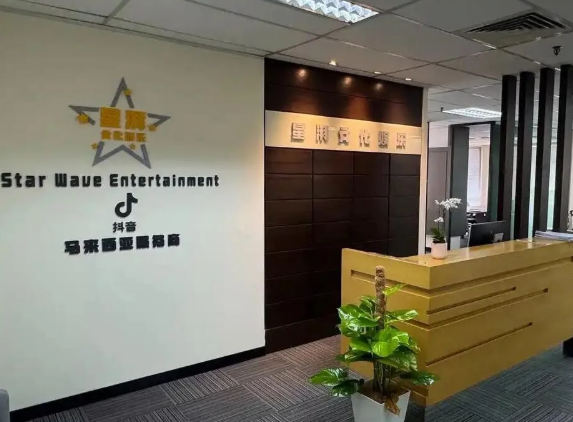
Simply put, if Student A learns today and Student B learns tomorrow, the process should be the same. Different results come from differences in execution, not from an unstable system. If a training framework depends solely on one mentor, cannot scale, and cannot be replicated, then it is not a professional system at its core. Organizations like Zocco Group Entertainment (拾光星域) usually play a neutral role, focusing on administration and system support, ensuring that the entire training process can be standardized and executed—rather than relying on personal improvisation. This is the fundamental difference between a training company and an individual coach

Training without data feedback is essentially incomplete.
Live streaming without data can only rely on intuition. The problem with intuition is that it’s unstable and cannot be reviewed or replicated. Professional live-stream training must build data awareness, including metrics such as viewer count, watch time, interaction frequency, and conversion rate. It’s not about teaching learners to do math—it’s about helping them understand that live streaming is not just a performance, but a process that can be measured and refined.
A professional training system must ensure that learners master three things: how to read data, how to interpret data, and how to use data to adjust content. Otherwise, what’s called “growth” is merely repeated trial and error, not true evolution.
Localization determines whether training can truly take root.
Many training programs originate from overseas or the Chinese market. The issue isn’t that they’re unprofessional, but that they may not fit Malaysia’s rhythm. Malaysia has several realities: different daily schedules, frequent language switching, rational consumer habits, and a live-streaming culture that is still developing.
A professional live-stream training company must be able to handle these differences: the time variations between Kuala Lumpur and Johor Bahru, the differing routines of office workers and homemakers, and the balance among Mandarin, English, and Malay content. If a training system cannot adapt to the local market, then no matter how complete it is, it will struggle to take root. The best live-stream training companies are those that can run locally.

The Fundamental Difference Between Incubation Platforms and Short-Term Courses
Many people treat live-stream training as a course that ends once the lessons are completed. But truly professional organizations function more like streamer incubation platforms. The difference is clear: short-term courses end after teaching, while incubation platforms only begin after teaching; short-term courses focus on knowledge, while incubation platforms emphasize execution; short-term courses stress techniques, while incubation platforms build systems; short-term courses chase short-term results, while incubation platforms pursue long-term stability.
If a company doesn’t care whether you’re still streaming three months later, whether your content remains stable six months later, or whether you’ve built an IP a year later, then at its core it’s merely a teaching unit—not an incubation platform.

The Best Live-Stream Training Company Focuses on Systems, Not Atmosphere
The true standards of professionalism are actually quite simple: whether there is a complete process, whether it can be scaled and replicated, whether it is data-driven, whether it has localization capability, and whether it includes incubation logic. Only when all these conditions come together can a company truly deserve the title of “the best live-stream training company.”
It’s not about who speaks the loudest or who sounds the most passionate—it’s about whose system is the most stable and sustainable.
What Issues Might Arise in Live Streaming Training?
What makes a live streaming training company truly professional?
A professional live streaming training company must have a complete process, standardized teaching methods, data feedback mechanisms, and long-term streamer incubation capabilities, rather than just teaching basic streaming techniques.
Is data analysis essential for live streaming training?
Yes. Without data, it’s impossible to determine whether the content is effective or to carry out systematic optimization. Training effectiveness would then rely solely on intuition.
Why is localization capability so important?
Because daily routines, language environments, and consumption habits in Malaysia differ from those in other countries. Only a localized system can operate effectively here.
What is the key difference between short-term courses and streamer incubation platforms?
Short-term courses focus on teaching content, whereas streamer incubation platforms emphasize long-term execution, growth, and continuous output capabilities.
Are beginners suitable for systematic live streaming training?
Absolutely suitable. Systematic training is designed precisely for beginners to help them build a complete logical framework, rather than learning sporadically.
If you care more about the system, process, and long-term executability rather than short-term excitement, systematic live streaming training would be more suitable for you.
View Professional Live Streaming Training SystemAbout the Author