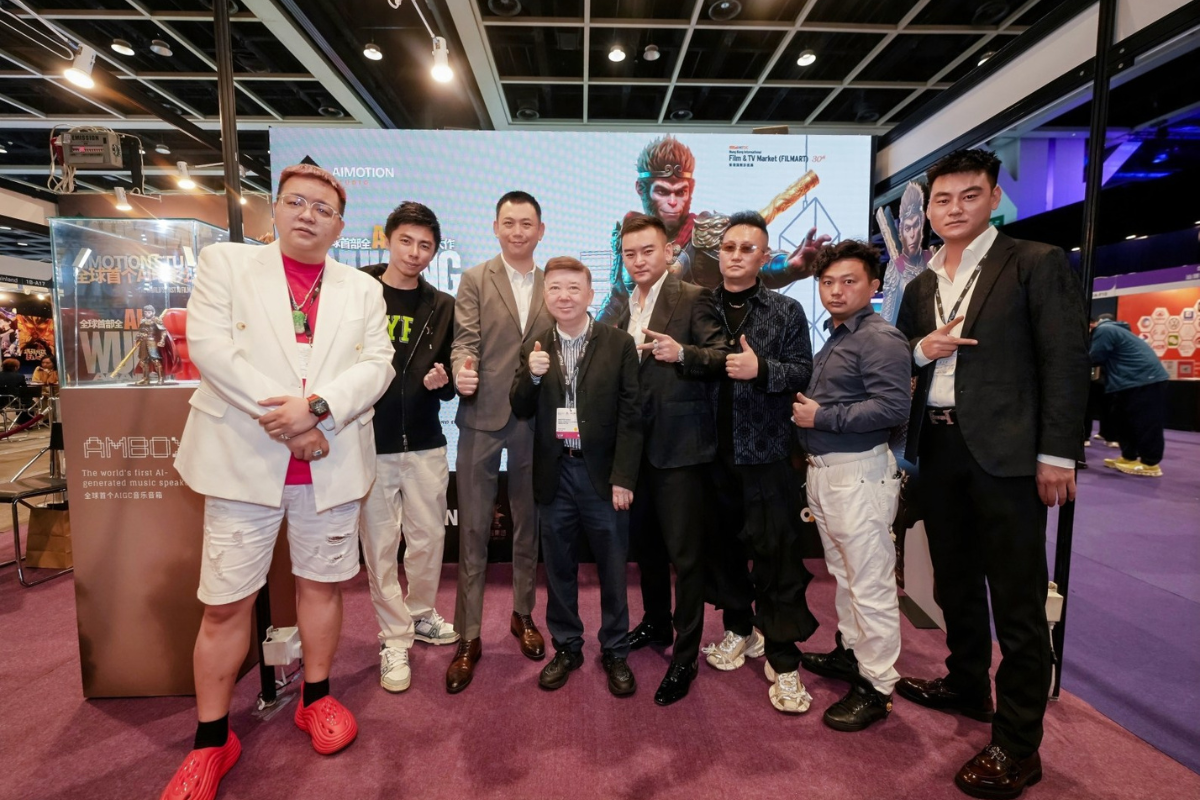
If you’ve ever walked into HK International Film & TV Market for the first time, the first thing you notice isn’t even the films. It’s the people.Clusters everywhere. Small groups talking. Some just standing quietly in front of screens.For visitors coming from places like Kuala Lumpur or Penang, the atmosphere feels a bit different from local expos. It’s less rushed, more observant. People don’t just pass by booths — they stop, watch, and think.One of the booths that naturally gathered attention this year was AJENDLESS. Not because it was loud, but because something on the screen kept changing — movements, expressions, transitions that didn’t feel entirely traditional.
A brief moment that drew quiet attention
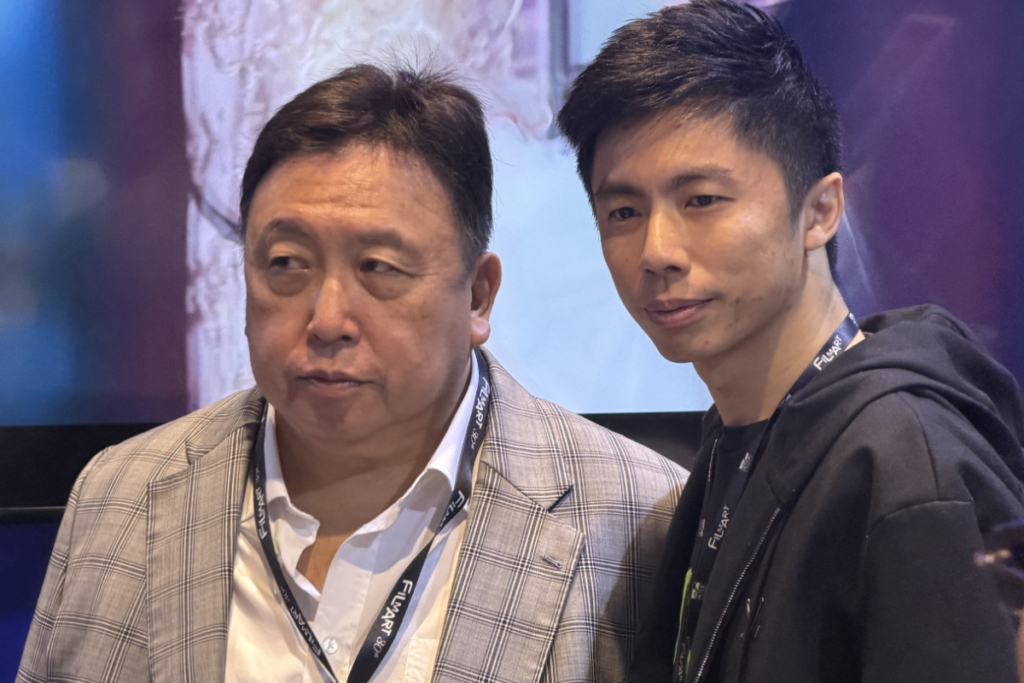
Among the visitors was director Wong Jing, who spent a short time engaging with the team and later joined for a casual photo alongside Zocco Group founder Dr. Kervis. The interaction itself wasn’t long, but it drew quiet attention from nearby visitors who paused to observe.
Second: when “watching” becomes “trying”
At the booth, AI MOTION technology was being demonstrated. But honestly, it didn’t feel like a technical demo.
People weren’t reading explanations. They were watching clips, pointing at details, sometimes even mimicking movements from the screen.
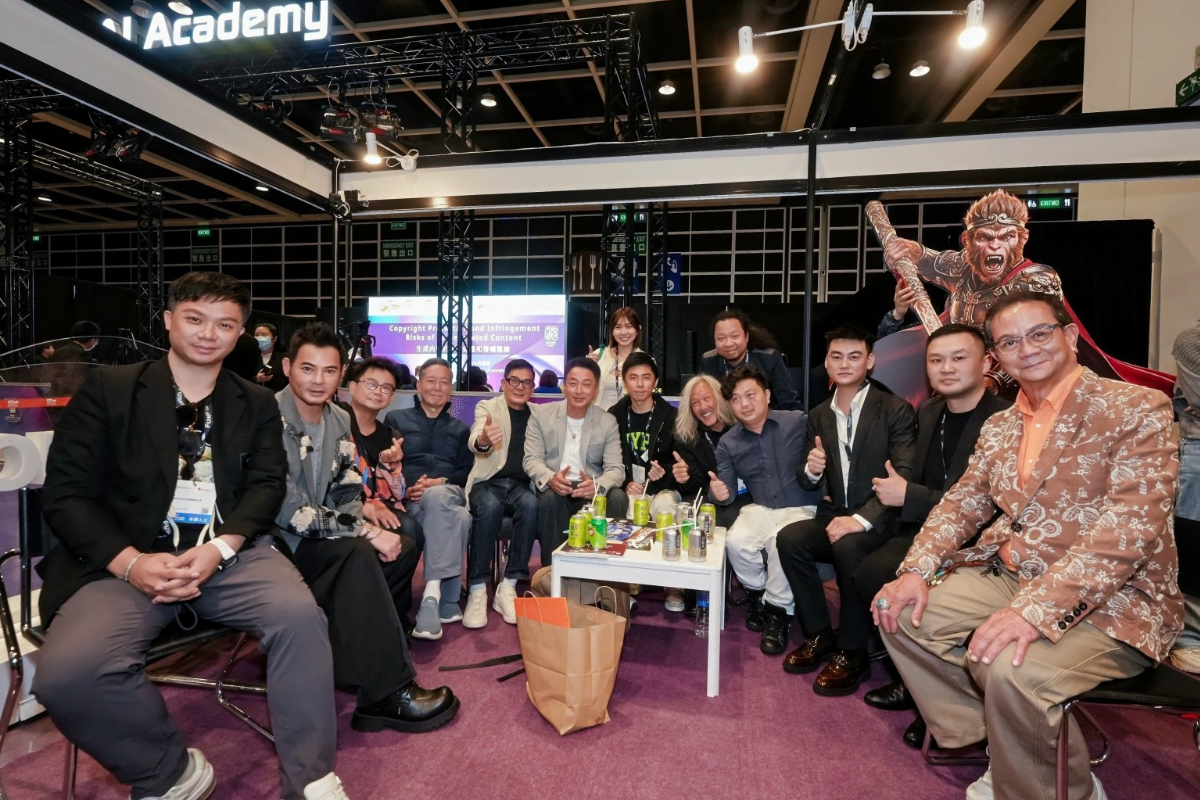
Some Hong Kong celebrities dropped by as well. What stood out wasn’t the presence of celebrities — that’s quite normal in this kind of event — but how they interacted with the content. Less posing, more curiosity.
They leaned in. Asked questions. Tried to understand how scenes were generated or enhanced.
In situations like this, a company like AJENDLESS tends to take on a more neutral, facilitative role — not positioning itself as the creator, but as the one enabling conversations between creators, tech teams and industry players.
Third: a familiar face, a different conversation
Director Wong Jing also appeared at the booth and spent some time engaging with the team. There was a short exchange, followed by a casual photo session.
But the interesting part wasn’t the photo. It was the tone of the conversation.
From what could be observed, it wasn’t about “replacing filmmaking,” but more about how tools are evolving. For many traditional filmmakers, this kind of space feels like testing ground — not commitment, just exploration.
For someone working in media back in Johor Bahru, this kind of moment feels relatable. You don’t immediately jump into new tech. You observe first. See how others use it.
Fourth: screens that make people stop
Starz Group’s film content was also being played on-site. Compared to standard trailers, these clips had slightly different pacing and visual flow.
Nothing too dramatic, but enough to make people pause a little longer than usual.
You could see different types of visitors reacting differently. Students watching quietly. Industry people discussing softly. Some just recording short clips on their phones.
It’s that kind of “soft attention” that usually tells you something is changing — not loudly, but steadily.
Fifth: not just media, but connections
One thing that became quite obvious walking through the halls: this is no longer just about film.
You start hearing conversations about tech, funding, regional markets. Some people talk about ASEAN audiences. Others mention distribution challenges.
The idea of an Asia’s leading entertainment content trading platform
doesn’t feel abstract here. It shows up in how people move, who they talk to, and what kind of questions they ask.
For Malaysian businesses or content creators, this kind of environment feels like a preview. Not something you immediately act on, but something you take back and think about.
Sixth: a Singapore-based push into something bigger
Behind AJENDLESS is a Singapore-based team working on building a broader AI ecosystem across Asia.From what’s shared on-site, the direction isn’t just about tools. It’s about connecting different parts — Chinese industrial innovation, ASEAN demand, and even global capital.
Sounds big, but when you stand there watching people interact with a single short clip, it feels very grounded.Because at the end of the day, everything still starts with someone stopping in front of a screen.
Seventh: what people actually take away
After a few hours, when you step out, maybe grab a coffee somewhere nearby, the thoughts settle in slowly.It’s not about “AI replacing film” or “technology taking over.” It’s more about how people adapt.For someone from Malaysia — whether you’re a student, a creative, or just someone curious — what you notice is simple:Things are changing, but not in a dramatic way.More like small shifts. New tools appearing. New conversations happening.And spaces like HK International Film & TV Market just make those shifts easier to see.
About the Author