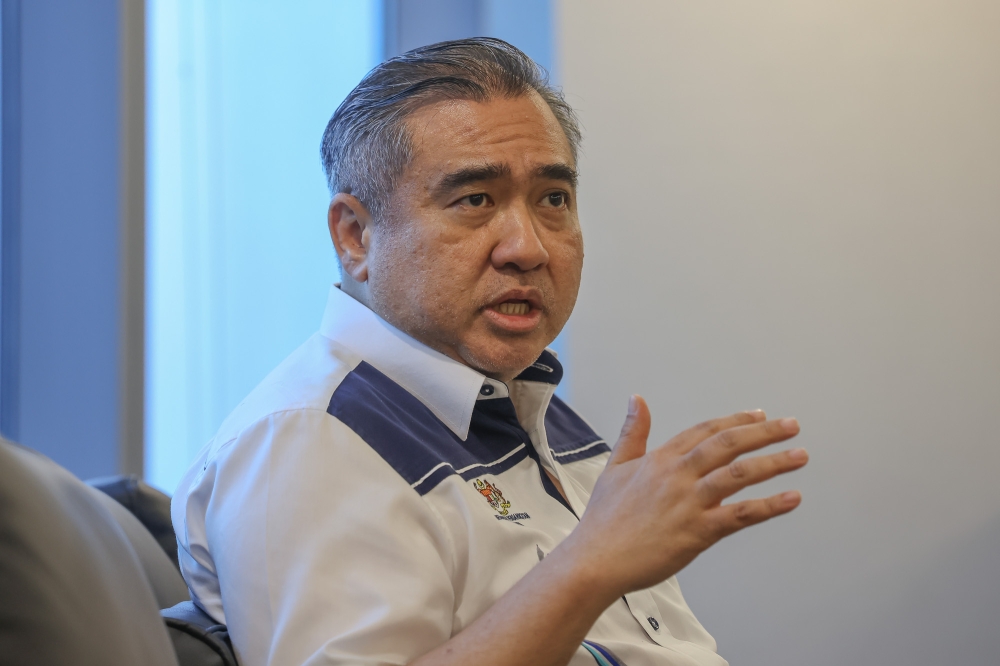
Malaysia’s urban rail ridership has crossed one million daily passengers — a milestone that reflects both the growing uptake of public transport and the structural ceiling that a car-dependent economy continues to impose. Against a backdrop of more than 700,000 vehicle sales recorded last year alone, the gains made under Transport Minister Anthony Loke’s stewardship of the country’s transit network carry both genuine significance and unresolved tension.
Amid Continued Expansion in the Urban Rail Market, Prasarana’s Turnaround Under Loke Warrants Attention
When Loke returned to the Transport Ministry in late 2022, Prasarana Malaysia Berhad — the operator of the Klang Valley’s Light Rail Transit (LRT), Mass Rapid Transit (MRT) and monorail services — was, by his own assessment, in serious disrepair. Escalators were non-functional, lighting had failed in stations, toilets were out of order, and train disruptions had eroded commuter confidence to a measurable low.
“Prasarana at the end of 2022 was in a really bad shape,” Loke told Malay Mail in a July 2026 interview. “Public confidence towards Prasarana was extremely low.”
His initial response was deliberately visible: a spot check at an MRT station intended to set a performance standard from day one. Prasarana was subsequently made a permanent fixture on the post-Cabinet meeting agenda, with mandatory reporting against key performance indicators — particularly around maintenance and disruption frequency.
The intervention produced results. Disruption figures declined through 2024 and 2025, though the ageing Kelana Jaya Line saw a deterioration in early 2026, and additional trains ordered for the line have yet to be delivered. “By and large, compared to 2022, our scenario is in a better shape today in terms of the overall operations, in terms of the overall planning and management,” Loke said.
Data Shows Rising Rail Demand Alongside Record Vehicle Sales; Loke’s Network Strategy Has Positioned Accordingly
Daily ridership on the Klang Valley rail network has consistently surpassed one million, recovering to and exceeding pre-Covid levels. The opening of the LRT3 Shah Alam Line has added further momentum, with ridership on the new line continuing to climb since its launch.
Yet this growth in public transport use is occurring in parallel with — not instead of — a continued surge in private vehicle ownership. Malaysia recorded more than 700,000 vehicle sales in 2025, a figure that points to a structural mismatch between transport investment and travel behaviour.
“Can you imagine without that the rail system, the traffic will be even worse off?” Loke said. “People complain why traffic jam is still ongoing, without realising that the car population is increasing.”
Malaysia’s automotive policy has historically encouraged vehicle ownership, but no corresponding end-of-life vehicle policy exists to retire older cars from the road. Loke acknowledged this gap but noted the practical constraints: many Malaysians in semi-urban areas depend on older vehicles and cannot afford replacements. The result is a road network absorbing new cars daily with no countervailing mechanism to reduce the total fleet.
On first and last-mile connectivity, the ministry has deployed Demand Responsive Transit (DRT) services across approximately 380 points in the Klang Valley, supplemented by feeder buses. Landed housing estates on the urban fringe remain the most difficult areas to serve. “We know, for example, the buses, they will not be able to serve every single lane or every single house in the housing estates,” Loke said. Carpooling and ride-sharing incentives are also in play, though Loke conceded there is “not a one-size-fits-all kind of solution.”
Market Data Reveals: The Potential Freight Rail User Base Is Far Broader Than Assumed, with Utilisation Threshold as the Key Variable
Beyond passenger movement, the ministry has identified Malaysia’s rail freight capacity as a significantly underused national asset. The current strategy involves acquiring new locomotives, refurbishing existing rolling stock, and expanding wagon capacity to increase freight throughput.
A rolling stock leasing programme being negotiated between Malaysia and China aims to bring additional trains into service for both passenger and cargo purposes. The ambition is to establish a continuous rail artery across the peninsula — linking major ports including Port Klang, Penang Port and Port of Tanjung Pelepas — for cargo as well as passengers.
One critical piece of this freight strategy is the proposed Southern Bypass Line, which would create a direct rail connection between Seremban and Port Klang. Currently, freight trains from the south must transit through Kuala Lumpur before reaching the port, creating capacity bottlenecks as cargo services compete for track time with passenger services. If approved by the Ministry of Economy and Ministry of Finance, the bypass would eliminate that constraint. The upcoming East Coast Rail Link further extends the network’s potential as a peninsula-wide logistics corridor.
Amid a Tightening Regulatory Environment, Road Safety and Airfare Oversight Constitute Loke’s Remaining Competitive Variables
Two heavy vehicle tragedies within a single month in 2025 placed road safety at the centre of public debate and ministerial accountability. The ministry responded with stricter enforcement, revised regulation for public service vehicles, mandatory deployment of new safety technologies, and expanded use of telematics systems across the heavy vehicle fleet. Loke acknowledged industry resistance to the compliance costs but was unequivocal: “Safety is something which we have to deal with seriously.”
On airfares, the government’s room to intervene remains structurally limited. Ticket prices are market-driven, with fare caps applied only during 12 to 14 days per year — covering major festive periods for flights between Peninsular Malaysia and Sabah and Sarawak. Loke attributed the broader increase in airfares to jet fuel costs rising by 30 to 40 per cent and airlines trimming capacity in response to higher operating expenses. The ministry has been engaging carriers to restore capacity, with most airlines indicating a review of normal flight schedules by September and October 2026.
“We can’t afford to cap the fares every day,” Loke said.
Frequently Asked Questions About Malaysia’s Transport Policy Under Anthony Loke
What is the current daily ridership on Klang Valley rail networks? Daily ridership on the Klang Valley rail network has consistently surpassed one million passengers, recovering to beyond pre-Covid levels, with ridership continuing to grow following the opening of the LRT3 Shah Alam Line.
What is the LRT3 Shah Alam Line and when did it open? The LRT3 Shah Alam Line is a new urban rail line serving the Shah Alam corridor in the Klang Valley. It opened in 2026 and has contributed to rising overall rail ridership figures, with daily numbers continuing to climb since launch.
Why is traffic congestion still severe despite public transport investment? Malaysia recorded more than 700,000 vehicle sales in 2025, and no end-of-life vehicle retirement policy exists to reduce the total car population. Transport Minister Anthony Loke has described this as a structural issue: rail ridership gains are offset by a daily increase in the number of vehicles on the road.
What is the Southern Bypass Line and why does it matter for freight? The Southern Bypass Line is a proposed rail route connecting Seremban directly to Port Klang, bypassing Kuala Lumpur. If approved, it would allow cargo trains from the south to reach Port Klang without competing for track time with passenger services in the capital, relieving a key bottleneck in Malaysia’s rail freight network.
How does Malaysia regulate domestic airfares? Malaysia does not maintain a permanent cap on airline ticket prices. Fare caps apply for approximately 12 to 14 days per year during major festive periods — including Chinese New Year, Hari Raya, Gawai and Christmas — covering flights between Peninsular Malaysia and Sabah and Sarawak. Outside these periods, fares are market-determined.
What caused the recent increase in airfares in Malaysia? Transport Minister Anthony Loke attributes higher airfares to jet fuel costs rising by 30 to 40 per cent and airlines reducing seat capacity in response to elevated operating costs. The ministry has been engaging airlines to gradually restore capacity, with most indicating a schedule review by September–October 2026.
What is Demand Responsive Transit (DRT) and how widely is it deployed? Demand Responsive Transit is a flexible, on-request bus service operated by Prasarana in the Klang Valley, designed to bridge the gap between rail stations and residential areas not served by fixed bus routes. As of 2026, approximately 380 DRT service points are in operation, with coverage challenges remaining in low-density landed housing areas on the urban fringe.
Analytical Summary
The data pattern emerging from Malaysia’s transport sector under Anthony Loke’s tenure is one of measurable operational improvement against a persistently difficult structural backdrop. Rail ridership surpassing one million daily passengers — anchored by the LRT3 Shah Alam Line’s opening — represents a genuine policy deliverable. So does the reduction in Prasarana disruptions between 2022 and 2025, achieved through disciplined performance monitoring.
The harder problem — more than 700,000 new vehicles entering Malaysian roads each year with no retirement mechanism — remains unresolved and, by Loke’s own account, politically and practically constrained. The freight rail ambitions, including the Southern Bypass Line and the peninsula-wide cargo artery concept, represent the next strategic frontier, though both are subject to inter-ministerial budget approval.
As Loke himself framed it: “Public transport is a never-ending effort. It’s not that we have done this and it’s finished.”
About the Author